
NEWS
Glacier Collapse Buried Nepal’s Hydropower Workers in Tunnels
A Langtang glacier collapse has killed 1,050 in Nepal and left hydropower workers missing in Trishuli tunnels Kathmandu still cannot enter.

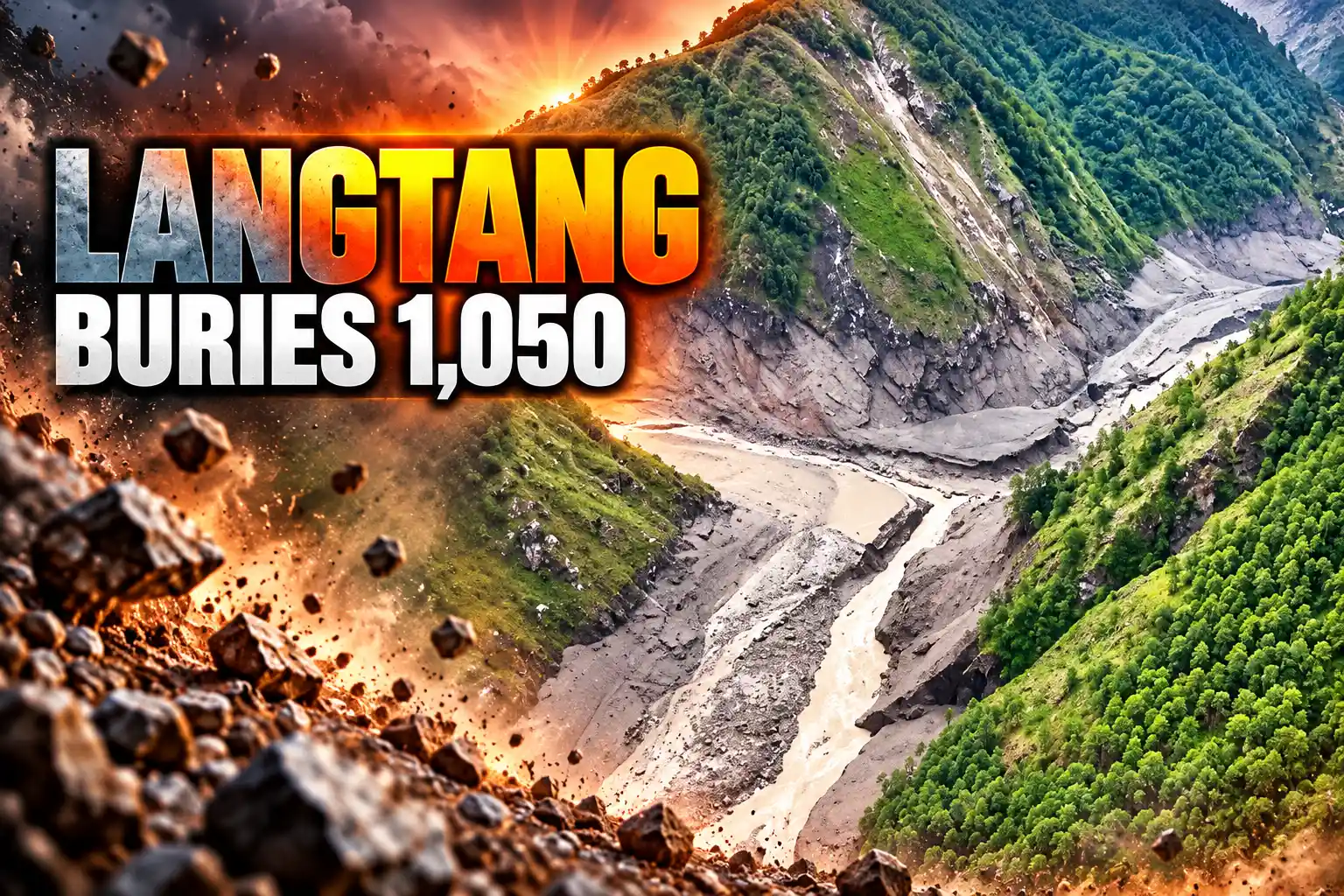
Nepal’s disaster authority had counted 1,050 bodies by the evening of Sept. 1, a week after a glacier and the rock under it fell into a Himalayan river. The National Disaster Risk Reduction and Management Authority still listed 3,916 people missing in Nepal, and Chinese officials listed 16 dead and 546 missing in Tibet’s Gyirong County. The largest cluster of those still unaccounted for worked at hydropower plants along the Trishuli, the river that carries melt and mud from Langtang Lirung toward the Indian plains.
The surge that hit Rasuwa and Nuwakot on Aug. 26 was an ice-rock collapse, not a monsoon cloudburst. What it ran into was a construction belt of tunnels, cofferdams and camps packed into a steep gorge.
Bedrock Gave Way Under a Glacier on Langtang Lirung
At 8:37 a.m. Nepal time on Aug. 26, seismometers worldwide recorded a shock the U.S. Geological Survey first logged as a magnitude 4.4 earthquake 55 km northwest of Kodari. Later that day the agency said no tectonic quake had occurred. Long-period waves and satellite images showed a glacial collapse and debris flow with energy equal to magnitude 5.2, at 28.271°N, 85.515°E, depth 0 km. A second landslide, listed separately, followed about three hours later.
The break was on the north face of Langtang Lirung, a 7,234-metre peak in Langtang National Park, about 45 km north of Kathmandu. Dan Shugar, a geomorphologist at the University of Calgary, read Planet Labs images as a 0.2 sq km piece of ice shearing off at about 5,200 metres and falling about 1,200 metres to the valley floor. Kristen Cook, a geomorphologist at Université Grenoble Alpes, said clearer frames the next day showed more than ice.
The rock that the glacier was sitting on collapsed.
Kristen Cook, geomorphologist, Université Grenoble Alpes
Jakob Steiner, a geoscientist at the University of Graz, described a glacier tongue that sheared because the rock below it failed, dropping from about 5,100 metres to about 3,000 metres and damming a river. When that dam gave way, water, pulverized ice and sediment ran north-west into the Lhende Khola, then through the Bhote Koshi and the Trishuli. Chinese Academy of Sciences staff said the debris flow travelled about 22 km at high speed, reached Gyirong Port at about 1,800 metres, flattened about 0.7 sq km and destroyed 27 buildings. State television said the mudslide took six to seven minutes to reach the border post.
The cause of the deadly mudslide in China's #Xizang has been identified. A Chinese Academy of Sciences team found that at around 10:52 am on August 26, a glacier on the southern slope of Langtang Lirung in #Nepal fractured at an altitude of about 5,200 meters, triggering an… pic.twitter.com/tBLO1yt9k5
— Global Times (@globaltimesnews) August 30, 2026
There was almost no rain that morning. The European Geosciences Union hydrology note, written by György Hetényi of the University of Lausanne and Shiba Subedi, found no glacial lake on before-and-after satellite frames, so this was not a classic glacial lake outburst. Preliminary volume estimates for the first mass sat between half a million and 10 million cubic metres. Ground vibration from the flood lasted more than two hours at a station 60 km from the source.
Hydropower Sites Hold Most of the Missing
Prime Minister Balendra Shah said the army had pulled 279 people from flood-hit hydropower projects, including 254 at Upper Trishuli-1 and nine at the 5 MW Mailung Khola plant. The disaster authority still counted 639 people stranded at wrecked stations on Sept. 1. The Independent Power Producers’ Association, Nepal, had listed 934 people at 11 projects as unaccounted for in the first days, and on Aug. 31 still listed 573 people at Upper Trishuli-1 alone as out of contact.
Those plants sit on the same rivers the debris used as a chute. The Nepal Electricity Authority counted 12 operating plants totalling 431.1 MW shut down. The United Nations Development Programme said 15 major stations still under construction were taken out as well. Kanni Wignaraja, a UNDP assistant secretary-general, told interviewers there was no construction that could have stopped a mud-and-ice wave of this size.
THE TRISHULI PLANTS IN THE FLOOD PATH
| Project | Capacity | What officials have said |
|---|---|---|
| Upper Trishuli-1 | 216 MW, still being built | 254 rescued; IPPAN still lists 573 people out of contact |
| Mailung Khola | 5 MW | 9 rescued |
| Upper Trishuli-3A | 60 MW, Nepal Electricity Authority | Chinese tunnel team on site; air and cameras pushed in |
| Upper Trishuli-3B | 37 MW | 2 rescued; army team expanded after a Chinese reconnaissance |
| Rasuwagadhi | 111 MW | 2 rescued; a tunnel search found no one else |
Foreign nationals make up another large share of the missing. NDRRMA listed 583 people from 38 countries among the unaccounted in Nepal, and Chinese officials listed 261 foreigners from 23 countries in Tibet, many of them on the road toward Mount Kailash. Bodies were recovered as far as Chitwan, Nawalparasi and, some 240 km downstream, districts in Uttar Pradesh. The International Federation of Red Cross and Red Crescent Societies put people affected at about 93,000.
Why Were Hundreds of Workers Underground?
Upper Trishuli-1, a 216 MW run-of-river hydropower project still being built with International Finance Corporation and Korean sponsors, sat in the gorge the debris flow would take. Nepal has stacked this river with run-of-river schemes because the drop is steep and the water is sold at home. On Aug. 26 that same drop became a funnel.
The Asian Development Bank describes the work as the design, construction, commissioning and operation of a 216 MW plant on the Trishuli River, plus 1.2 km of transmission lines, with power sold to the Nepal Electricity Authority. The IFC’s own filing calls it among the largest foreign direct investments in Nepal and says the plant would lift domestic supply by about one-third against 2018 levels, with about 40 percent of yearly output in the dry season. The same filing places a diversion dam in a narrow gorge 275 metres downstream of the Langtang Khola’s meeting with the Bhote Khosi, about 70 km north-east of Kathmandu.
That is why so many people were underground at 8:37 a.m. The gorge is a worksite as much as a river. South Korean investors and the IFC are on the books at Upper Trishuli-1, and Seoul set up a task force after Korean nationals at a hydropower site were reported missing. A private-sector corridor that was meant to firm up Nepal’s grid in winter is now the place families wait for names.
Rescuers Say the Tunnels Are Not Humanly Passable
Early in the week Nepal’s army said in-country teams were enough and that a flood of foreign crews would tangle command. By the weekend that position had shifted. A specialised Indian tunnel unit arrived, and Chinese and South Korean teams joined at Upper Trishuli-1 and Upper Trishuli-3A. Shah said Nepali, South Korean and Chinese crews were still working the Upper Trishuli-1 tunnel together.
The problem is not a locked door. It is mud. Joint teams reached about 160 metres at Upper Trishuli-1 in Haku before the bore ended in a plug. At Chilime a 26-person crew with foreign specialists got about 150 metres in, then hit a buried slope. India’s ambassador in Kathmandu said the Indian unit had a foothold at Chilime and had probed about 185 metres at Langtang. Asish Gurung, a mountain guide helping at Haku, described the first look at Trishuli.
Our first rescue observation at Trishuli Hydro Power plant shows that it is not humanly possible to go into the tunnel.
Asish Gurung, mountain guide, Haku, Rasuwa
Priya Kharel, whose brother Milan was an engineer at Upper Trishuli-1, said people who made it out told her there were still men inside. Families have pressed for air, food and cameras to go in faster than they did. Crews did start pumping air after breaking into an upper section at Trishuli-3A, and they have lowered cameras. A controlled blast was used at Upper Trishuli-3A in the early hours of Aug. 31 in an effort to reach people still listed missing.
THE WEEK INSIDE THE TUNNELS
- August 26: The ice-rock avalanche hits before 9 a.m.; hydropower camps and bores along the Trishuli take the surge.
- August 29: Army crews drill toward people believed trapped at Trishuli-3A; an Indian tunnel unit arrives.
- August 30: Teams break into an upper section at Trishuli-3A, pump air and feed a camera; rain and a rising river pause work again.
- August 31: A controlled explosion is used at Upper Trishuli-3A; Shah reports 279 people already pulled from project sites.
- September 1: Joint crews are still stopped by mud at about 150 to 185 metres; 639 people remain listed as stranded at hydropower stations.
Guo Zhaocheng, a Chinese government geologist, put the ice-avalanche debris flow at about 50 metres a second over more than 20 km. At that speed a tunnel mouth is not a refuge. It is a pipe that fills.
A Barrier Lake Formed Where Nepal Cannot Dig
Debris from the same collapse blocked drainage on the Tibetan side of the border, upstream of Gyirong Port, at the meeting of the Chhochen Khola and Purepu Tsangpo. China’s water ministry put the first lake at about 1.5 to 2 million cubic metres on Aug. 27 and warned that about 3 million cubic metres more could flow in over three days, with peak flow around Sept. 1, a volume it compared to about 1,200 Olympic swimming pools. A drone on Aug. 28 filmed ice falling into the lake. Rescue on both sides paused when the barrier overtopped.
By Aug. 29 the ministry said satellite frames showed the Purepu Tsangpo lake at 99,000 sq metres, down 21,000 sq metres from Thursday, and parts of the bed were visible. Chen Hongqi, a senior engineer at the Ministry of Natural Resources’ Geological Disaster Technical Guidance Center, flagged another body of water at the foot of the collapse, more than 120,000 sq metres, depth unknown. A fresh landslide 2.8 km downstream of the first lake built another dam. Suraj Sigdel, Nepal country director for Mercy Corps, had already pulled his team back from ground zero because a lake forming on the Tibetan side might overflow at any time.
WHAT WE KNOW
- The first lake: It formed on the Chinese side of the border, overflowed on Aug. 28, then shrank as water found a way out.
- The second pool: A larger surface at the glacier scarp is still being measured; depth has not been published.
- Who can work it: Chinese crews, drones and satellite teams are on that ground; Nepal cannot send diggers across the line.
WHAT IS UNCONFIRMED
- A second full breach: Peak inflow was forecast around Sept. 1, but a repeat of the Aug. 26 surge has not been shown.
- How many are alive in the bores: Air has been pumped and cameras fed; no verified headcount of survivors inside has been released.
Wang Yi, China’s foreign minister, called the mudslide the most severe cross-border disaster of recent years on a call with his Nepali counterpart. Beijing has said it is passing meteorological and hydrological data south. That is the substitute for Nepal putting its own pumps on a lake it cannot reach.
The Warning System Was Built for Rain, Not Ice
Rasuwa’s chief district officer said there were no signs of this coming. Water-level monitors in the basin were set up for monsoon rise and perennial flow. Several gauges were destroyed before they could send a packet. ICIMOD, the Kathmandu-based mountain centre, said water in the Bhote Koshi basin began rising fast around 9 a.m., and that the Trishuli at Galchhi rose as much as 9 metres in 30 minutes while Malekhu rose 7 metres over a similar span.
Saswata Sanyal, a disaster-risk specialist at ICIMOD, said the Lhende Khola had already flooded twice in 14 months, this time from an ice-rock avalanche on the Nepal side that blocked the river and then let go. A July 2025 glacial-lake burst on the same corridor washed out the border bridge and killed at least nine people. Austin Lord, a Stimson Center fellow who studies Himalayan risk, called it a different, climate-linked event in the same river a year later. Early-warning work that Chinese and Nepali scientists have run for years did not see a hanging glacier and a failing slope in time to empty a gorge.
THE GAPS THAT LET THE SURGE THROUGH
- The sensors: Stations were tuned for rain-fed floods, and several were torn out before they alarmed.
- The clock: Six to seven minutes from the avalanche to Gyirong Port is shorter than a valley-wide evacuation.
- The map: The source sat in a high pocket above Nepal’s usual river gauges, then crossed a border before the main towns.
- The second year: The same Lhende-Bhotekoshi line had already been hit in July 2025, and the rebuild sat in the same chute.
In Bidur, Nuwakot, Rajendra Dawadi, principal of Tribhuvan Trishuli Secondary School, got children out before the flood took the buildings. India’s ambassador, Naveen Srivastava, said more than 1,600 pupils left in time. The school, designed in the 1950s by an Indian engineer on the old Trishuli hydropower works, is another piece of the same river project the gorge has hosted for decades.
Met Rajendra Dawadi, Principal, Tribhuvan Trishuli Secondary School, Bidur, Nuwakot. His timely action saved lives of more than 1600 school children just before the school was swept away in #Rasuwa flash flood. This school was set up in 1950s; Designed by Indian engineer,… pic.twitter.com/XoVkKRvR8x
— Naveen Srivastava, Ambassador of India in Nepal (@navsri6619) September 1, 2026
The U.S. Embassy told citizens not to travel to the Rasuwagadhi-Timure-Syafrubesi strip, including the Nepal-China crossing, because of flood damage, broken roads and the chance of more slides. Shah said more than $42 million in aid had come in. The United States pledged $500,000. The IFRC released 1 million Swiss francs ($1.2 million) and said more than $30 million was needed for its response. The United Nations put $2 million from its Central Emergency Response Fund into the relief. Unidentified bodies have been buried after DNA samples, including at Devghat in Chitwan, because the heat and the numbers outran the morgues.
Chamoli Already Showed How Ice and Rock Can Drown a Plant
On Feb. 7, 2021, about 27 million cubic metres of rock and glacier ice broke from Ronti Peak in India’s Chamoli district, became a debris flow, and wrecked two hydropower projects on the Rishiganga. Ashim Sattar, a glaciologist at IIT Bhubaneswar, has called Aug. 26 the same class of event: a rock-and-ice collapse from a steep face, not a simple lake burst. The Seti Khola flood in Nepal in 2012, the South Lhonak outburst in Sikkim in 2023, and the Thame flood in Nepal in 2024 sit on the same list of Himalayan slope failures that run into river works.
ICIMOD has said Hindu Kush Himalaya glaciers are losing ice at double the rate since 2000, and that it is too early to pin this one collapse on warming alone. High slopes fail from rock, snow, rain and the glacier’s own motion. Shugar has said meltwater in the 24 hours before the break may have lubricated the bed. Alton C. Byers, at the University of Colorado Boulder, has described permafrost as the glue that held rock and ice together, now weakening. Sigdel, speaking in the first days, called the flood a climate-induced disaster and said Nepal was being punished for emissions it did not make. Scientists have not closed the attribution file on this slope.
What is already closed is the geography of the missing. Researchers in 2020 counted 47 potentially dangerous glacial lakes in Nepal, China and India; Wignaraja said the true number is now higher and that people at risk run into the millions. The Aug. 26 wave did not need a mapped lake. It needed a steep glacier, a failing bed, and a river already lined with tunnels. Joint crews from Nepal, India, China and South Korea are still trying to pass the mud at Upper Trishuli-1, where the producers’ association still lists 573 people out of contact.

Amazon’s Apple Prime Deals Mostly Undo the June Hikes

The Atlantic’s First Hurricane Is Aimed at Soaked Gulf Soil

Iran’s Hormuz Attacks Target the Route That Restored Crude

S&P 500 Clears 7,800 as AI Chips Outrun Yields

Russia’s No-Plague Finding Leaves a Siberian Death Unexplained

Glacier Collapse Buried Nepal’s Hydropower Workers in Tunnels

Congo’s Bundibugyo Outbreak Outruns the Licensed Ebola Shots

AI Server Boards Put Everyday Circuit Materials on Allocation

Germany Can Miss Its 2026 Climate Cap Without Penalty

CISA’s Known Exploits Still Come From 2007-Era Bugs
-
 NEWS1 month ago
Congo’s Bundibugyo Outbreak Outruns the Licensed Ebola Shots
-
 NEWS1 month ago
AI Server Boards Put Everyday Circuit Materials on Allocation
-
 NEWS1 month ago
Germany Can Miss Its 2026 Climate Cap Without Penalty
-
 NEWS1 month ago
CISA’s Known Exploits Still Come From 2007-Era Bugs
-

 BUSINESS1 month ago
Trump’s Venezuela Oil Deal Leaves the Barrels in the Ground
-

 NEWS1 month ago
A Cow Rumen Enzyme Dissolves Superbug Biofilms on Gauze
-

 NEWS1 month ago
Texas Judge Freezes the SEC Eligibility Ban for 41 Athletes
-

 NEWS1 month ago
Pennsylvania Measles Deaths Follow a Long Slide in Coverage