
GAMING
Switch 2 Game Dumps Rest on a Patchable Software Bug
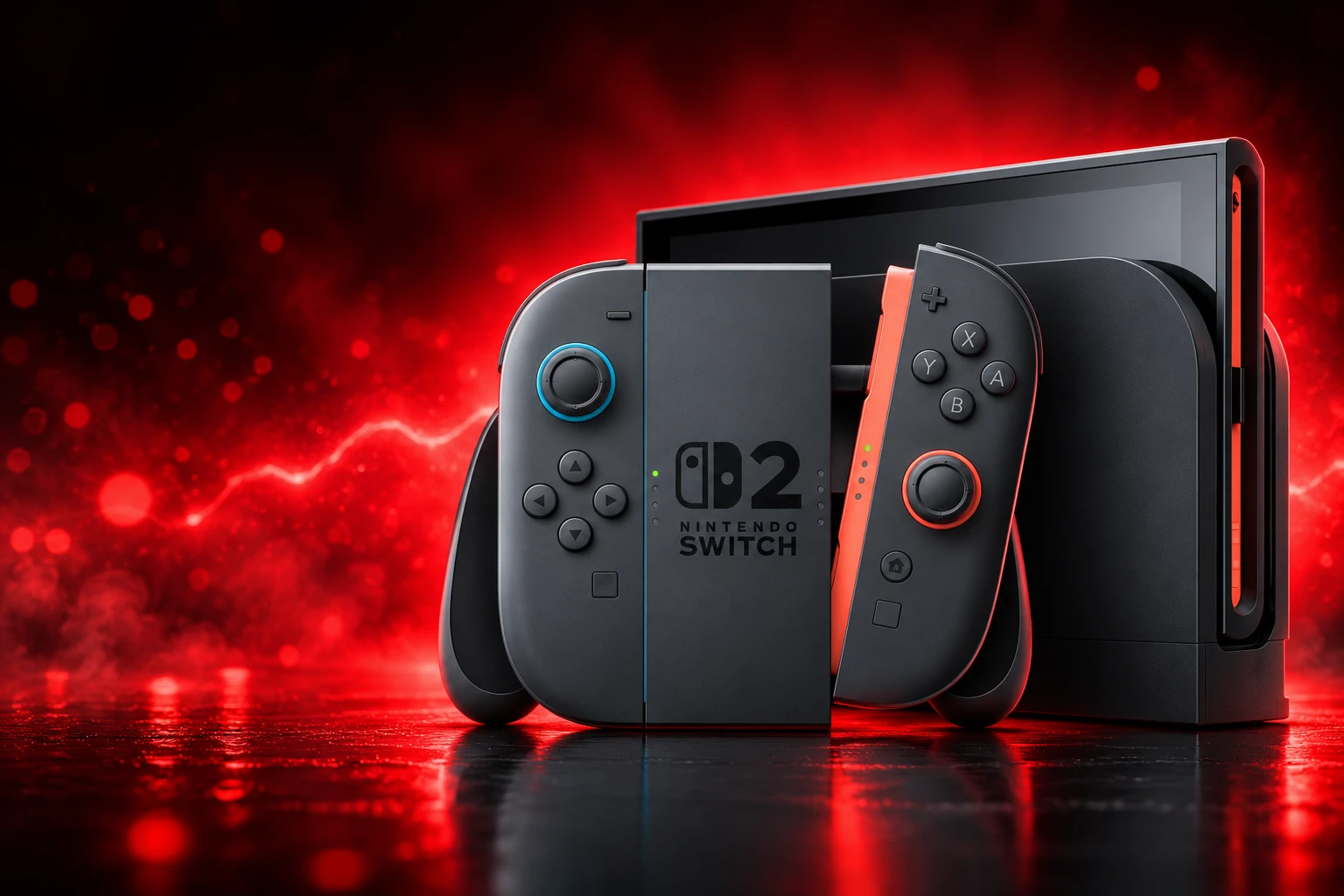
ns2jb dumps Switch 2 code on firmware 23.0.1, then dies on reboot, a software hole unlike the Tegra bootROM bug Nintendo could not patch in 2018.

Sammy Hajhamid published a software-only Switch 2 jailbreak on October 22 that runs on firmware 23.0.1 and dies the moment the console restarts. He used it to drop Cinnamoroll, Peter Griffin and Hatsune Miku into Mario Kart World, then posted a demo that does not install custom firmware.
The original Switch was cracked in April 2018 by a silicon bug Nintendo could not patch on early units. This chain is a filesystem overflow. That difference decides how long the dumps last.
Filesystem Access That Vanishes at Power-Off
Hajhamid, who posts as pepsipu, calls the chain ns2jb. It is a tethered userland jailbreak: native code runs with the privileges of the built-in filesystem module, then a restart wipes it. In Hajhamid’s technical write-up, dated October 18, he says that access “lets us run homebrew, reverse engineer and mod Switch 2 games, back up save files off the Switch, and access most of the Switch 2’s peripherals through MMIO.”
The public package is a proof, not a toolbox. The ns2jb demo on GitLab runs two small native functions inside FS, checks the results, and puts the original instructions back. A fork of that repo is blunt: the demo does not install custom firmware or persistence. Keep SmileBASIC open or start over.
The announcement post is the Mario Kart World clip, not a piracy loader.
i jailbroke the nintendo switch 2
so i modded cinnamoroll, peter griffin, hatsune miku, and more into Mario Kart World, a switch 2 exclusive
now watch my friends and i get cooked by bots
learn more and get the exploit https://t.co/ykjgyfrFRp pic.twitter.com/BOcFhejRz1
— pepsipu (@pepsipu) October 22, 2026
THE 23.0.1 LOCK
- System software: The published chain is built for firmware 23.0.1 exactly; newer software is expected to miss.
- Entry app: The demo uses SmileBASIC 4.4.9, a Switch 1 title running through backward compatibility.
- Host PC: Node.js 22 or newer on macOS or Linux, on the same network, talking on port 39380.
- Reliability: Ethernet is required because the filesystem stage is timing-sensitive, and success sits at 20% at best, with more than 20 MiB free in the SmileBASIC save.
A physical test logged on October 21 passed on the third fresh boot. The first two attempts died in validation checks and then cleaned up. That is the working window, not a silent patch on every Switch 2.
Switch 1 Still Carries an Unpatchable Silicon Hole
Eight years ago the comparison was a different class of bug. Katherine Temkin and the ReSwitched group documented Fusée Gelée as a coldboot flaw in the USB recovery mode of NVIDIA’s Tegra X1 bootROM. The Fusée Gelée vulnerability disclosure is still the baseline: early boot code execution, no signed payload required, and a path to secrets burned into device fuses.
The damaged code lived in mask ROM. Once the production fuse was burned, Nintendo could not ship a download that repaired units already sold. New consoles got a factory iPatch from around mid-2018, and later “Mariko” boards closed the hole in hardware. Early Switch, Switch Lite and OLED owners still live with that split. Serial trackers still list which original Switch units were patched because a system update never could.
TWO SWITCH CRACKS, TWO CLASSES OF BUG
| Point of comparison | Fusée Gelée, 2018 | ns2jb, 2026 |
|---|---|---|
| Where the bug lives | Tegra X1 bootROM USB recovery | SmileBASIC interpreter, then the filesystem service |
| Can a system update kill it? | No, on pre-revision chips | Yes; it is software |
| Survives a reboot? | Yes, as a coldboot with a jig | No; the demo dies on power-off |
| Keys and kernel | Early-boot secrets and high privilege | No keys, no kernel |
| What you need in the room | RCM access over USB | The app, a PC, and a stable ethernet path |
ns2jb is the modern cousin of Switch 1 userland tricks, not a second Fusée Gelée. Mike Heskin, the Atmosphere lead who posts as hexkyz, put it in those terms when his notes hit the forums on October 22. The filesystem module is as high as userland goes. Climbing from there into the kernel is as hard as it is from any other system module.
What Has Been Dumped From Switch 2 Games?
Firmware dumping is in the repo. Game dumping is a claim with a much thinner public record. Hajhamid used filesystem access to pull ordinary system-module code for offline study. A dump-firmware helper asks the console for installed system-program IDs, then reads each accessible CodeFS main file and writes hashes into a JSON inventory. That is a real artifact. A complete, playable Switch 2 game image is not.
WHAT WE KNOW
- Mario Kart World: Hajhamid showed custom models in a Switch 2 exclusive, including Cinnamoroll, Peter Griffin and Hatsune Miku, after about a day of extra work.
- System code: The filesystem module can be used as an oracle for binaries below kernel-level initial processes, which covers games, apps and ordinary sysmodules.
- Saves: Encrypted save files can be copied off the console for study, which is a backup path, not a shop.
WHAT IS UNCONFIRMED
- Full game images: hexkyz says dumps are possible in principle. No complete game dump has been shown in public.
- Deltarune: A Switch 2 dump was claimed on October 24. Commenters say the files look like diffs against the Switch 1 build, and that claim is unverified.
- Title installers: There is still no loader that boots backups. Asset folders are not a piracy scene.
RomFS scraps and a firmware inventory are useful to people who reverse games. They are not the 2018 moment when early boot access handed over the keys. hexkyz was explicit that filesystem access does not expose keys or key material. Without those, the dumps stay research material.
The eShop Delisting That Followed in Hours
Nintendo has not issued a public statement on ns2jb. It did reuse a move from 2016, when the 3DS SmileBASIC title came off the eShop after the smilehax homebrew chain. On October 22 it pulled SmileBASIC 4.
THE FIRST FIVE DAYS
- October 18, 2026: Hajhamid dates the write-up that describes the software-only, tethered chain on firmware 23.0.1.
- October 21, 2026: A hardware run of the filesystem demo passes on the third fresh boot after two failed validation attempts.
- October 22, 2026: Hajhamid posts the Mario Kart World clip at 03:59 GMT. Gezine, known for PS5 userland work, replies that the report looks genuine.
- October 22, 2026: SmileBASIC 4 leaves the EU and UK eShops around 14:22 GMT, about 10 hours 23 minutes after the post, and the US store follows around 17:00 GMT.
- October 24, 2026: The title’s nsuid is reported gone from Nintendo’s eShop registry, not merely marked unavailable, and Japanese demo listings are later reported stripped too.
Owners who already have 4.4.9 keep the copy on the console. People who do not cannot buy it on the affected stores. A later fork of the demo package says an installed SmileBASIC demo build can still drive the chain, which is why a store takedown is a delay, not a cure. No system update closing the filesystem bug had gone out through October 26, when dump write-ups spread beyond the forums.
Codex Did the Heap Work on a Crash-Loop Rig
The integer overflow sits in SmileBASIC’s interpreter, in the code that removes items from an array. Hajhamid picked the title because the 3DS edition had already been used in smilehax, and because a large C++ BASIC runtime is a good place to hunt memory bugs. He first tried a WebKit path through a captive portal and dropped it when Switch 2 mitigations made control-flow hijacks too expensive.
The SmileBASIC 4 programming environment is still a Switch 1 product: users write, run and share small programs. That interpreter is what gave the first out-of-bounds read and write. From there he hunted Switch 2 sysmodules and found a buffer overflow in filesystem path handling. An oversized string overwrote a temporary buffer, a cached pointer fell under his control, and a faked filesystem process let native code run as the FS module.
OpenAI’s Codex sat in the loop, not at the podium. Hajhamid wired a Switch and a Switch 2 to JetKVM units for HDMI and USB control, plus a motorised button to power-cycle after crashes, and let the model grind for about two weeks. A widely copied caption that told the model to “make no mistakes” was a joke overlay on a photo, not the prompt that popped the console. hexkyz later said the valuable model work was heap grooming: arranging scarce filesystem pointers so a known style of takeover hits a usable object. Finding a bug is ordinary. Keeping it stable on live hardware is the part that usually eats months.
With FS access, you can use it as an oracle to dump any below-KIP-level binary, that is, games, apps and non-KIP sysmodules.
Mike Heskin (hexkyz), Atmosphere lead
He added that SmileBASIC is not a requirement, and that the filesystem command exposing the bug is available almost everywhere. That sentence is why the eShop takedown cannot be the end of the story, and why it also cannot be treated as kernel access.
Why This Chain Is Not Custom Firmware
ns2jb is a jailbreak in the narrow sense that native code runs on a live Switch 2. It is not Atmosphere, not a coldboot, and not a way to install backups. Hajhamid describes it as a step toward custom firmware. The published demo still restores FS, restores the donor files, and tells you to restart when you are done.
WHAT THE DEMO WILL NOT DO
- Kernel: Privilege stops at the filesystem module and ordinary sysmodules. There is no kernel compromise in the public chain.
- Keys: Filesystem access does not give up key material, which blocks the classic path to decrypted, portable game images.
- Persistence: hexkyz says early system savedata manipulation might, in theory, survive a reboot. Nobody has shown it.
- Piracy loader: There is no title installer and no way to boot dumped Switch 2 games as if they were installed from the eShop.
- A clean daily driver: The filesystem stage is unstable enough that leftover SmileBASIC save data has hung other titles until the save was deleted.
That last point is already showing up on hardware, not only in README warnings. An owner who force-rebooted a Switch 2 about eight times while babysitting SmileBASIC then found Puyo Puyo Tetris hanging on load. Safe mode misbehaved too until the SmileBASIC save, not just the app, was wiped. The 20% success note in the demo is not modest branding. A leftover save can punish a console that still needs Nintendo’s online services.
Waiting for a cleaner entry is the sane move for anyone who is not dumping sysmodules for a living. A supported console is a bad place to burn a research chain that still asks you to keep a BASIC window open on ethernet.
A Browser or a Cart Can Hit the Same Bug
The public recipe still wants SmileBASIC 4.4.9. The underlying filesystem command does not. hexkyz said any entry point can be used, whether it is a Switch 1 game, a Switch 2 game or the browser. Gezine told people not to update just to grab SmileBASIC, and floated other games, including titles built on the Artemis Engine, plus a possible cartridge path. Alula later said one teased demo route still needed a tampered save from an already-hacked Switch 1.
That is the actual race. Nintendo can patch path handling in FS and ship it as a system update that players will need for new releases and online play. Researchers can move the first foothold into something that cannot be delisted, or into a save that already sits on a cart. Lower firmwares, hexkyz noted, may still hide bugs that go deeper than userland. People who care about this chain are being told to freeze 23.0.1 and stay off Nintendo’s servers, not to chase a paid app that already left the store.
Homebrew menus and shader demos appeared within a day of the Mario Kart World clip. Those are sandboxed curiosities until someone holds filesystem access across a reboot without a PC on the other end of a cable. Until that lands, Switch 2 dumping is a lab event on a patchable hole. The 2018 consoles that still take a jig in recovery mode remain the ones Nintendo could not talk back into a sealed box.

Airbnb Starts House Rules Reviews as Cities Rewrite Contracts

United’s Computers Failed the Day After Kirby Blamed ATC

Tyson Foods Guides Beef Losses Narrower as Chicken Cools

Saudi Arabia’s Leisure Tourism Falters as Pilgrims Still Come

Himesh Patel Confirms the X-Files Writers’ Room Is Open

AI Server Boards Put Everyday Circuit Materials on Allocation

Glacier Collapse Buried Nepal’s Hydropower Workers in Tunnels

Congo’s Bundibugyo Outbreak Outruns the Licensed Ebola Shots

Pennsylvania Measles Deaths Follow a Long Slide in Coverage

CISA’s Known Exploits Still Come From 2007-Era Bugs
-
 NEWS2 months ago
AI Server Boards Put Everyday Circuit Materials on Allocation
-
 NEWS3 months ago
Glacier Collapse Buried Nepal’s Hydropower Workers in Tunnels
-
 NEWS3 months ago
Congo’s Bundibugyo Outbreak Outruns the Licensed Ebola Shots
-
 NEWS3 months ago
Pennsylvania Measles Deaths Follow a Long Slide in Coverage
-
 NEWS3 months ago
CISA’s Known Exploits Still Come From 2007-Era Bugs
-

 NEWS3 months ago
Germany Can Miss Its 2026 Climate Cap Without Penalty
-

 NEWS3 months ago
Texas Judge Freezes the SEC Eligibility Ban for 41 Athletes
-
 GAMING2 months ago
Xbox Disc-to-Digital Turns Delisted Games Into Traveling Licenses