
BUSINESS
Fed Survey Ranks AI First as Data-Center Debt Swells
A 23-person Fed survey put AI first, while the report’s own figures recast the boom as a concentrated credit-market problem.

87% of market contacts in the Federal Reserve’s November Financial Stability Report named artificial intelligence a salient risk to the U.S. financial system. That share was 50% in the spring survey. The next most-cited danger, a correction in risk assets, came in at 52%.
The poll is small. The report’s own numbers are not. Staff mapped a data-center financing boom that now takes a large slice of high-grade corporate debt, with leases and guarantees stacked beside it, while hedge-fund leverage sits at its highest mark since 2013.
Twenty-Three Contacts Put AI First
New York Fed staff surveyed 23 people at broker-dealers, banks, investment funds, and advisory firms in September and October. The box in the report says those answers are a summary of outside views and should not be read as the Board’s own judgment. Data in the rest of the document run through October 28, 2026. The Board published the report on Friday, November 13.
Contacts split AI into three channels: rich equity prices that could fall if earnings miss, cyber risk from state actors or from frontier models themselves, and complex AI-related financing. Mentions of AI, higher long-term rates, and cyberattacks rose the most from the spring round. Cyberattacks and fiscal debt sustainability, each named by 43%, were seen as the most severe if they hit. U.S. debt is over $40 trillion and the budget deficit is near $2 trillion.
FALL 2026 SALIENT RISKS
| Named risk | Share of contacts |
|---|---|
| Artificial intelligence | 87% |
| Correction in risk assets | 52% |
| Higher long-term rates | 48% |
| Cyberattacks | 43% |
| Fiscal debt sustainability | 43% |
Twenty of 23 people naming AI is a loud reading, and it is still a reading from 23 people. The Board’s overview still called the banking system sound, with high regulatory capital ratios. Fair-value losses on fixed-rate assets remained large. The poll moved. The staff work on debt is what changed the file.
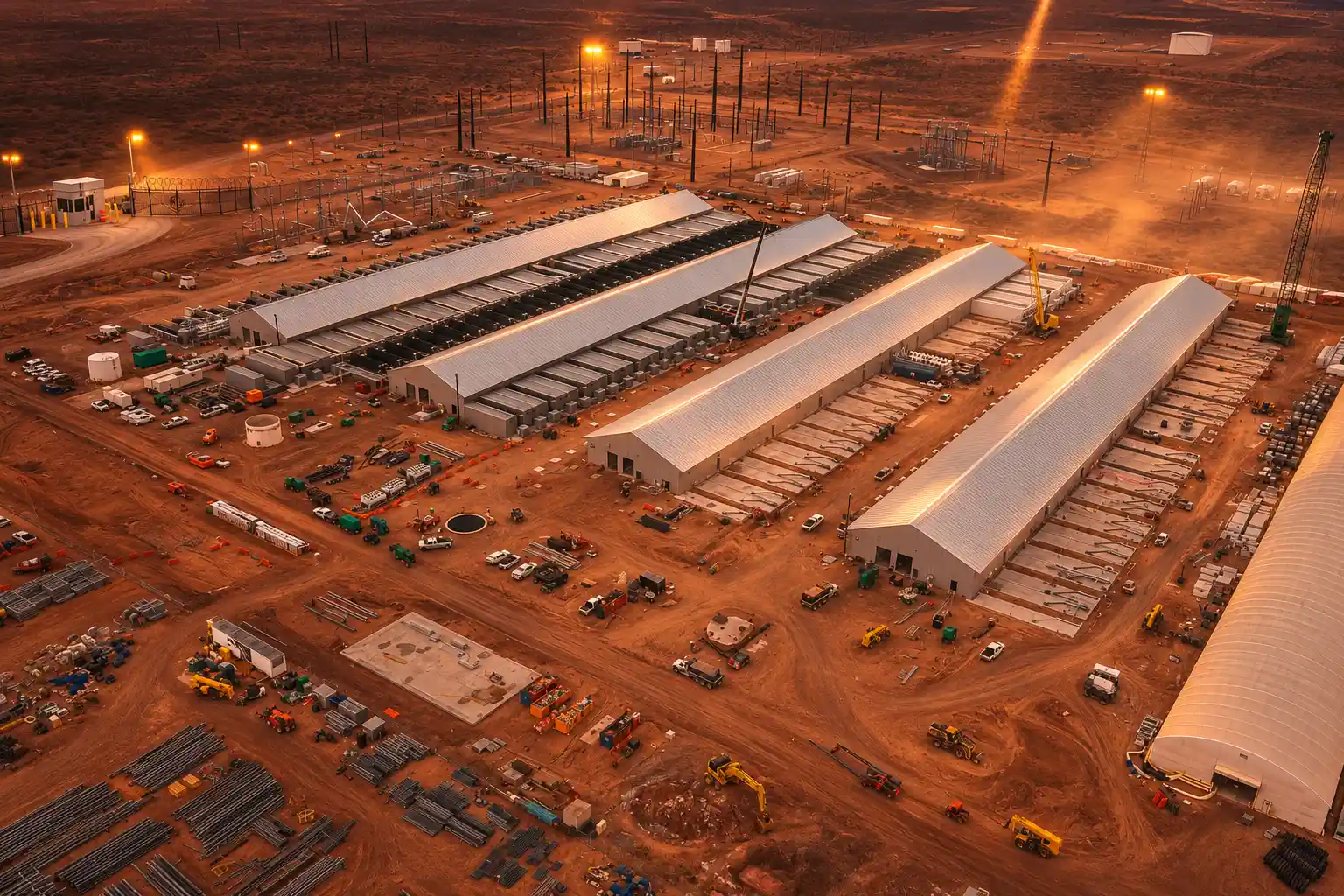
The Buildout Now Takes About 31 Percent of High-Grade Issuance
A staff box on leverage in the data center buildout is the part of the report that will last longer than the ranking. Advanced computing debt issuance rose to more than $680 billion by October 2026, about five times the $130 billion raised in all of 2023. Investment-grade technology firms issued most of it.
That borrowing’s share of nonfinancial investment-grade corporate debt issuance rose from less than 6% in 2023 to about 31% in 2026. Outstanding public debt tied to advanced computing is estimated at more than $1.1 trillion as of October. Private credit deals sit beside that total, so the full stock is harder to count. The mix has shifted from mostly corporate bonds toward public and private debt, structured credit, and project finance.
THE DEBT STACK IN THE FED BOX
| Item | Figure | Timing |
|---|---|---|
| Advanced computing debt issuance | More than $680 billion | Through October 2026 |
| Same issuance, full year | $130 billion | 2023 |
| Share of nonfinancial IG issuance | About 31% | 2026 |
| Share of nonfinancial IG issuance | Less than 6% | 2023 |
| Public debt still on the books | More than $1.1 trillion | October 2026 |
| Leases not yet started (undiscounted) | More than $1 trillion | Report |
| Take-or-pay contracts and residual-value guarantees | More than $2 trillion | Report |
| Large bank holding company exposure | Close to $1 trillion | Report |
Cash outflows for this cycle’s capital spending, the report said, suggest the build may soon outpace the 1990s telecom wave. Corporate bond and leveraged-loan spreads were still at the low end of their historical range. Equity prices stayed well above their long-run median. Credit is cheap, issuance is heavy, and the share of the high-grade market now runs through a handful of computing names.
Circular Leases Keep the Risk off the Giants’ Books
Hyperscalers once paid for campuses from cash and ordinary bonds. Developers now borrow against long leases. Chip makers back the resale value of the processors that fill the halls. Equity checks from the same large firms sometimes sit on top of that paper. The report calls the loop circular financing.
HOW THE STACK IS BUILT
- The lease: A cloud tenant signs a long contract that a developer takes to lenders as proof of future rent.
- The vehicle: A special purpose firm owns the hall and issues the bonds, keeping much of the debt off the tenant’s books.
- The chip backstop: A hardware maker may promise a floor on collateral value so the loan can be rated high-grade.
- The extra promises: Take-or-pay contracts and residual-value guarantees now exceed $2 trillion on the Fed’s tally, beside more than $1 trillion of leases that have not started.
One working example is Meta’s Hyperion campus with Blue Owl funds, financed in part with $27.3 billion of privately placed senior secured bonds. Mathias Drehmann and Egemen Eren, writing on off-balance-sheet AI credit structures, map the same web: the vehicle owns the site, insurers and private-credit funds hold the debt, and banks lend to both the vehicle and the funds. A Kansas City Fed bulletin found some of those vehicles that finance 90 percent with debt.
The complex interlinkages among firms engaged in the data center buildout, public credit markets, private lenders, and special purpose financing vehicles create vulnerabilities that necessitate close monitoring.
Federal Reserve, November 2026 Financial Stability Report
The same box names Amazon, Alphabet, Broadcom, Meta, Microsoft, Nvidia, and Oracle as the seven firms in the lease-and-guarantee tally. Via those ties, the report said, the largest technology firms may absorb losses in a downturn and spare the rest of the system. It also said their economic exposure may be much larger than the liabilities on their books.
Who Holds the Paper If Utilization Slips?
The largest U.S. bank holding companies have close to $1 trillion of exposure to big technology firms, data-center developers, related financing vehicles, private-credit funds, and utilities. That is a broad, multi-sector total, not a pure AI loan book, and the report says it is already in the annual supervisory stress test. Hedge-fund leverage, concentrated in the largest funds, reached its highest level since 2013. Leverage at the largest life insurers stayed historically high.
Bessemer Trust’s credit desk puts the six largest hyperscalers at 5.1 percent of the investment-grade market, up from 2.4% a year earlier. That is index weight, not the Fed’s issuance count, and it is why a miss on computing rents would now show up in ordinary bond funds, not only in tech stocks. Five-firm capital spending, in the BIS note, is expected to exceed $800 billion by the end of 2026, or about 2.5% of U.S. GDP.
WHERE EXPERTS DISAGREE
- Market contacts: 87% named AI the leading shock over the next 12 to 18 months, ahead of a risk-asset correction.
- The Board’s own overview: The banking system remained sound, with high capital ratios, even as valuation pressure stayed elevated.
- BIS staff: Spillovers from AI-financing news days in 2026 into Treasuries and investment-grade bonds were small and short-lived, though a faster issuance pace could change that.
Credit desks are already treating the plumbing as the live risk. The next break, if there is one, is more likely to start with a refinance that will not clear than with a model that will not chat. Some 56% of voters in the November midterm elections said data centers were of crucial or major importance in their choices, according to exit polling, so the same buildout is now a local political fact as well as a bond-market one.
In Spring the Top Shock Was Still Oil
The May report’s outreach ran in March and April with 20 contacts. Geopolitical risks and an oil shock led that round, after the Iran conflict. AI was already in the file at 50%, with notes on equity prices, debt-funded capital spending, and labor-market effects. Private credit drew more mentions than it had the prior fall. A successful cyberattack was still flagged as the blow with the worst consequences, even when it was not the most-named shock.
HOW THE RISK LIST ROTATED
- March and April 2026: Twenty contacts put geopolitics and an oil shock first; half of them already named AI.
- September and October 2026: Twenty-three contacts put AI first at 87%, with a risk-asset correction second.
- October 28, 2026: The report’s data cutoff lands a few days before the election.
- November 13, 2026: The Board releases the November Financial Stability Report.
The ranking rotated with the tape, which is what this survey usually does. What did not rotate is the staff finding that computing debt is now a first-order slice of the high-grade market. The International Monetary Fund’s October Global Financial Stability Report had already listed weaker AI profits, fiscal yields, and cyber threats as three shocks that could tighten conditions at once.
A Blackstone Borrower Took a Smaller Check
QTS, the data-center operator Blackstone bought in 2021, cut a planned private debt sale from about $800 million to about $300 million after buyers balked at the price and the firm declined to pay a much higher yield. About 60% of the target went away. The remaining package included a $100 million seven-year private placement priced at 2.45 percentage points over benchmarks and a $200 million five-year bank loan still to be set. The original $800 million had been meant to refinance existing five-year bank debt.
QTS is not a startup neocloud. It is a repeat borrower with a large owner, and it still had to take less cash rather than pay up. Lenders have been stress-testing construction deadlines, cancellation rights, and the terms under which a big tenant can walk. Spreads on hyperscaler debt have already widened more this year than spreads on high-quality industrial firms outside the AI trade.
The Fed did not call a crash. It put a financing boom on the watch list at the same moment a well-backed operator accepted a smaller check. That is the second move in this story, and it is the one the 87% figure was pointing at even when the poll itself could not carry the weight.
Frequently Asked Questions
What question did Fed market contacts answer?
The New York Fed asked: “Over the next 12-18 months, which shocks, if realized, do you think would have the greatest negative impact on the functioning of the U.S. financial system?” Contacts could name more than one shock, which is why the shares add to more than 100%.
Does the 87% figure speak for the Fed Board?
No. Box 5.1 says the write-up is a summary of respondent views and should not be interpreted as representing the views of the Federal Reserve Board or the Federal Reserve Bank of New York. The Board’s own sections still describe a sound banking system with high capital ratios.
Which seven companies sit in the lease and guarantee tally?
The data-center box tracks Amazon, Alphabet, Broadcom, Meta, Microsoft, Nvidia, and Oracle for not-yet-started leases, take-or-pay contracts, and residual-value guarantees. Residual-value guarantees are promises to support the worth of buildings or chips if a lease is not renewed.
Are the bank exposures already in Fed stress tests?
Yes. The report says exposures of the largest U.S. bank holding companies to large technology firms, data-center developers, related vehicles, private-credit funds, and utilities are evaluated in the annual supervisory stress test. That is a monitoring channel, not a new capital rule announced in this report.
How often does the Fed publish the Financial Stability Report?
Twice a year, in the spring and the fall. The current series on the Board’s site runs back to 2018, and each edition pairs a staff assessment of valuations, debt, leverage, and funding with this market-contact survey.
Disclaimer: This article is news reporting and analysis of the Federal Reserve’s November 2026 Financial Stability Report and related market facts, and it is for information only. It is not investment, legal, or financial advice, and it is not a recommendation to buy, sell, or hold any bond, stock, fund, or data-center credit. Readers who may act on financing or portfolio questions should consult a licensed financial adviser, credit analyst, or attorney who can review their own facts. Figures and statuses reflect the cited reports and deal accounts as of the dates named in the piece and can change with new issuance, ratings, or Fed publications.

Airbnb Starts House Rules Reviews as Cities Rewrite Contracts

United’s Computers Failed the Day After Kirby Blamed ATC

Tyson Foods Guides Beef Losses Narrower as Chicken Cools

Saudi Arabia’s Leisure Tourism Falters as Pilgrims Still Come

Himesh Patel Confirms the X-Files Writers’ Room Is Open

AI Server Boards Put Everyday Circuit Materials on Allocation

Glacier Collapse Buried Nepal’s Hydropower Workers in Tunnels

Congo’s Bundibugyo Outbreak Outruns the Licensed Ebola Shots

Pennsylvania Measles Deaths Follow a Long Slide in Coverage

CISA’s Known Exploits Still Come From 2007-Era Bugs
-
 NEWS2 months ago
AI Server Boards Put Everyday Circuit Materials on Allocation
-
 NEWS3 months ago
Glacier Collapse Buried Nepal’s Hydropower Workers in Tunnels
-
 NEWS3 months ago
Congo’s Bundibugyo Outbreak Outruns the Licensed Ebola Shots
-
 NEWS3 months ago
Pennsylvania Measles Deaths Follow a Long Slide in Coverage
-
 NEWS3 months ago
CISA’s Known Exploits Still Come From 2007-Era Bugs
-

 NEWS3 months ago
Texas Judge Freezes the SEC Eligibility Ban for 41 Athletes
-

 NEWS3 months ago
Germany Can Miss Its 2026 Climate Cap Without Penalty
-

 NEWS2 months ago
Pig Kidneys Got Two Men to Human Transplants After Failing