
NEWS
United’s Computers Failed the Day After Kirby Blamed ATC
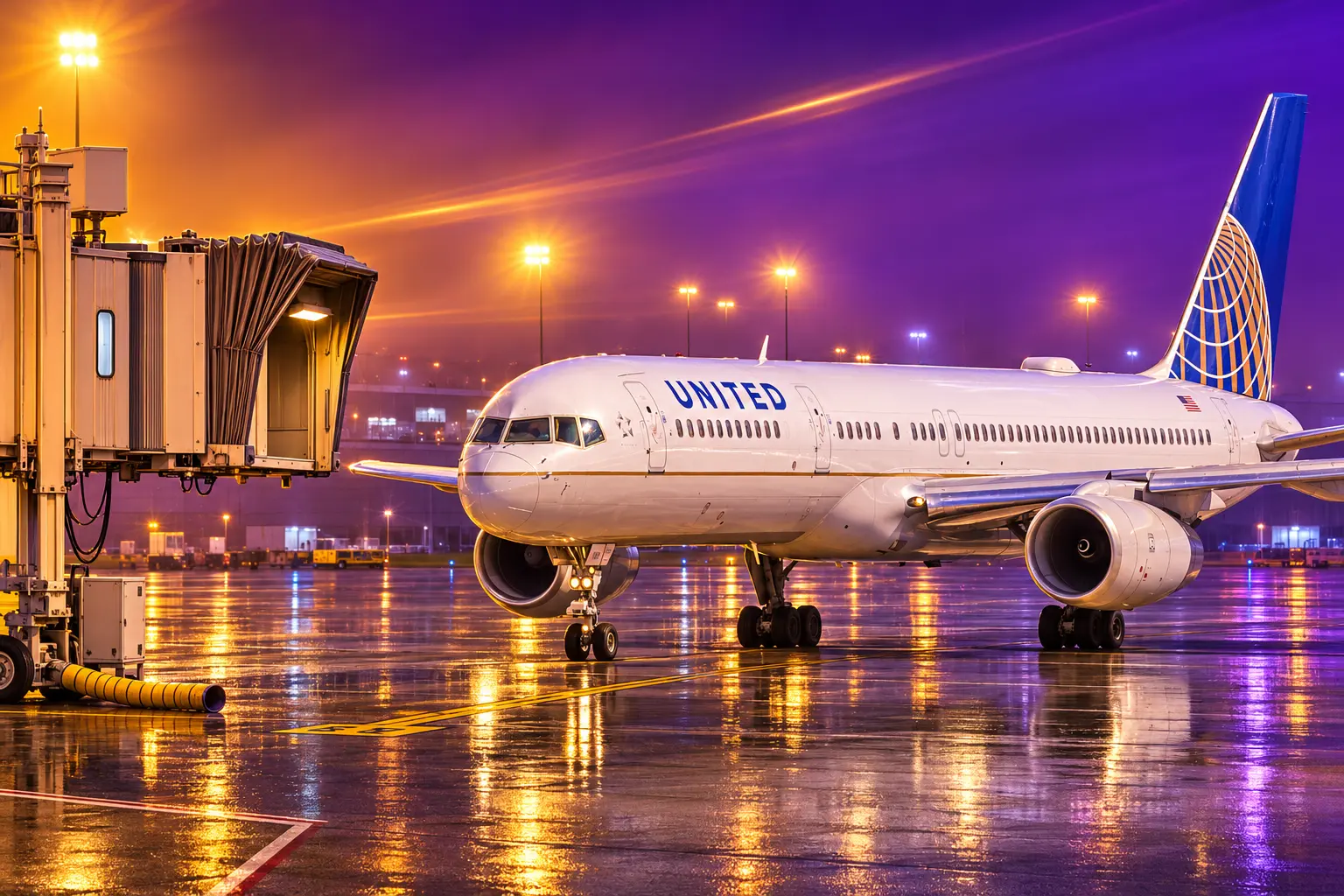
United Airlines resolved a Monday departure outage a day after CEO Scott Kirby demanded ATC fixes, and the freeze was the airline’s own weight sheet.

United Airlines resolved a technology outage on Monday that delayed departing flights after crews lost the weight figures they need to take off. The freeze hit mainline jets only, spared United Express, and left planes already in the air untouched, the airline said.
It landed a day after chief executive Scott Kirby told Washington that the country’s air traffic computers were the system that had to be fixed.
Final Weights, and a Halt at the Gate
United acknowledged a widespread system outage just before 5 p.m. ET on Monday, November 16. Spokesperson Leslie Scott said the outage lasted about 30 minutes and affected fewer than 150 flights. The company said there was no indication it was a cybersecurity-related issue.
The airline put that first public note on X while crews were still stuck for numbers.
We sincerely apologize for the inconvenience. We're aware of the widespread system outage, and our teams are working hard to get things back up and running as soon as possible. We appreciate your patience while we work through this. Please check back with us for updates, and keep… https://t.co/Y6hG6u2Kjj
— United Airlines (@united) November 16, 2026
In a later statement United said, “We have resolved a technology issue that delayed flight departures.” It repeated that flights in progress and United Express were not touched. The FAA, during the incident, said United was having a technology outage on its end and that “it’s not an FAA equipment issue.”
FlightAware’s Monday tally at 6:50 p.m. ET was larger because it counted the whole day, not only the outage window: 645 United delays, or 20% of the schedule, and 25 cancellations. How many of those traces sat on the tech failure, and how many were still left from Friday’s national halt, was not separated in that feed.
Kirby Spent Sunday Asking Washington to Fix ATC
On Sunday, November 15, Kirby thanked controllers and his own crews for digging out of the Federal Aviation Administration’s Friday ground stop. Then he turned the subject to money and hardware. He wrote that he had spoken directly with Transportation Secretary Sean Duffy, FAA Administrator Bryan Bedford, and Republican and Democratic aviation leaders in Congress. He issued a Sunday call to action on air traffic control in that company note.
This moment must be a call to action. It is critical for safety, our passengers, and our economy that we fix our nation’s Air Traffic Control system now.
Scott Kirby, chief executive, United Airlines, November 15 company note
He said the FAA needed 100% staffing and the funds to modernize its technology. Monday’s freeze did not involve those federal radios. It involved United’s own departure tools, on a recovery day, after Kirby had already used the weekend to argue that the broken computer was in Washington.
Why United’s Mainline Jets Could Not Push Back
United could not send outbound mainline flights their final aircraft weights, the Air Line Pilots Association told members, and an internal company alert said crews had also lost flight planning, weather briefing, and crew management tools. Pilots were told not to log out, because they might not get back in. Without those figures, a jet cannot legally leave the gate.
THE TOOLS PILOTS LOST
- Final weights: The pilots’ union said United could not provide outbound flights with the final aircraft weights required for departure.
- Crew apps: An internal alert said the outage cut access to multiple applications used by flight crews, including flight planning, weather briefing, and crew management.
- Login warning: The airline told pilots not to log out of several systems, warning they might be unable to sign back in.
- Paper path: Pilots who could not open a flight plan were told to have dispatchers email the documents, and at least one crew tried hand calculations at the gate.
Air traffic control audio captured the stop in plain language. A pilot on United Flight 1728, sitting in El Paso for Denver, told the controller, “Hey, we’re uh, still waiting on our final weights.” The crew had already called operations. “Apparently there’s a company-wide system outage on it so might be a while.” Asked whether they had any idea when they could leave, the pilot said, “No ma’am.”
Passenger Halina Eth heard her pilot say the crew would do “old school” calculations so the flight could take off. When the tools came back, the same pilot said there was a “very narrow window of opportunity to get this flight in the air.”
Sheldon Jacobson studies aviation safety at the University of Illinois Urbana-Champaign. Weight and balance, he has said, is critical to ensure that a plane can take off and fly safely, and without that information the risk at takeoff would be high. That is why a missing number on a screen is treated as a stop, not a delay to talk through.
A second freeze in four days is enough to make a cyber strike the first guess, even when the airline and the FAA have already said they see no sign of one. The harder question underneath that guess is ordinary: if the carrier would not label it a cyberattack in public, would it say so if that were the finding.
August 2025 Already Taught United This Lesson
United has not said which application failed on Monday, and it has not said whether Unimatic, its old flight-information system, was in the path. The symptom matched a failure the airline already knows. On August 6, 2025, Unimatic stopped feeding the tools that calculate weight and balance and track flight times. United paused mainline departures. United Express was not put under those ground stops, the same split that showed up again on Monday.
That August outage began just after 6 p.m. ET and was resolved after 10 p.m. ET. About 35% of the airline’s flights were delayed that Wednesday and another 6% were canceled, according to FlightAware figures carried at the time. United said it was not a cybersecurity breach. Unimatic holds information about each flight and feeds other systems, including the ones that produce the takeoff weight sheet. The software dates to the 1970s and still runs on a mainframe.
United’s finance chief, Mike Leskinen, told analysts the carrier had moved 70% to 90% of its systems to the cloud and still had to maintain a mainframe for 10% to 20%. United has said it plans to move off Unimatic. Monday’s outage does not prove that work stalled. It does show that when final weights disappear, mainline jets sit, Express keeps flying, and the public is told it was not a hack.
3 Percent Canceled, Then the Screens Went Dark
United had been one of the cleaner recoveries from Friday’s national halt. Bank of America analysts put Sunday cancellation shares at 22% for American and 28% for JetBlue, against 5% at Delta, 4% at Southwest, and 3% at United. Monday was supposed to be the first ordinary operating day after that hole in the schedule.
SUNDAY CANCELLATION SHARES AFTER THE GROUND STOP
| Airline | Sunday share canceled |
|---|---|
| JetBlue | 28% |
| American | 22% |
| Delta | 5% |
| Southwest | 4% |
| United | 3% |
Those Sunday shares came from a Bank of America note on the weekend recovery, not from Monday’s tech failure. By 6 p.m. ET Monday the country’s cancellation count had fallen to 347 U.S. flights, per FlightAware, after a weekend that had already piled up more than 18,500 cancellations as of 8:47 a.m. ET Monday on the same tracker.
Brokerage Bernstein estimated American, Delta, United, and Southwest face an about $345 million pretax earnings hit from Friday’s halt, with an 80% range of $270 million to $430 million. That bill is the FAA weekend, not United’s half hour. It is the hole United had just climbed out of when its own departure tools stopped.
Duffy Made Clear the Failure Was United’s
Duffy, speaking Monday on Hannity, separated the two events before anyone could fuse them. “This is not an FAA system-wide problem,” he said. “I don’t know what the root cause of United is.” The agency’s Friday failure and United’s Monday failure shared a week and a vocabulary, not a network.
WHAT WE KNOW
- Monday’s owner: The outage sat on United’s systems, and the FAA said it was not FAA equipment.
- Who could fly: Flights already airborne and United Express kept operating, per United.
- Cyber claim: United said there is no indication the event was cybersecurity-related.
- Friday’s separate halt: The FAA traced that failure to data flooding its FTI network, at a rate of 1,000 connection attempts every 4 to 5 seconds, from work tied to a radar site in Amarillo, Texas, and a radio site in El Dorado, Arkansas.
WHAT IS UNCONFIRMED
- The broken app: United has not named the application that failed on Monday.
- Unimatic’s role: The airline has not said whether the 1970s Unimatic system was in the chain this time.
- The delay split: FlightAware’s 645 Monday delays still mix outage time with leftover weekend recovery.
The FAA’s own account of Friday is the one with hard federal numbers. Instability began at about 3:30 p.m. ET on November 13 and spread through 17 of 22 Air Route Traffic Control Centers. Air traffic resumed at 8:15 p.m. ET, 4 hours 45 minutes after the first problem. About 3,500 aircraft in the air landed. The agency’s tally of 12,462 flights canceled on Friday included 9,082 by major airlines. L3Harris, the network provider, had been deploying a new router at El Dorado. As a precaution the FAA disabled the same function on more than 60 similar routers. It said it had no indication of a cyberattack.
Two Broken Systems and One Thanksgiving Rush
Duffy has been asking Congress for $50 billion to rebuild air traffic control, up from a $30 billion request before Friday. Kirby’s Sunday note put United on that same funding argument. Monday did not help the case that the only fragile computer in American flying is the federal one. It also did not repeat Friday’s damage. Scott’s count was fewer than 150 flights, and the airline said the hole lasted about 30 minutes.
The American Automobile Association said it did not expect Friday’s ground stop to disrupt Thanksgiving travel unless another incident occurred, and Monday produced one at United that the airline said was over in about 30 minutes. Duffy has said he expected the national system to be ready for that rush. Crews still had to put aircraft and people back on the right metal after a weekend that took more than 18,500 flights out of the book.
FOUR DAYS OF SEPARATE FAILURES
- November 13, 2026, about 3:30 p.m. ET: The FAA’s FTI network becomes unstable; a nationwide ground stop follows, and traffic resumes at 8:15 p.m. ET.
- November 15, 2026: Kirby publishes his note calling the FAA halt a call to action and asking for ATC staffing and modernization money.
- November 16, 2026, just before 5 p.m. ET: United acknowledges a widespread system outage on departing mainline flights.
- November 16, 2026: United says the technology issue is resolved, with no effect on airborne flights or United Express and no indication of a cyber issue.
United still has not named the tool that failed. Mainline jets at the gate needed a weight figure a computer is supposed to supply. United Express kept flying, and so did every jet that had already left the ground.
Disclaimer: This article is news reporting on an airline technology failure and related federal air traffic events, and it is for information only. It does not constitute investment, legal, or travel-booking advice and should not be used to buy or sell airline shares or to change tickets. Readers who need help with bookings should contact their airline or a travel agent, and readers who need help with airline stocks should consult a licensed financial adviser. Delay counts, cancellation tallies, and the Bernstein earnings estimate reflect the company statements, FAA figures, tracker feeds, and analyst notes named in the story as of the dates on those documents, and those figures can change as airlines keep recovering.

Airbnb Starts House Rules Reviews as Cities Rewrite Contracts

United’s Computers Failed the Day After Kirby Blamed ATC

Tyson Foods Guides Beef Losses Narrower as Chicken Cools

Saudi Arabia’s Leisure Tourism Falters as Pilgrims Still Come

Himesh Patel Confirms the X-Files Writers’ Room Is Open

AI Server Boards Put Everyday Circuit Materials on Allocation

Glacier Collapse Buried Nepal’s Hydropower Workers in Tunnels

Congo’s Bundibugyo Outbreak Outruns the Licensed Ebola Shots

Pennsylvania Measles Deaths Follow a Long Slide in Coverage

CISA’s Known Exploits Still Come From 2007-Era Bugs
-
 NEWS2 months ago
AI Server Boards Put Everyday Circuit Materials on Allocation
-
 NEWS3 months ago
Glacier Collapse Buried Nepal’s Hydropower Workers in Tunnels
-
 NEWS3 months ago
Congo’s Bundibugyo Outbreak Outruns the Licensed Ebola Shots
-
 NEWS3 months ago
Pennsylvania Measles Deaths Follow a Long Slide in Coverage
-
 NEWS3 months ago
CISA’s Known Exploits Still Come From 2007-Era Bugs
-

 NEWS3 months ago
Germany Can Miss Its 2026 Climate Cap Without Penalty
-

 NEWS3 months ago
Texas Judge Freezes the SEC Eligibility Ban for 41 Athletes
-

 GAMING2 months ago
Xbox Disc-to-Digital Turns Delisted Games Into Traveling Licenses