
BUSINESS
Ukraine Hits the Kstovo Refinery as Homes Go Dark
Kyiv never ordered a midterm pause on Russian refineries, Fire Point confirmed a Kstovo blaze.

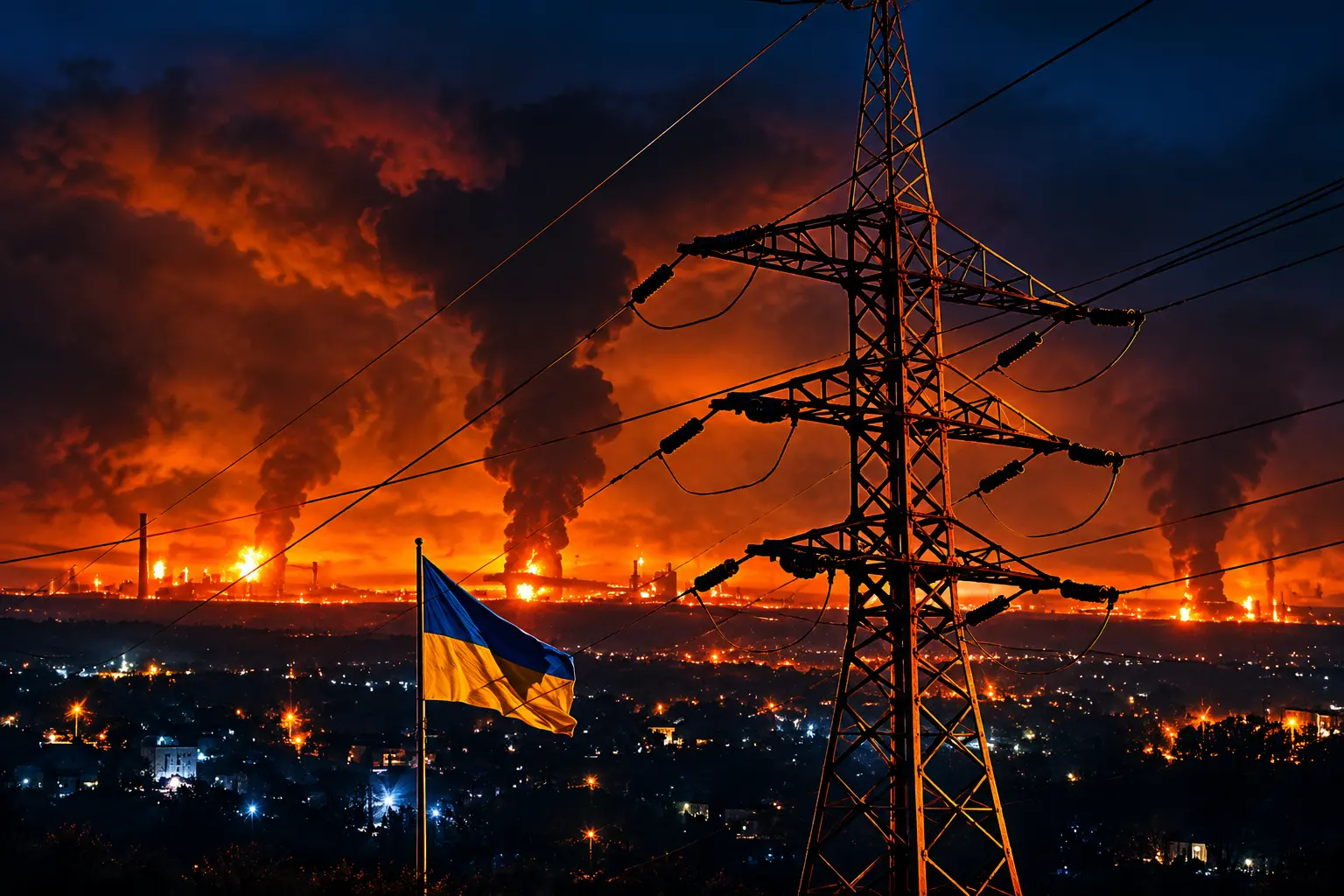
Russian strikes on energy sites in four Ukrainian regions left hundreds of thousands of families without power on Nov. 1, President Volodymyr Zelenskyy said. The same night, drones set fire to an industrial plant in Kstovo that Fire Point, the Ukrainian drone maker, named as Lukoil’s NORSI refinery.
An account circulating in late October said Kyiv had quietly paused raids on Russian refineries until after the Nov. 3 U.S. midterm elections. Ukrainian officials said nobody issued that order, and the fires in Samara and Kstovo are the proof.
Four Regions Lost Power Overnight
Zelenskyy wrote that energy infrastructure in Dnipro, Vinnytsia, Zhytomyr, and Khmelnytskyi came under attack overnight, including substations, transformers, and power lines that feed homes. Repair crews were already on the ground, he said, and hundreds of thousands of families remain without power.
Ukraine’s Energy Ministry, in its morning report, listed outages in eight regions: Zhytomyr, Donetsk, Zaporizhzhia, Kyiv, Dnipropetrovsk, Sumy, Cherkasy, and Kharkiv. It counted nearly 100,000 consumers without power in Dnipropetrovsk and more than 650 settlements dark in Zhytomyr, and it described conditions in Kyiv and Dnipropetrovsk as especially hard because some sites were hit again while repairs were almost finished.
The Ukrainian military said Russia launched 433 drones that night from Orel, Shatalovo, and occupied Donetsk, and that air defenses shot down 371 of them. Zelenskyy’s wider tally covered the week leading up to that Sunday post.
ZELENSKYY’S WEEK OF INCOMING FIRE
- Attack drones: Russia launched 1,940 of them at Ukraine in the week before his Nov. 1 post.
- Guided bombs: More than 1,580 guided aerial bombs were recorded in the same stretch.
- Missiles: Forty-four missiles of various types, including 36 ballistic missiles.
- His warning: He said Moscow is trying to exploit a shortage of ballistic interceptors, and that Patriot missiles cannot take years to arrive.
He thanked partners for new packages decided in October, then added that Russia is destroying infrastructure and killing people now, and is betting on ballistic missiles this winter. Iuliia Mendel, a former press secretary to Zelenskyy, wrote that Russia is freezing Ukraine “one substation at a time,” with power in parts of Kyiv down to roughly an hour a day.
Nobody Gave the Order to Stop Hitting Refineries
People familiar with Ukrainian long-range units said in late October that those units had been told, in mid-October, to hold refinery raids once missions already in motion were done. The unofficial pause, in that account, was meant to last through the Nov. 3 vote and maybe deeper into November, after weeks of pressure from President Donald Trump, who has blamed Ukrainian strikes for higher fuel prices and, in October, lifted U.S. sanctions on Russian diesel.
Ukrainian officials rejected that story. They said U.S. envoy Jared Kushner had asked for a pause, and that Kyiv had not agreed. Zelenskyy had already told journalists in Kyiv on Oct. 27 that the units had been “trying to be a little more careful during these days” and that “they do not have an order.”
Jared suggested that we not hit refineries for 30 days. Nobody had given such an order.
Senior Ukrainian official, speaking on Oct. 31
Another senior official said Ukraine would keep striking Russian oil sites but would not always claim them in public, to avoid looking as if it were picking a fight with the Trump administration. People close to that administration said much of the noise about refinery raids was aimed at U.S. voters, and that intelligence on Russian air defenses was still reaching the units that fly the long-range drones.
Russian Deputy Prime Minister Alexander Novak offered a different chronology. After the Oct. 30 raids he said Ukraine had attacked three refineries and one gas-chemical complex, with minor damage at one plant, then added, “We had a brief pause, but today, attacks on refineries have resumed.”
Kstovo, Novokuibyshevsk and a Halloween Greeting
Fire Point did the claiming Kyiv’s government would not. On Oct. 30 the company said Ukrainian forces used its FP-1 drones against the Novokuibyshevsk oil refinery in Russia’s Samara region, and that FP-1 drones struck the diesel hydrotreating unit. Rosneft, which has owned the plant since 2007, lists a primary distillation capacity of 8.8 million tons a year at a site that opened in 1951 and makes jet fuel among other products.
Samara Governor Vyacheslav Fedorishchev blamed Kyiv for a dawn raid he called a record drone wave, said there were no casualties, and asked residents not to say what had been hit. Independent Russian channel Astra identified the fire as the Novokuibyshevsk plant. Zelenskyy, without naming the refinery, wrote on Oct. 30 that “every Russian strike on our cities and communities always gets our fully justified response,” after a jet-powered drone killed 15 people at Dnipro’s train station and a cruise missile killed two 15-year-old girls in Chernihiv.
Overnight into Nov. 1, Nizhny Novgorod Governor Gleb Nikitin reported a “massive” drone attack, said more than a hundred drones had been destroyed, and said an industrial facility in the Kstovo district had taken “significant damage,” with no casualties in preliminary reports. He did not name the plant. He warned that repairs could mean temporary power cuts and less hot water and heat in some apartment blocks.
Fire Point named it. The company said Ukrainian forces had hit Lukoil-Nizhegorodnefteorgsintez, also called NORSI, and posted a Halloween line on Sunday morning.
Kstovo refinery, trick or treat! 👻 pic.twitter.com/bFyBpwQjqX
— Fire Point (@FirePointUA) November 1, 2026
Monitoring channels placed the fire near the AVT-5 and AVT-6 crude units, a visbreaker, or unit 35/11-600, and some also reported a strike on the nearby Novogorkovskaya combined heat and power plant. The exact damage is still being assessed. NORSI is Russia’s fourth-largest refinery by processing volume, with a design capacity of 17 million tons of oil a year, or about 340,000 barrels a day, and it sits on the same Kstovo site as Lukoil’s Nizhny Novgorod refinery in Kstovo. The plant has been hit through 2026, including on May 18 and 20, July 2, and Aug. 26.
THE PLANTS HIT SINCE OCT. 30
| Plant | Owner | Design capacity | Night of the fire |
|---|---|---|---|
| Novokuibyshevsk, Samara region | Rosneft | 8.8 million tons a year | Oct. 30 |
| Kstovo NORSI, Nizhny Novgorod region | Lukoil | 17 million tons a year | Nov. 1 |
Monitoring channels also pointed to a fire on Oct. 31 at Bashneft-Novoil in Ufa. Ukraine’s General Staff, on a parallel track, said drones and Neptune missiles had hit the Kombinat Kamensky chemical works in Rostov region, damaging four workshops and a finished-goods warehouse at a plant that makes solid rocket fuel. Zelenskyy said a Pantsir-S2 and an S-400 command vehicle were hit in the same set of raids, putting the air-defense losses at about $70 million.
What Kushner Asked Zelenskyy to Stop
The argument in Washington is not about whether Ukrainian drones can reach the Volga. It is about who pays at the pump before Americans vote. Trump has told Zelenskyy to stop hitting Russian refineries, and he has treated those fires as a driver of diesel prices heading into the Nov. 3 midterms, when Republicans are defending both chambers of Congress.
Kushner pressed the point in a conversation with Zelenskyy on Oct. 20, during talks tied to Oslo. He joined remotely because he was ill. Two U.S. officials later described the exchange as very tough. Kushner argued that he and fellow envoy Steve Witkoff were spending time, effort, and aviation fuel on talks with Moscow, and that a 30-day pause on refinery strikes would be a way for Ukraine to show appreciation.
Kyiv had already offered a different bargain: it would stop hitting Russian refineries if Moscow stopped hitting Ukrainian power plants and heating stations. That trade never closed. European diplomats, according to people in those talks, also urged Zelenskyy to weigh how raw U.S. fuel prices would look on Nov. 3. Defense Minister Yevhenii Khmara told Zelenskyy it would be wise to hold off because the diplomacy was fragile. Zelenskyy, on the Ukrainian account, agreed only that the military could start again if it judged it necessary, and he never converted that caution into an order.
A pause asked of one side, as a favor to mediators and to U.S. gasoline politics, is not an energy ceasefire. Russia did not offer one, and Fire Point’s public jokes make it harder for anyone in Washington to pretend the campaign is frozen until the ballots are counted.
Hours After Trump’s Energy Ceasefire, Kharkiv Was Hit
The midterm request had a rehearsal. On Oct. 11, Trump posted that an energy ceasefire was in force immediately and that both parties had agreed. “Do not break it!” he wrote. Neither Kyiv nor Moscow had signed onto the text he announced. Ukraine held refinery strikes for about 72 hours. Russia did not hold its fire.
FROM THE ENERGY CEASEFIRE TO KSTOVO
- Oct. 11: Trump announces an energy ceasefire “effective immediately.” Ukraine pauses refinery raids for about 72 hours. Hours later, a Russian cruise missile hits Kharkiv’s CHP-5 thermal power plant.
- Oct. 20: Kushner, joining remotely, asks Zelenskyy for a 30-day halt on refinery strikes as a gesture of thanks for U.S. mediation.
- Oct. 27: Zelenskyy tells journalists the long-range units have been a little more careful and that they do not have an order to stop.
- Oct. 29: An account of an unofficial pause until after the Nov. 3 midterms begins circulating, citing people familiar with Ukrainian operations.
- Oct. 30: Fire Point says FP-1 drones hit Novokuibyshevsk, including a diesel hydrotreating unit. Novak says refinery attacks have resumed after a brief pause.
- Nov. 1: Nikitin reports significant damage at an unnamed Kstovo plant. Fire Point names NORSI. Zelenskyy reports hundreds of thousands of families without power after strikes in four regions.
Zelenskyy had said in mid-October that the block on attacking refineries was finished once it was clear Moscow would not match it. Trump later called the renewed fires a disgrace. The pattern from that week is the pattern from this one: Ukraine can throttle a campaign that Washington finds politically expensive, and Russia keeps aiming at the grid that keeps Ukrainian apartments lit.
Repair Crews Keep Returning to the Same Substations
The Ukrainian outages are not a one-night blackout. They are a running fight over the high-voltage nodes that move power from nuclear plants still under Kyiv’s control toward the cities. Zelenskyy’s Nov. 1 list named substations, transformers, and power lines. The ministry said crews were being sent back to sites they had almost finished repairing.
The night before that Sunday, on Oct. 31, Zelenskyy had already posted a separate, smaller map of the dark. About 200,000 families in Dnipro and the surrounding region were without electricity after strikes on four substations, he said, and more than 80,000 families in the Kyiv region were still without power after Shahed drones hit a combined heat and power plant in the capital. A drone also hit a combined heat and power plant in Shostka, and railway sites in Dnipro and Kharkiv were struck, along with a gas distribution site in Dnipropetrovsk.
WHERE THE LIGHTS WENT OUT
- Nov. 1, Zelenskyy: Energy sites hit in Dnipro, Vinnytsia, Zhytomyr, and Khmelnytskyi, with hundreds of thousands of families still without power.
- Nov. 1, Energy Ministry: Outages logged in eight regions, including nearly 100,000 consumers in Dnipropetrovsk and more than 650 settlements in Zhytomyr.
- Oct. 31, Zelenskyy: About 200,000 families without power in Dnipro and the region, and more than 80,000 in the Kyiv region, after a different night of strikes.
- Dnipropetrovsk crews: Governor Oleksandr Hanzha said more than 70 emergency repair teams were sent out after the fresh cuts, even as water in the city of Dnipro had been restored from earlier damage.
Mendel’s hour-a-day picture in parts of Kyiv sits on top of that. So does Zelenskyy’s daily ask for Patriot missiles, aimed at the United States, Europe, and anyone else who can send interceptors before winter deepens. The shortage he describes is not abstract. He says Russia is using it.
Queues at the Pumps After the Kstovo Fire
Nikitin would not name the Kstovo plant. Regional officials still moved to keep filling stations supplied, and they told drivers to take fuel as needed without creating a rush. Local posts showed lines at pumps anyway, which is what a fire at a gasoline-heavy plant looks like from the road, even when a governor insists supplies are stable.
That is the other half of the same night. Ukrainian families sat through another round of substation strikes while a Lukoil tower burned on the Volga, and a U.S. election two days later is being treated in Washington as a reason Ukraine should have waited. Kyiv says it never accepted that bargain. Fire Point, with a Halloween punch line and a second named refinery in 48 hours, made the wait impossible to sell.

Airbnb Starts House Rules Reviews as Cities Rewrite Contracts

United’s Computers Failed the Day After Kirby Blamed ATC

Tyson Foods Guides Beef Losses Narrower as Chicken Cools

Saudi Arabia’s Leisure Tourism Falters as Pilgrims Still Come

Himesh Patel Confirms the X-Files Writers’ Room Is Open

AI Server Boards Put Everyday Circuit Materials on Allocation

Glacier Collapse Buried Nepal’s Hydropower Workers in Tunnels

Congo’s Bundibugyo Outbreak Outruns the Licensed Ebola Shots

Pennsylvania Measles Deaths Follow a Long Slide in Coverage

CISA’s Known Exploits Still Come From 2007-Era Bugs
-
 NEWS2 months ago
AI Server Boards Put Everyday Circuit Materials on Allocation
-
 NEWS3 months ago
Glacier Collapse Buried Nepal’s Hydropower Workers in Tunnels
-
 NEWS3 months ago
Congo’s Bundibugyo Outbreak Outruns the Licensed Ebola Shots
-
 NEWS3 months ago
Pennsylvania Measles Deaths Follow a Long Slide in Coverage
-
 NEWS3 months ago
CISA’s Known Exploits Still Come From 2007-Era Bugs
-

 NEWS3 months ago
Texas Judge Freezes the SEC Eligibility Ban for 41 Athletes
-

 NEWS3 months ago
Germany Can Miss Its 2026 Climate Cap Without Penalty
-

 NEWS3 months ago
FDA Approves XFG COVID-19 Vaccines Without a CDC Vote