
NEWS
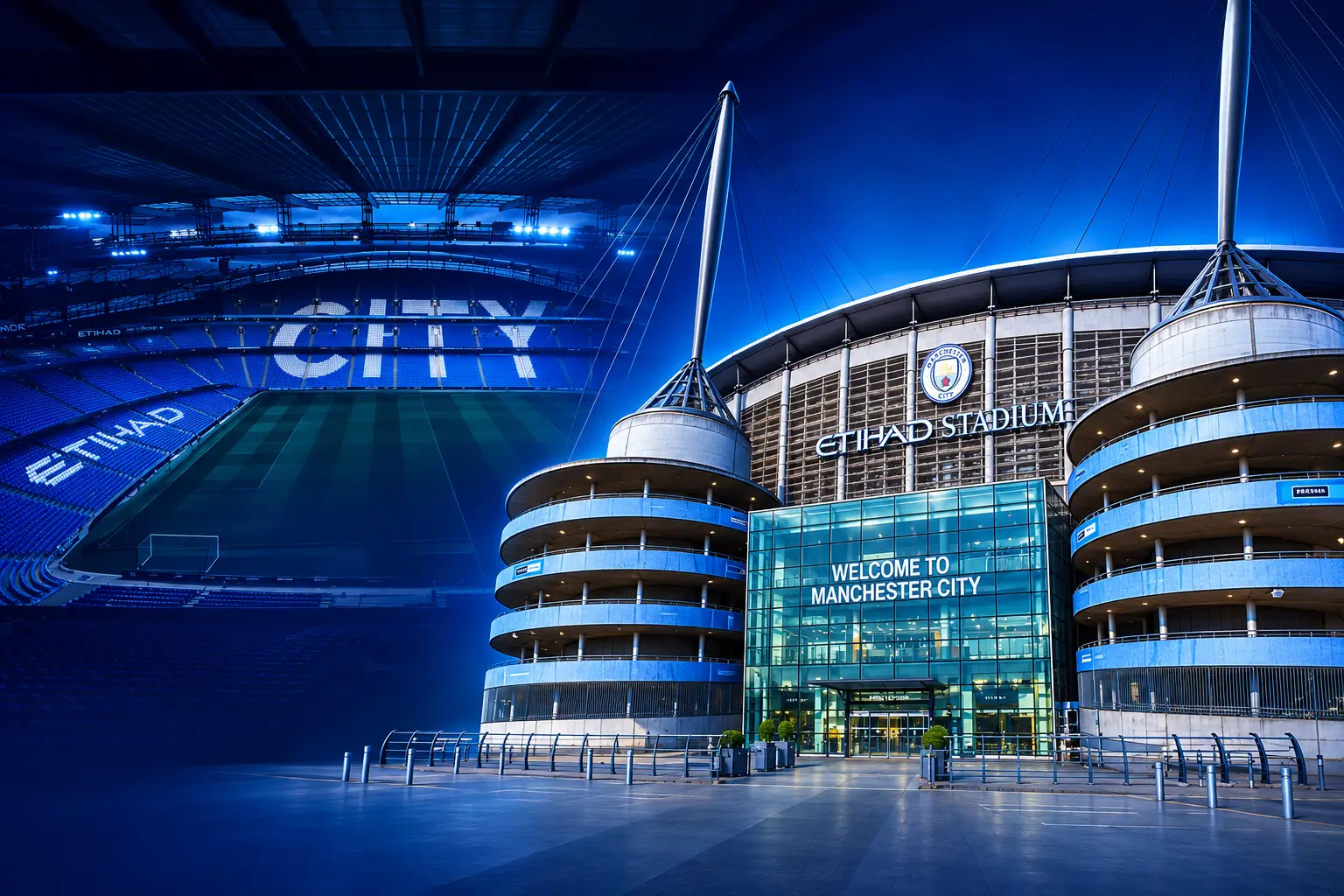
Apollo Scraps a $2 Billion Loan to City Football Group
Apollo walked away from a $2 billion City Football Group loan after the Premier League guilty verdict, even as it still finances other sports teams.

Apollo Global Management has dropped a planned $2 billion loan to City Football Group after Manchester City’s guilty verdict on Premier League financial charges.
People familiar with the talks said the New York firm was in the final stages of a facility that would have added cash and refinanced older credit. The talks ended after an independent commission, in a 29 September 2026 ruling, found the club used “sham” commercial contracts. Neither Apollo nor City Football Group has commented. The appeal is due in December. Any sanction hearing is a 2027 problem. The loan market has already moved.
Apollo Drops a $2 Billion Loan to City Football Group
The planned advance, about £1.52 billion at the $1 = 0.7614 pounds rate used when the ruling was restated, was meant for City Football Group, the holding company that has owned Manchester City since 2008. It was not a cheque to the first team. People close to the talks said the money would have given the group extra cash and replaced existing credit lines.
Apollo manages about $1.05 trillion of assets as of 30 June 2026. Walking away from a $2 billion term sheet is not a small sports punt gone cold. It is a credit decision on a borrower whose flagship club has been found guilty of all financial charges covering nine seasons, with an appeal still to run.
That gap between owner wealth and lender comfort is the part the points-deduction debate has not priced. Sheikh Mansour bin Zayed Al Nahyan, the UAE vice president who controls CFG through Newton Investment and Development, can still write equity cheques. A US credit shop can still say no.
WHAT WE KNOW
- The facility: A planned $2 billion loan to City Football Group, described as extra cash plus a refinance of existing credit, reached late-stage talks and then stopped.
- The ruling: On 29 September 2026 an independent commission found Manchester City guilty on 114 of 115 charges, including every financial count from 2009/10 to 2017/18.
- The owner cheque: Newton took up about £100 million of new CFG shares allotted on 14 October 2026, lifting Mansour’s holding to around 81%.
- The calendar: City lodged its appeal on 1 October 2026. The hearing is expected in December. A sanction hearing is likely in 2027 if the verdict stands.
WHAT IS UNCONFIRMED
- Apollo on the record: The firm has not said publicly that the charges caused the walk, and City Football Group has not confirmed the talks.
- The stop date: People familiar tie the collapse to the September ruling, but no term sheet or internal memo has been published.
- A replacement lender: There is no public sign that another shop is stepping into the $2 billion hole.
- The sporting penalty: Fines, points, a title strip and expulsion remain on the menu. None has been imposed.
A lender’s lawyers do not wait for a sanction hearing to ask what a “final award” does to covenants, security and reputation risk. If the club were treating the appeal as a formality, that legal work would still have to underwrite a nine-season finding the commission has already written down. The silence from both firms leaves the walk as an attributed fact, not a joint statement.
The Same Firm Still Finances Other Sports Teams
Apollo did not leave sport. It left this borrower. Apollo Sports Capital, launched in 2025, closed a majority stake in Atletico Madrid on 12 March 2026 in a deal that valued the Spanish club at more than €2 billion. In December 2024 it lent Nottingham Forest £80 million. On 11 August 2026 it announced a $2.6 billion Yankees financing agreement, a mix of credit and equity for Yankee Global Enterprises, with Apollo Sports Capital chief executive Al Tylis taking a board seat.
Apollo partner Robert Givone called the Yankees package “precisely the kind of bespoke capital solution Apollo Sports Capital was built to deliver.” That sentence was published in August, weeks before the Manchester City core decision. The sports book was open. The CFG file was not, once the commission spoke.
APOLLO’S SPORTS CHEQUES BESIDE THE CFG WALK
| Counterparty | Date | Instrument | Size |
|---|---|---|---|
| Yankee Global Enterprises | 11 August 2026 | Credit and equity | $2.6 billion |
| Atletico Madrid | 12 March 2026 | Majority stake | Valued at more than €2 billion |
| Nottingham Forest | December 2024 | Club loan | £80 million |
| City Football Group | 2026 talks, then stopped | Group loan, not closed | $2 billion |
Forest is a Premier League club. Atletico is a European giant. The Yankees sit at the top of American baseball. Apollo will finance sport at scale. It would not close this CFG loan after a published finding of sham contracts and misstated accounts. That is a regulatory-risk price, not a sudden dislike of football cash flows.
Why City Football Group Needed the Money
City Football Group wanted the Apollo money to add cash and to refinance a $650 million term loan from July 2021 that falls due in July 2028, plus a £100 million revolving line arranged with the same banks. Owner equity has been covering losses and projects since 2024, and the $2 billion facility would have taken part of that job off Mansour’s desk.
Barclays underwrote the 2021 seven-year loan, with HSBC and KKR Capital Markets arranging and distributing it. The original use included infrastructure, among it a stadium path for New York City FC. A separate revolving facility of £100 million sat alongside, with no stated plan then to draw it. Other Premier League owners have used revolving lines to reshape holding-company debt, including Manchester United’s £90m revolving credit on a larger three-part stack. CFG’s version of that job just lost its Wall Street bid.
Football-finance analyst Paul Quinn, who has reviewed CFG’s Companies House allotments and group figures, puts pre-tax losses at £292.3 million for the year to 30 June 2025 on revenue of £888.0 million. Manchester City itself accounted for £694.1 million of that revenue, about 78%, and posted a £9.9 million pre-tax loss. The rest of the group plus central costs carried the bulk of the red ink.
Outside investors last put primary equity in at scale in 2019, when Silver Lake invested $500 million at a $4.8 billion valuation. Quinn’s tally of owner-side share issues since June 2024 is about £650 million, including the October 2026 £100 million. The $2 billion loan would have been cheaper politically than another string of Newton allotments, and it would have pushed the 2028 wall out of the way. That option is now gone.
A Guilty Verdict With a Credit-Market Price
The Premier League published a redacted core decision on 29 September 2026 after a 42-day hearing that ended in December 2024. The investigation had begun in December 2018. A complaint on 115 charges followed in February 2023. Transcripts ran to about 7,000 pages. The commission called its own delay regrettable and still labelled the decision a “final award,” which is why the league could publish it.
WHAT THE COMMISSION PUT ON THE RECORD
- Sham contracts: Between 2009/10 and 2017/18 the club arranged “sham” contracts with commercial partners, and relied on sham agreements with others, to lift revenue and cut costs.
- Disguised funding: Sponsors paid only part of the posted fees. Abu Dhabi United Group Investment and Development, which owned the club, funded the rest, and further ADUG-funded arrangements reduced recorded operating expenses, including a circular image-rights deal with Fordham.
- The scale: Those schemes were found to have inflated revenues and reduced costs by more than £900 million ($1.18 billion) so the club would appear to meet spending rules.
- The books: The club filed misstated accounts and hid the true position from auditors and football regulators, and would have breached Premier League and UEFA spending limits by a very large amount if the deals had been reported as they were.
- Co-operation: Three of four alleged breaches of duties of co-operation and utmost good faith were upheld. The commission said the club had “made concerted efforts to stop and frustrate the PL investigation.”
Richard Masters, the Premier League’s chief executive, tied the finding to the competition’s own rules, which clubs approve, and to a process he said had been long and hard.
The core decision establishes the facts of what happened at Manchester City during this period. It details how the club systematically broke Premier League Rules for nearly a decade. This disciplinary case, and this decision, are the most significant in Premier League history.
Richard Masters, Chief Executive, Premier League statement, 29 September 2026
A credit officer reading that packet does not need a points tariff to mark the file. Sham contracts, concealed funding and a finding that the club meant to get around the rules are the sort of facts that sit in a representations schedule. City says the opinion is unsafe. Until an appeal board agrees, the published award is what a lender has to underwrite.
£100m From Mansour at a Frozen £5.9bn Price
Companies House filings show City Football Group allotted 11,327,163 new shares on 14 October 2026, about two weeks after the core decision. Newton took them up for about £100 million, implying roughly £8.83 a share and a group price of £5.9 billion. A CFG spokesperson called it “equity from our largest shareholder” and said the proceeds would be used “for normal corporate purposes against our strategic plans, funding planned investments into the City Football Group.”
That cheque is real support. It is also a fraction of the loan that did not close, and it arrived in a pricing band Quinn notes has barely moved since 2024, with owner-subscribed issues stuck around £8.83 to £8.84. The only arm’s-length marks on the group remain $3.0 billion in 2015 and $4.8 billion in 2019.
On 5 June 2026, chairman Khaldoon Al Mubarak told the Emirates News Agency the group was worth more than $8 billion and would fetch no less than $10 billion if it were offered for sale. He also said Mansour had no plan to sell. An implied £5.9 billion on an owner share issue and a $10 billion sale talk can both be on the page because they measure different things: one is the price at which Newton keeps writing cheques, the other is the chairman’s view of an open-market sale that is not in train.
£100 million does not replace $2 billion of term debt. It does show that when third-party credit steps back, the controlling shareholder still funds the group at the same internal price.
Who Else Is on the Hook for CFG’s Credit
Silver Lake holds a near-17% minority in CFG. Sister clubs from New York to Melbourne sit inside the same holding company that needed the loan. Yankee Global Enterprises, now an Apollo finance partner, also holds a stake in New York City FC, a CFG club, which puts the lender next to a CFG asset even as it walked away from the parent.
CFG’s own company page lists 12 football clubs across five continents. Newton, fully owned by Mansour, is the majority holder. Silver Lake, the US technology firm that first bought in in 2019, remains the main outside name, with co-chief executive Egon Durban on the board. After the October issue, coverage of the filings puts Newton at around 81%, with Silver Lake most of the rest.
THE NAMES ON THE SAME HOLDING-COMPANY RISK
- Silver Lake: A near-17% minority whose last primary cheque was the 2019 $500 million investment, now sitting behind a published guilty verdict and a failed refinance.
- Sister clubs: New York City FC, Melbourne City, Girona, Palermo, Bahia, Troyes, Lommel and Montevideo City Torque are inside the group that wanted the $2 billion, so a parent credit freeze is not a Manchester-only event.
- Yankee Global Enterprises: The Yankees holding company, freshly financed by Apollo, holds a stake in New York City FC, so Apollo is adjacent to a CFG club through baseball even as it refused to lend to CFG itself.
None of those parties has a public comment on the Apollo talks. They do not need one for the structure to matter. A $2 billion hole at parent level is a group problem, and Apollo’s Yankees partnership makes the walk harder to read as a blanket exit from football.
December’s Hearing Cannot Rebuild the Term Sheet
City lodged its appeal on 1 October 2026, a day before the Friday deadline. League rules send that challenge to a new three-person appeal board, with a 12-week clock that, from 2 October, runs to 25 December 2026 unless it is extended. People with knowledge of the process have pointed to a multi-day hearing in December, with a written outcome later and a separate sanction hearing in 2027 if the findings stand. There is no concurrent punishment trial while the appeal is live.
Chief executive Ferran Soriano told staff the commission had backed what he called the Premier League’s “conspiracy theory,” and that the club had given bank statements, transfers and witnesses to show owner money did not enter through Abu Dhabi sponsors.
Our lawyers will now file an appeal that sets out the opinion contains clear material errors of law, principle and fact and it is unsafe. Remember we have been here before. In 2020 we were also wrongly ruled against for many of the same issues. We appealed to an independent body in CAS and we won.
Ferran Soriano, Chief Executive, message to Manchester City staff, 29 September 2026
An appeal board can still tear up findings. It cannot put Apollo’s $2 billion back on the table in the meantime. Sanctions, if they come, will be argued in 2027. The refinance that was supposed to handle 2028 is already dead.
THE DATES THAT GOT THE LOAN FILE HERE
- December 2018: The Premier League opens its investigation into Manchester City.
- February 2023: The league issues a complaint covering 115 charges.
- December 2024: A 42-day independent hearing ends.
- 12 March 2026: Apollo Sports Capital completes its majority stake in Atletico Madrid.
- 11 August 2026: Yankee Global Enterprises announces a $2.6 billion Apollo financing mix.
- 29 September 2026: The Premier League publishes the core decision on 114 of 115 charges.
- 1 October 2026: Manchester City lodges its appeal.
- 14 October 2026: Newton takes up about £100 million of new CFG shares.
- 19 November 2026: People familiar with the talks say Apollo has scrapped the $2 billion CFG loan.
- December 2026: The appeal hearing is expected, with any sanction process left for 2027 if the verdict stands.
Mansour can keep buying new CFG shares at £8.83. Silver Lake can keep its seat. The appeal board can still be persuaded. What it cannot do, sitting in December, is reopen a $2 billion term sheet a US credit house already walked away from once the sham-contracts finding was on paper.
Disclaimer: This article is news reporting and analysis of a reported financing decision and a published disciplinary ruling. It is for information only and is not investment, legal or betting advice, and it does not recommend any loan, share purchase, club transaction or wager. Readers who may act on ownership, lending or disciplinary questions should speak first to a qualified solicitor and, where money is involved, a licensed financial adviser. Figures, shareholdings and case status reflect the public statements and filings cited here and may change as the appeal and any later sanction hearing proceed.

TAP Opens Porto-Dulles Flights After Lufthansa Signs On

Arla Seeks a New Home for Everswinkel Ice Cream

GTA 6’s $3.79 Billion Day One Is Mostly Pre-Sold

McMillen Missed the Suno Tracks in Isaac’s GTA Run

GTA 6 Occupied 24% of Comcast’s Network at Peak

AI Server Boards Put Everyday Circuit Materials on Allocation

Glacier Collapse Buried Nepal’s Hydropower Workers in Tunnels

Congo’s Bundibugyo Outbreak Outruns the Licensed Ebola Shots

Pennsylvania Measles Deaths Follow a Long Slide in Coverage

CISA’s Known Exploits Still Come From 2007-Era Bugs
-
 NEWS3 months ago
AI Server Boards Put Everyday Circuit Materials on Allocation
-
 NEWS3 months ago
Congo’s Bundibugyo Outbreak Outruns the Licensed Ebola Shots
-
 NEWS3 months ago
Glacier Collapse Buried Nepal’s Hydropower Workers in Tunnels
-
 NEWS3 months ago
Pennsylvania Measles Deaths Follow a Long Slide in Coverage
-
 NEWS3 months ago
CISA’s Known Exploits Still Come From 2007-Era Bugs
-
 NEWS3 months ago
Texas Judge Freezes the SEC Eligibility Ban for 41 Athletes
-

 NEWS3 months ago
Germany Can Miss Its 2026 Climate Cap Without Penalty
-

 NEWS3 months ago
FDA Approves XFG COVID-19 Vaccines Without a CDC Vote