
NEWS
Fiona the Hippo Died After a Hat Lodged Out of Reach
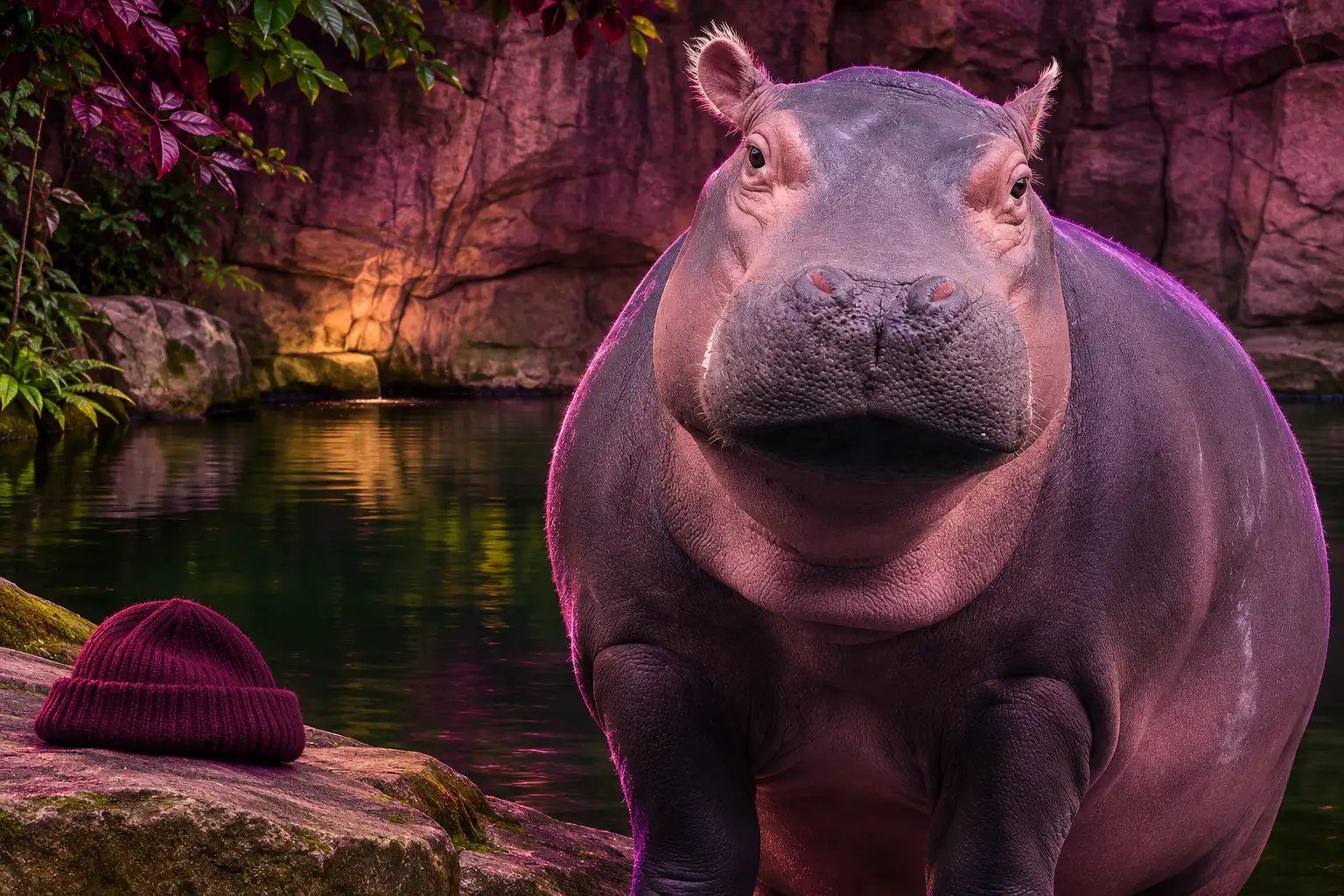
Fiona the Cincinnati Zoo hippo died November 19 after a knit hat lodged 25 feet past her last stomach, where no surgeon could follow.

Fiona, the Cincinnati Zoo hippo famous since a 29-pound premature birth, died November 19 after a knit hat lodged deep in her intestine. She was 9, and she would have turned 10 in January. A necropsy the next day found the hat 25 feet past her last stomach, where every scope stopped short.
A Child Tossed a Hat and a Fan Did the Rest
The Cincinnati Zoo & Botanical Garden announced Fiona’s death on November 19, after vets and keepers spent days trying to move a visitor’s knit cap through her gut. Director Dave Jenike said the staff had not expected that ending. “We are in shock at the moment,” he said. “We did not expect this outcome. She fought until she couldn’t anymore.”
It is with extreme sadness that we share with you the devastating news that Fiona did not make it after multiple attempts from our amazing vets and keeper team to help her through what ended up being a medical emergency. https://t.co/X0GVbDAiEQ pic.twitter.com/7wLF0uclWB
— Cincinnati Zoo (@CincinnatiZoo) November 19, 2026
The hat was not thrown into the pool. A child in front of Hippo Cove tossed it up, a ceiling fan caught it, and the fan flung it through a small opening above the viewing glass. Spokesperson Michelle Curley said the zoo could not have designed that flight on purpose.
THE PATH THE HAT TOOK
- The toss: A child standing in front of the habitat threw a knit hat into the air.
- The fan: A ceiling fan caught the hat and catapulted it toward the glass.
- The gap: It slipped through a 1-foot opening above the 12-foot viewing windows.
- The swallow: Fiona ate the cap after it landed in her habitat on November 8.
“We probably couldn’t make that happen again if we tried. It was clearly an accident,” Curley said. The zoo later asked guests to secure their things near habitats and to tell staff at once if anything falls in, because foreign objects can kill.
The easier story is to hunt the person who tossed a winter cap. That instinct spread as soon as the death notice did. It does not survive the necropsy. Once the knit sat in a stretch of intestine no instrument on the grounds could touch, no parent and no keeper had a move left.
Why Couldn’t Vets Operate on Fiona?
They never had a surgical shot. Specialists told director of animal health Dr. Mike Wenninger that cutting into a full-grown hippo was not an option, so the team tried to help her pass the hat herself. Upper and lower scopes could not reach it. An ultrasound specialist could not pin it down either. Surgery through small cuts was off the table for the same reason: the hat was in the wrong place in a body built to hide what it swallows.
WHERE THE HAT STOPPED
| Checkpoint | Distance |
|---|---|
| Colonoscopy scope from the Columbus Zoo | 9 feet |
| Hat past Fiona’s last stomach | 25 feet |
| Hat from the end of her intestines | 50 feet |
Wenninger said the necropsy put the cap in the middle of the small intestine, 25 feet beyond the final stomach and 50 feet from the far end. The 9-foot camera used on November 17 never got close.
Upper and lower GI endoscopy were unable to reach the object. The location and anatomy made laparoscopic removal impossible. No treatment aside from supportive care had any chance for success, and the necropsy confirmed that no amount of supportive care would have worked.
Dr. Mike Wenninger, director of animal health, Cincinnati Zoo
On Tuesday, November 17, ultrasound showed bunching in the intestines, which the team read as her body still trying to push something through. Keepers gave pain medicine and anti-nausea drugs, ran fluids, and kept her off exhibit. She died Thursday during recovery after more supportive care. “Our animal care team was heroic in their efforts to save her. They did everything possible, but her body couldn’t fight anymore,” Jenike said.
She Weighed 29 Pounds on the Day She Was Born
Fiona arrived at 2:58 a.m. on January 24, 2017, six weeks early. Africa keeper Wendy Rice wrote that Bibi, a first-time mother, had spent about 19 hours in labor and then delivered on dry ground, which is not how hippos usually give birth. The calf tried to stand, then faded. Keepers stepped in because she was too weak to nurse.
She weighed 29 pounds. The zoo said that was at least 25 pounds under the lowest recorded birth weight for a Nile hippo, whose usual range sat at 55 to 120 pounds. Rice’s team built a warm nursery in the hippo building, asked other zoos how to hand-raise a preemie, and turned Bibi’s trained ultrasound behavior into a milking behavior so they could collect colostrum and match a formula to her milk.
Bibi had been due in March. Keepers had the first in-utero ultrasound images of a Nile hippo fetus and thought they had time. When labor started on January 23, they recut the dates and hoped the math was wrong. It was not. Fiona was the animal the city watched live because she was not supposed to last the week.
She still died at 9, far short of the adult years now common for the species in human care. A 2025 review of adult common hippo survivorship in zoos found that adult survival has held steady for decades, while juvenile survival has improved. Fiona was that juvenile success story. Her father, Henry, died on October 31, 2017, at 36.
Two Nurses From Next Door Found a Vein
At three weeks she stopped taking bottles, dehydrated, and blew through short IVs that lasted only hours. Zoo marketing staffer Amy, who had watched Cincinnati Children’s Hospital nurses start a line on her own daughter, called them the “Vein Whisperer” and asked if the same tools would work on a hippo.
Darcy Doellman, then clinical manager of the Vascular Access Team, took colleague Blake Gustafson, an ultrasound machine, and a bag of catheters to Hippo Cove. They found Fiona on a blanket on the floor, on oxygen, in a room kept hot to hold her temperature. Vets called her critical. Doellman scanned her head and saw no scalp veins. Gustafson found a usable vein in a hind leg.
Of course we can help Fiona! Fiona received 5 liters of fluids over 6 days through her midline catheter. The catheter was discontinued on day 6.
Darcy Doellman, clinical manager, Vascular Access Team, Cincinnati Children’s Hospital
The first line leaked after 20 minutes. They trimmed a second midline catheter under ultrasound guidance, sutured it, and left it in. Doellman later wrote that the vein sat about 0.2 cm under the skin. NICU parents at the hospital started using Fiona’s name as a dare to keep going. The same city that could put a line in a 29-pound calf could not, nine years later, get a hand 25 feet into the adult she became.
Keepers Borrowed a Vibration Plate From a Horse Farm
For the first days after November 8 she looked fine. Then her appetite fell. By Monday, November 16, the zoo had taken her off exhibit and said the care team was cautiously optimistic she would pass the object. Surgery was already out. What followed was a string of borrowed tools and small comforts.
THE ELEVEN DAYS
- November 8, 2026: A knit hat enters Hippo Cove and Fiona swallows it; she shows no early distress.
- November 15, 2026: Vets give fluids and an enema after her appetite drops.
- November 16, 2026: The zoo tells the public and keeps her off exhibit around the clock.
- November 17, 2026: A 9-foot colonoscopy, done with a scope from the Columbus Zoo, fails to reach the hat; ultrasound shows intestinal bunching.
- November 18, 2026: She stands through the day on a vibration plate borrowed from a local horse farm; keepers offer a sniff of coffee, a scent she has always liked, and she responds.
- November 19, 2026: Supportive care fails and she does not recover.
- November 20, 2026: A necropsy finds the hat in the mid small intestine, out of reach of every scope used.
Wenninger said she had been sedated twice so the team could look. Curley said the horse plate was meant to shake the tract into moving. Keepers kept offering favorite foods. Thane Maynard, executive chair of the zoo’s board and the man who wrote a children’s book about her, called her “lightning in a bottle” from the day she was born. The last week was the opposite of that flash: waiting on an object nobody could see.
Stadiums Went Purple the Night She Died
Jenike said stadiums, bridges, and buildings went purple on the night of November 19. “The support that we’re feeling from all over the world reminds me of the time when everyone pulled together to root for her to survive. She did, and she gave us almost a decade of smiles,” he said. Fans laid flowers, crayon notes, candles, and at least one watermelon at a hippo statue. The zoo asked people not to bring more gifts and to give memorial donations or, in its words, spread love and cheer instead.
Christina Gorsuch, director of animal care, said Bibi, Tucker, and Fritz, Fiona’s younger brother, were eating and behaving as they usually do. “It’s difficult to know how they’re feeling, but they appear to be their normal selves,” she said. Keepers, vets, staff, and volunteers were shaken. The zoo closed the area around Hippo Cove through the weekend of November 21 and 22 so the animal care team could have room. Those keepers asked for space, the same people who had milked a hippo, called a children’s hospital, borrowed a horse plate, and then lost her anyway.
Frequently Asked Questions
How long do Nile hippos usually live in zoos?
An Association of Zoos and Aquariums Species Survival Plan analysis estimated median life expectancy for river hippos in North American zoos at 34 years, with the oldest animals in that dataset in their 50s. Fiona’s father, Henry, died at 36. Wild hippos are often described as living into their 30s or 40s; she died at 9.
Why was Fiona born on land instead of in water?
Bibi spent much of a roughly 19-hour labor in the pool, then delivered on land at 2:58 a.m. Keepers wrote that this was the only reason they could save her, because a calf that small and weak would likely have drowned in minutes if she had been born in the water, which is how many hippos give birth.
What did the Cincinnati Children’s nurses actually place?
After a first midline failed in 20 minutes, Darcy Doellman and Blake Gustafson seated a 3Fr catheter trimmed to 7 cm in a hind-leg vein about 0.2 cm below the skin, sutured it, and ran continuous fluids so it would stay open. Fiona took 5 liters over 6 days, then the line came out. Doellman believed it was the first time a hospital vascular access team had placed that kind of catheter in an animal.
Who remains in Fiona’s hippo group?
Bibi, her mother, still lives at Hippo Cove with Tucker and with Fritz, Fiona’s younger brother. Gorsuch said on November 20 that all three were eating and acting as they usually do, though she cautioned that it is hard to know what they feel. Henry, Fiona’s father, has been gone since 2017.
What children’s books told Fiona’s story?
Jan Sherbin’s photographic book Hip, Hippo, Hooray for Fiona! was published in 2017 as a 40-page hardcover priced at $25.99, with a portion of proceeds going to the zoo. Thane Maynard later wrote Saving Fiona for young readers, the account of the preemie weeks that made her famous.
By the statue, the watermelon sat with the crayon notes. Inside, Hippo Cove stayed closed, and the people who had already saved her once asked to be left alone with the animal they could not reach.

TAP Opens Porto-Dulles Flights After Lufthansa Signs On

Arla Seeks a New Home for Everswinkel Ice Cream

GTA 6’s $3.79 Billion Day One Is Mostly Pre-Sold

McMillen Missed the Suno Tracks in Isaac’s GTA Run

GTA 6 Occupied 24% of Comcast’s Network at Peak

AI Server Boards Put Everyday Circuit Materials on Allocation

Glacier Collapse Buried Nepal’s Hydropower Workers in Tunnels

Congo’s Bundibugyo Outbreak Outruns the Licensed Ebola Shots

Pennsylvania Measles Deaths Follow a Long Slide in Coverage

CISA’s Known Exploits Still Come From 2007-Era Bugs
-
 NEWS3 months ago
AI Server Boards Put Everyday Circuit Materials on Allocation
-
 NEWS3 months ago
Congo’s Bundibugyo Outbreak Outruns the Licensed Ebola Shots
-
 NEWS3 months ago
Glacier Collapse Buried Nepal’s Hydropower Workers in Tunnels
-
 NEWS3 months ago
Pennsylvania Measles Deaths Follow a Long Slide in Coverage
-
 NEWS3 months ago
CISA’s Known Exploits Still Come From 2007-Era Bugs
-

 NEWS3 months ago
Texas Judge Freezes the SEC Eligibility Ban for 41 Athletes
-

 NEWS3 months ago
Germany Can Miss Its 2026 Climate Cap Without Penalty
-

 NEWS3 months ago
FDA Approves XFG COVID-19 Vaccines Without a CDC Vote