
NEWS
The Chickenpox Shot Splits Shingles Risk Across Generations
Epic data show shingles falling in the first chickenpox-vaccinated adults, while rates keep rising in people 35 and older who lost their natural boosters.

Shingles diagnoses fell among U.S. adults 34 and younger from 2019 to 2026, according to an Epic Research review of health records from more than 85 million patients. The drop tracks the first generation that got the chickenpox vaccine as children, while rates rose in people 35 and older, who are more likely to have caught the wild virus.
Epic, which mines records from clinics that use its software, logged shingles diagnoses by age and sex and released the figures on Oct. 2, 2026. The young-adult fall is the cleaner signal. The rise after 35 is the open fight: lost boosters from kids with chickenpox, a trend that began before the shot, or both.
The First Vaccinated Adults Finally Show a Drop
Anyone who had chickenpox can get shingles later. The varicella zoster virus stays in nerve cells and can wake up as a painful, blistering rash, usually on one side of the body. For years, that adult illness kept climbing, including in younger adults, for reasons that were never pinned down.
Kersten Bartelt, a registered nurse and the lead author at Epic Research, said the youngest adults are now the exception. They are the first group that was eligible for the childhood shot.
Our data suggest that trend is now reversing in the very youngest adults, the first generation eligible to be vaccinated against chickenpox as children.
Kersten Bartelt, R.N., Epic Research, Oct. 2, 2026
Dr. Sharon Curhan, a physician and epidemiologist at Brigham and Women’s Hospital and Harvard Medical School who was not part of the Epic team, put the biology in one line. People who had the wild virus carry a higher shingles risk. People who got the vaccine can still get shingles, she said, but they sit at a much lower risk.
Bartelt added a limit that matters more than the applause. Shingles is still uncommon before 50, so this chart cannot prove the protection will hold when these adults hit the ages when the rash usually explodes.
What the 85 Million Patient Chart Shows
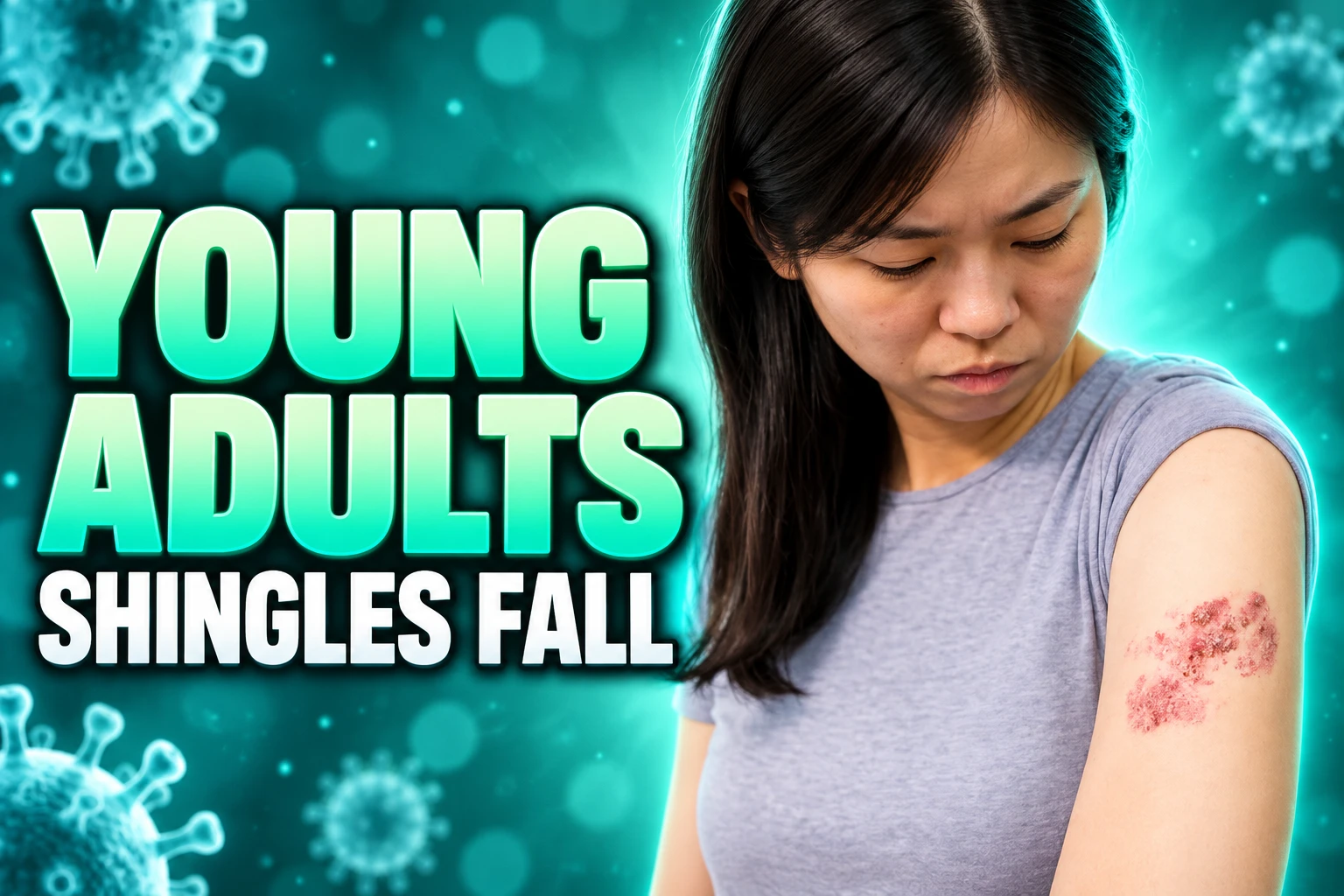
Epic compared diagnosis rates per 10,000 people in 2019 with rates in 2026. The fall is widest at 25 to 29, where cases more than halved. It is smaller at 18 to 24, a band that already started low. At 30 to 34, the leading edge of the vaccine era, both sexes moved from the low teens to 7.3 per 10,000.
SHINGLES DIAGNOSES PER 10,000 PEOPLE
| Age group | Women, 2019 | Women, 2026 | Men, 2019 | Men, 2026 |
|---|---|---|---|---|
| 18 to 24 | 2.9 | 1.6 | 2.7 | 2.4 |
| 25 to 29 | 7.7 | 3.2 | 7.5 | 3.0 |
| 30 to 34 | 10.8 | 7.3 | 11 | 7.3 |
Women 25 to 29 went from 7.7 to 3.2 per 10,000. Men in that band went from 7.5 to 3.0. Women 30 to 34 went from 10.8 to 7.3, and men from 11 to 7.3. Among 18- to 24-year-olds, women fell from 2.9 to 1.6 and men only from 2.7 to 2.4, the slightest move on the chart.
The nostalgia take, that stopping chickenpox parties caused a wave of shingles in people in their 20s, runs the wrong way through these rows. The adults now falling are the ones who got the childhood shot. The adults still rising are the ones more likely to have had the wild infection, which is the form that lodges in nerves for life.
Chickenpox Once Killed 100 to 150 Americans a Year
The Food and Drug Administration licensed the first chickenpox vaccine in 1995 and put it on the childhood schedule. In 1997, states began requiring it for school and daycare. The Centers for Disease Control and Prevention now recommends two doses between ages 1 and 6. A second dose was added in 2007 after one dose left enough leftover spread to keep school outbreaks alive.
In the early 1990s, before that program, more than 4 million people got chickenpox each year. Hospitalizations ran from 10,500 to 13,500, and 100 to 150 people died, half of them children. CDC figures show the program has reduced chickenpox cases by more than 97%. Typical years now see fewer than 150,000 cases, 1,400 hospitalizations, and 30 deaths.
Over the first 25 years, CDC estimates the shots prevented 91 million cases and saved $23.4 billion in healthcare costs. A CDC-funded review of 6.3 million children, published in Pediatrics in 2019, found herpes zoster risk was 78% lower in vaccinated children than in those who were not.
HOW THE VARICELLA PROGRAM WAS BUILT
- 1995: The first chickenpox vaccine is licensed and added to the childhood schedule as a one-dose shot.
- 1997: States begin requiring the vaccine for school and daycare.
- 2007: A routine second dose is added after leftover school outbreaks under one dose.
- 2017: Shingrix, a two-dose recombinant shingles vaccine, is licensed for older adults.
- 2020: Zostavax, the older live shingles shot, is withdrawn in the United States on Nov. 18.
- 2026: Epic logs a shingles drop in adults 34 and younger and a rise at 35 and over.
That is the bargain in calendar form. Kids stopped dying of a routine virus. The adults who already had it kept the dormant infection, and they stopped bumping into sick children.
A 30-Year Bargain the Models Warned About
In 1965, the British physician R. Edgar Hope-Simpson argued that fresh contact with chickenpox acts like a booster for people who already had it. If childhood vaccination dried up those contacts, models said, shingles in adults would rise for decades before the vaccinated cohorts aged into the high-risk years and the curve bent down.
A UK records study in The BMJ found adults were at 33 percent less zoster after household exposure to a child with chickenpox, compared with baseline time, and still 27% lower 10 to 20 years later. Several countries, including the United Kingdom, kept varicella off the routine childhood list in part because those models warned of a long, temporary shingles bulge.
The United States did not wait. Thirty years on, Epic’s split looks like the middle of that story: the vaccinated young falling, the wild-virus adults still climbing. A 2013 multidisciplinary review concluded that exogenous boosting exists, though not for all people and not in every setting, and that its size is still poorly measured.
Before the vaccine was available, parents in their 20s, 30s, 40s, and grandparents, were exposed to younger children with chickenpox, so that was like a booster for them.
Dr. Sharon Curhan, physician and epidemiologist, Brigham and Women’s Hospital
Real-world tracking never delivered the giant surge some models drew. Adult shingles was already rising in the early 1990s, before the childhood shot. After the program began, the pace of that rise often slowed, and some age bands later flattened. The Epic 2019-to-2026 window is a new slice, not a verdict on the whole 30 years.
Why Millennials Are Getting More Shingles
Epic said rates are rising among people 35 and over, the ages more likely to have had chickenpox as children. It did not publish those older rates in the figures released with the young-adult drop, so the size of that rise is still a blank on the public chart.
Curhan said there is no clear proof of the cause. The lost-booster idea is one candidate. She also named higher rates of chronic stress, depression, anxiety, and autoimmune disease, all of which can weaken the immune watch that keeps the virus quiet.
WHERE EXPERTS DISAGREE
- Lost boosting: Curhan said adults used to get a free boost from kids with chickenpox, and that contact has almost vanished.
- A longer mystery trend: CDC says adult shingles rose for a long period for unknown reasons and that rates have recently plateaued or declined in some age groups.
- Stress and autoimmune disease: Curhan also pointed to depression, anxiety, and immune disorders as separate ways the virus can wake up.
Those views can sit together. A virus that is already reactivating more often would hit harder once the last schoolyard boosters disappeared. CDC’s own facts page still says about 1 in 3 people in the United States will get shingles in a lifetime, that fewer than 100 people die of it each year, and that almost all of those deaths are in older or immunocompromised patients.
More than 99% of Americans born on or before 1980 have had chickenpox, even if they do not remember the spots. In 2026 that group is 46 and older. The 35-to-45 band is mixed: some caught the wild virus, some got catch-up shots after 1995, and Epic’s cut at 35 is a blunt way to separate those stories.
The Age Window Shingrix Does Not Cover
The people in the rising band cannot walk into a pharmacy for the shingles vaccine on the routine schedule. CDC recommends two Shingrix doses from age 50 for adults with healthy immune systems, given 2 to 6 months apart. Adults 19 and older get the same series if they are or will be immunocompromised.
In trials, Shingrix was 97% effective against shingles at ages 50 to 69 and 91% at 70 and older. It was 91% effective against postherpetic neuralgia, the long nerve pain, in adults 50 and older. Immunity in healthy people 70 and older stayed high for at least 7 years. The shot is still advised after a prior shingles attack, after the old Zostavax dose, and after a childhood chickenpox vaccine.
WHO GETS THE SHINGLES SHOT
- Healthy adults 50 and older: Two doses, 2 to 6 months apart, with no upper age limit.
- Immunocompromised adults 19 and older: Two doses; the second can come at 1 to 2 months if the series needs to finish faster.
- Prior shingles or Zostavax: Still get Shingrix; wait until the rash is gone, and wait at least 8 weeks after Zostavax.
- Who should wait: Anyone with a current shingles rash, anyone who is pregnant, or anyone who had a severe allergy to a prior dose.
That leaves a long stretch, from the mid-30s to 49, where Epic sees rising diagnoses and CDC does not yet offer a routine shot. For a 38-year-old with a belt of blisters, the childhood vaccine debate is already over. The practical question is pain control, antivirals, and whether the adult series should start earlier than 50. CDC has not made that change.
Nerve Pain, the Eye and a Stroke Risk
Most shingles and chickenpox cases clear in a couple of weeks, said Dr. Anne Gershon, a professor emeritus of pediatrics at Columbia University’s medical school, who was not involved in the Epic work. The virus can still do lasting harm.
WHAT THE VIRUS CAN LEAVE BEHIND
- Postherpetic neuralgia: Severe nerve pain in the rash zone, the most common complication, in about 10% to 18% of shingles cases, and more often with age.
- The eye: An outbreak near the eye can cost vision, Bartelt said.
- The brain and heart: Gershon said shingles has been tied to a 20% higher risk of cognitive decline, possibly when the virus reactivates in the head rather than on the skin, and to higher stroke and heart disease risk.
- Hospital care: About 1% to 4% of people with shingles are hospitalized, CDC says, and about 30% of those patients have a weakened immune system.
Those complications are why the childhood shot’s second act matters, and why the adult shot exists at all. They are also why a drop at 25 to 34 is only a first reading. The same people will reach 50 in the 2040s, which is when shingles usually concentrates and when Shingrix is already on the schedule.
Bartelt’s caution still stands on that future date. The 2019-to-2026 chart shows the first vaccinated adults getting less shingles now. It does not show what their nerves will do at 60.
Disclaimer: This article is news reporting and analysis of published health data and vaccine guidance. It is for information only and is not medical advice, a diagnosis, or a recommendation to start, skip, or delay any vaccine or treatment. Readers who have a rash, nerve pain, a weakened immune system, or questions about chickenpox or shingles shots should talk with a licensed physician, pharmacist, or other qualified clinician before acting. Figures and recommendations reflect the Epic Research analysis and CDC materials cited here as of Oct. 2, 2026, and both the rates and the official age windows can change.

Kulbergs Leads Latvia’s Election With a Fragile Coalition

Tesla Held Deliveries While Rival EV Lines Collapsed

US Caps Jet-Part Licenses to Keep COMAC From Stockpiling

Greg Lui Routed $300 Million in GPU Servers Through Malaysia

Netflix Sends KPop Demon Hunters 2 to Theaters First

Glacier Collapse Buried Nepal’s Hydropower Workers in Tunnels

Congo’s Bundibugyo Outbreak Outruns the Licensed Ebola Shots

CISA’s Known Exploits Still Come From 2007-Era Bugs

Germany Can Miss Its 2026 Climate Cap Without Penalty

AI Server Boards Put Everyday Circuit Materials on Allocation
-
 NEWS1 month ago
Glacier Collapse Buried Nepal’s Hydropower Workers in Tunnels
-
 NEWS1 month ago
Congo’s Bundibugyo Outbreak Outruns the Licensed Ebola Shots
-
 NEWS1 month ago
CISA’s Known Exploits Still Come From 2007-Era Bugs
-
 NEWS1 month ago
Germany Can Miss Its 2026 Climate Cap Without Penalty
-
 NEWS4 weeks ago
AI Server Boards Put Everyday Circuit Materials on Allocation
-

 BUSINESS1 month ago
Trump’s Venezuela Oil Deal Leaves the Barrels in the Ground
-

 NEWS1 month ago
A Cow Rumen Enzyme Dissolves Superbug Biofilms on Gauze
-
 NEWS1 month ago
Pennsylvania Measles Deaths Follow a Long Slide in Coverage