
ENTERTAINMENT
Pamela Anderson Recounts a Death Sentence That Outlived Her Virus
At amfAR in Venice, Pamela Anderson said a 1990s hepatitis C warning still haunts her, years after an $84,000 cure cleared the virus.

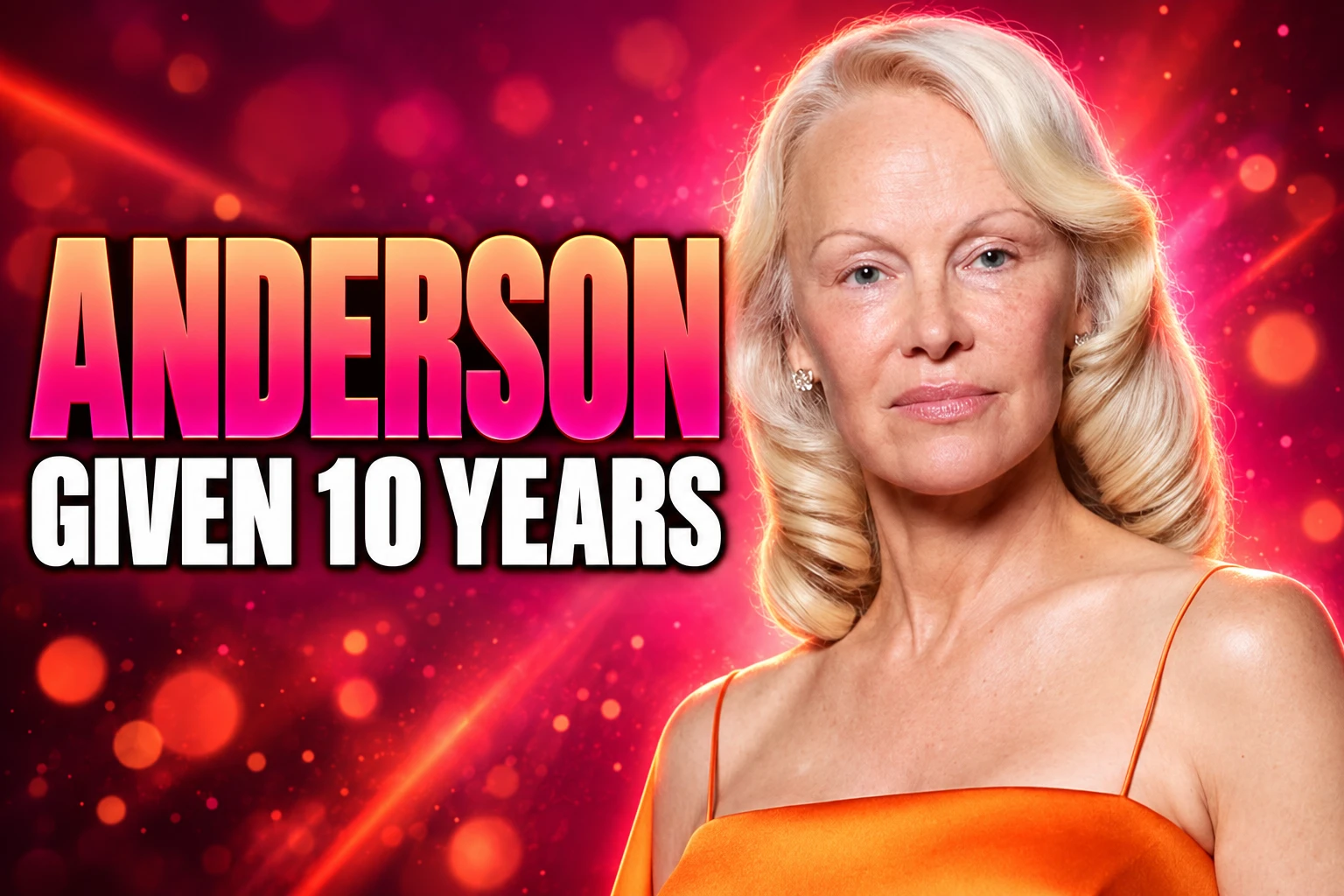
Pamela Anderson told a Venice gala on Sept. 6 that a doctor once gave her about 10 years to live after a hepatitis C diagnosis. She was 59, holding amfAR’s Award of Courage, and the virus had been gone since 2015, yet she said the old sentence still follows her.
The Foundation for AIDS Research’s sixth Venezia benefit filled the Hilton Molino Stucky during the 83rd Venice International Film Festival. Anderson used the honor to walk back through a late-1990s diagnosis, an early pill course she paid for herself, and a shame she said she has never put down.
She Took the Award and Read an Old Verdict
Hosted by Taika Waititi, with Orlando Bloom presenting, the black-tie night was built to raise money for biomedical research. Anderson, listed on the program as the Award of Courage honoree, did not give a soft thank-you. She went back to the first conversation with her doctor.
Back in the late ’90s, when I was diagnosed with hepatitis C, there was no cure. It was a death sentence. That’s what my doctor told me, that I probably had around 10 years to live.
Pamela Anderson, amfAR Gala Venezia, Hilton Molino Stucky
She first discussed the infection in public in 2002. She has said she contracted it after sharing a tattoo needle with then-husband Tommy Lee, the Mötley Crüe drummer, who denied that account. Blood-to-blood contact is how the virus moves, and the CDC lists sharing needles as the main route of new infections, with tattooing in unregulated shops among the less common ones.
A biotech commentator, Brad Loncar, put the medical distance in one line after the speech: a 1990s or early-2000s diagnosis came with that 10-year clock, and the same infection is now treated as a short, ordinary course of pills. The gap is the story she was telling in the room.
The Fear Was for Brandon and Dylan
Anderson shares two sons with Lee, Brandon Thomas, 30, and Dylan Jagger, 28. They were small when the diagnosis landed, and she said that, not dying, was the part that bent her life.
“I’m sure that colored and corrupted my decisions. It was not fear of death, but fear of what might happen to my young children. It turned my life inside out,” she told the gala. In 2015, still close to the end of treatment, she had already said a disease you are told you can live with still “plays into a lot of your decisions.”
She went on Larry King Live in July 2002 and described the first days as a mortality shock. A doctor, she said then, had flagged “this little glitch in your blood work” during movie-insurance labs. She asked how to get rid of it and learned there was no cure, only the long list of what the virus could do to a liver.
The 2002 version and the Venice version sit on the same hinge. She was not bargaining with death so much as with two boys who would have been left in the wreckage if the 10-year clock had been right.
Insurance Had Not Caught Up to the Pills
The virus did not wait for a clean ending. Anderson said about 10 blurry years passed, then a cure appeared, and she was offered it early. Paying for it, she said, “took everything I had in my bank.”
THE BILL FOR AN EARLY CURE
- The list price: Gilead set a typical 12-week course at $84,000, or $1,000 a pill, when sofosbuvir reached the U.S. market.
- The four-week wholesale: The company posted $28,000 for four weeks, which triples to the same $84,000 over 12 weeks.
- The coverage gap: Anderson said the regimen was not yet covered by insurance, which is why the cost hit her accounts directly.
- The leftover feeling: She said she felt “tremendous guilt that others weren’t granted the same access.”
That last line is the part a gala crowd can miss. The drugs worked. The queue did not. Her recovery was a medical result and a cash result at the same time, and she has been carrying the second one as guilt.
In November 2015 she announced she was clear, after starting a new FDA-approved regimen that summer. She said Lee had gone through treatment about a year earlier and kept pushing her to do the same. “They came up with a cure just recently, and you know Tommy was cured a year ago, I was cured just Friday,” she said then, adding that she felt as if she were getting 20 years back.
THE YEARS SHE COUNTED
- Late 1990s: She is diagnosed with hepatitis C and told she probably has about 10 years to live.
- 2002: She discusses the infection in public, including on Larry King Live in July.
- December 6, 2013: The FDA approves Gilead’s sofosbuvir (Sovaldi), a once-daily oral drug that shortens treatment for many patients.
- Summer 2015: She starts a new FDA-approved antiviral course; by November she says she is cured and has no liver damage.
- September 6, 2026: She accepts the Award of Courage in Venice and says the shame still haunts her.
Eleven years after that November announcement, she was still explaining the invoice.
How Hepatitis C Went From Shots to Pills
Direct-acting antiviral pills now cure more than 95% of cases in an 8-to-12-week oral course, the CDC says, and most people have few side effects. That is not the medicine Anderson met in the 1990s, when interferon shots were the main tool and cure rates were low.
On Larry King she had already described a yearlong interferon regimen as a year of “having the flu,” with hair loss, “a little kind of chemotherapy.” That older path is why a 10-year warning did not sound like hyperbole to patients then. The first extra antiviral pills, boceprevir and telaprevir, arrived in 2011, still tied to interferon and ribavirin. The break came when the FDA cleared Gilead’s once-daily sofosbuvir pill in 2013 for genotypes 1, 2, 3, and 4, including the first all-oral option for some patients.
HEPATITIS C TREATMENT, THEN AND NOW
| Period | Main treatment | What patients faced |
|---|---|---|
| Early 1990s | Interferon shots, three times a week, up to 48 weeks | Cure rates under 16%; flu-like effects |
| 1998 to 2010 | Interferon plus ribavirin, later pegylated interferon | Better odds, still long shots and heavy side effects |
| 2011 | First DAAs (boceprevir, telaprevir) with interferon | Cure rates around 66% to 79% for genotype 1, still injections |
| 2013 to 2014 | Sofosbuvir, then interferon-free combinations such as Harvoni | About 12 weeks of pills; list prices near $84,000 |
| Now | Pan-genotypic oral DAAs | 8 to 12 weeks; more than 95% cured; no hepatitis C vaccine |
The CDC also notes that more than half of people infected with hepatitis C develop a chronic infection, and that about 5% to 25% of those chronic cases develop cirrhosis over 10 to 20 years. Anderson has said she reached the far side without liver damage. Plenty of patients from her era did not get that roll of the dice, or that invoice.
Shame That Outlived the Virus
Clearance of the virus is a lab result. Anderson’s speech treated it as unfinished business. “I’m grateful to say now that I am hep C free,” she said, as the room applauded, then she pulled the applause back.
My words did not match my feelings. I was angry. I was scared. I went into sabotage mode and just like the sexual abuse I endured as a child, it felt like it was carved into my forehead: Damaged goods. And I presented myself as such. I don’t think I’ve ever fully recovered from that news.
Pamela Anderson, Award of Courage acceptance, Sept. 6, 2026
She called the shame and guilt “an unconscious journey” that “stays with me” and “haunts me.” In 2015 she had used a milder image, a “dark cloud” over her self-esteem even when she looked confident. Venice was blunter. The mark she described was not the virus. It was the story she told about herself after the virus arrived.
She has spent years telling other people to get tested and to drop the stigma around hepatitis C and AIDS. She said those public words and her private ones were not the same. The gala, an AIDS-research benefit that also backs hepatitis C work, was the place she chose to say that out loud.
47 Million People Still Carry the Same Infection
The WHO now estimates that 47 million people have chronic hepatitis C worldwide, with about 0.9 million new infections a year. It estimated about 239,000 hepatitis C deaths in 2024, mostly from cirrhosis and liver cancer. Direct-acting antivirals can cure more than 95% of patients, the agency says, “but access to diagnosis and treatment is low.”
WHERE THE CURE STILL DOES NOT REACH
- U.S. burden: The CDC estimated more than 2.4 million people, and as many as 4 million, had hepatitis C from 2017 to 2020.
- New U.S. cases: In 2023, 4,966 acute cases were reported; the CDC says the true number was probably closer to 69,000, plus 101,525 newly reported chronic cases.
- U.S. deaths: 11,194 hepatitis C-related deaths were reported in 2023, a figure the CDC calls conservative.
- Global treatment: Only about 20% of people with hepatitis C have been treated since 2015, and about 11 million people had been diagnosed by 2024 but were not yet on treatment.
Those figures are why her bank-account line is not a celebrity aside. She got the early pills because she could empty an account. WHO data say most people with the same infection still have not. There is no hepatitis C vaccine, so testing and treatment remain the whole defense.
Venice Heard a Line She Chose for Herself
Anderson has been working again in a different register, with a Golden Globe-nominated turn in Gia Coppola’s The Last Showgirl, a part in the 2025 The Naked Gun reboot, and Rosebush Pruning. She is in Venice with Place to Be, directed by Kornél Mundruczó and co-starring Waititi and Ellen Burstyn, which premieres on Sept. 9.
“My truth has come through my work, finding ways to express myself and heal through the arts,” she said. “It gave me the ammunition I needed, a fertile life to use and play in.” She closed on a sentence she wanted the room to keep: “I’m not a victim, I’m a victor. I am strong and capable, more now than I could ever dream of. I’m not the damsel in distress, no matter how easy that role is to play.”
The award is for courage. The speech was an inventory. A doctor gave her 10 years. She outlived the virus, paid the early price, and told a research gala that the news itself is the thing she still has not beaten.
Frequently Asked Questions
Can Hepatitis C Still Be Cured With Pills?
Yes. The CDC and WHO both say oral direct-acting antivirals cure more than 95% of people, usually in 8 to 12 weeks, and the CDC now recommends that every adult 18 and older be tested at least once, with testing in every pregnancy. There is still no vaccine, which is why screening is the only reliable way to find silent infections before cirrhosis or liver cancer sets in.
How Did Pamela Anderson Say She Contracted Hepatitis C?
She has said for two decades that she got the virus by sharing a tattoo needle with Tommy Lee after they were married, and that his doctor had already told him he had hepatitis C and needed to disclose it. Lee denied that version. On Larry King Live in July 2002 she said the infection showed up in blood work done for movie insurance, which is how many people still find an otherwise quiet virus.
When Did Pamela Anderson Become Free of Hepatitis C?
She announced in November 2015 that she was cured, after starting a new FDA-approved antiviral course that summer, and she said then that she had no liver damage and no side effects from the pills. She also said Lee had finished a different course about a year earlier and had urged her to follow. That 2015 all-clear is the medical end of the infection; the Venice speech was about what the diagnosis did after the labs turned negative.
Why Was Early Hepatitis C Treatment So Expensive?
When sofosbuvir launched in December 2013, Gilead’s wholesale list price was $1,000 a day, $84,000 for the usual 12 weeks, and $168,000 for the 24 weeks then used for a harder genotype. Anderson’s 2015 course came in that early window, before insurers routinely covered the drugs. Later list prices fell as more pill combinations arrived, with one 2020 analysis putting average net costs near $11,500 to $17,000, but the first patients in line paid the launch number or went without.
Disclaimer: This article is news reporting and analysis of Pamela Anderson’s public remarks and of published hepatitis C figures. It is for information only and is not medical advice, a diagnosis, or a treatment recommendation for hepatitis C or any other condition. Readers who are concerned about hepatitis C exposure, testing, or treatment should speak with a licensed physician or other qualified clinician before making health decisions. Dates, lab status, drug prices, and case counts reflect the official and on-the-record sources cited here and can change as new data and regimens appear.

Kulbergs Leads Latvia’s Election With a Fragile Coalition

Tesla Held Deliveries While Rival EV Lines Collapsed

US Caps Jet-Part Licenses to Keep COMAC From Stockpiling

Greg Lui Routed $300 Million in GPU Servers Through Malaysia

Netflix Sends KPop Demon Hunters 2 to Theaters First

Glacier Collapse Buried Nepal’s Hydropower Workers in Tunnels

Congo’s Bundibugyo Outbreak Outruns the Licensed Ebola Shots

AI Server Boards Put Everyday Circuit Materials on Allocation

CISA’s Known Exploits Still Come From 2007-Era Bugs

Germany Can Miss Its 2026 Climate Cap Without Penalty
-
 NEWS1 month ago
Glacier Collapse Buried Nepal’s Hydropower Workers in Tunnels
-
 NEWS1 month ago
Congo’s Bundibugyo Outbreak Outruns the Licensed Ebola Shots
-
 NEWS1 month ago
CISA’s Known Exploits Still Come From 2007-Era Bugs
-
 NEWS4 weeks ago
AI Server Boards Put Everyday Circuit Materials on Allocation
-
 NEWS1 month ago
Germany Can Miss Its 2026 Climate Cap Without Penalty
-

 BUSINESS1 month ago
Trump’s Venezuela Oil Deal Leaves the Barrels in the Ground
-

 NEWS1 month ago
A Cow Rumen Enzyme Dissolves Superbug Biofilms on Gauze
-

 NEWS1 month ago
Pennsylvania Measles Deaths Follow a Long Slide in Coverage