
NEWS
Mecca’s Public Air-Raid Alert Revives an Old Houthi Fight
Mecca’s first public air-raid alert in nearly a decade followed a claimed Houthi drone intercept, repeating a 2016 and 2017 pattern as Saudi oil routes fail.

Saudi Civil Defence put Mecca on a public air-raid alert at 12:18 p.m. local time on September 15, then lifted it at 12:24. The six-minute warning, sent through the National Early Warning Platform, told people to get indoors and stay off windows, balconies and roofs.
Hours later the Saudi-led coalition said Royal Saudi Air Defence destroyed a hostile drone at 6:50 p.m. south of the city, before it entered prohibited airspace over Islam’s holiest site. The Houthis called the targeting claim a worn-out lie.
Six Minutes on Mecca’s Warning Platform
The Mecca ping was the first time that platform has warned the holy city in the current Middle East war, and the first public shelter alert there in nearly a decade. Civil Defence did not name an attacker in the midday posts. It told anyone outside to enter the nearest building or get behind a solid barrier, and not to leave until the danger passed.
The all-clear arrived six minutes later: “The danger has been lifted from the city of Mecca, the Honorable.” Residents were still told not to gather and not to film. Similar cycles ran the same day in other western and southern cities, the most widespread single-day warning since fighting with the Houthis intensified.
CITIES TOLD TO TAKE SHELTER
- Mecca: First National Early Warning Platform alert of this war, 12:18 p.m. to 12:24 p.m. local time.
- Jeddah and Taif: Repeat warnings, including after Monday’s strikes on Taif.
- Yanbu, Abha, Jazan and AlUla: Same indoor order, covering the Red Sea oil port and the southern belt.
The US embassy told Americans to reconsider travel to Saudi Arabia after the Mecca alerts, citing Iranian drones and missiles, armed conflict and the Yemen border. Hajj 1447 AH had already finished in late May, but Umrah runs all year, so the haram was not empty when phones lit up.
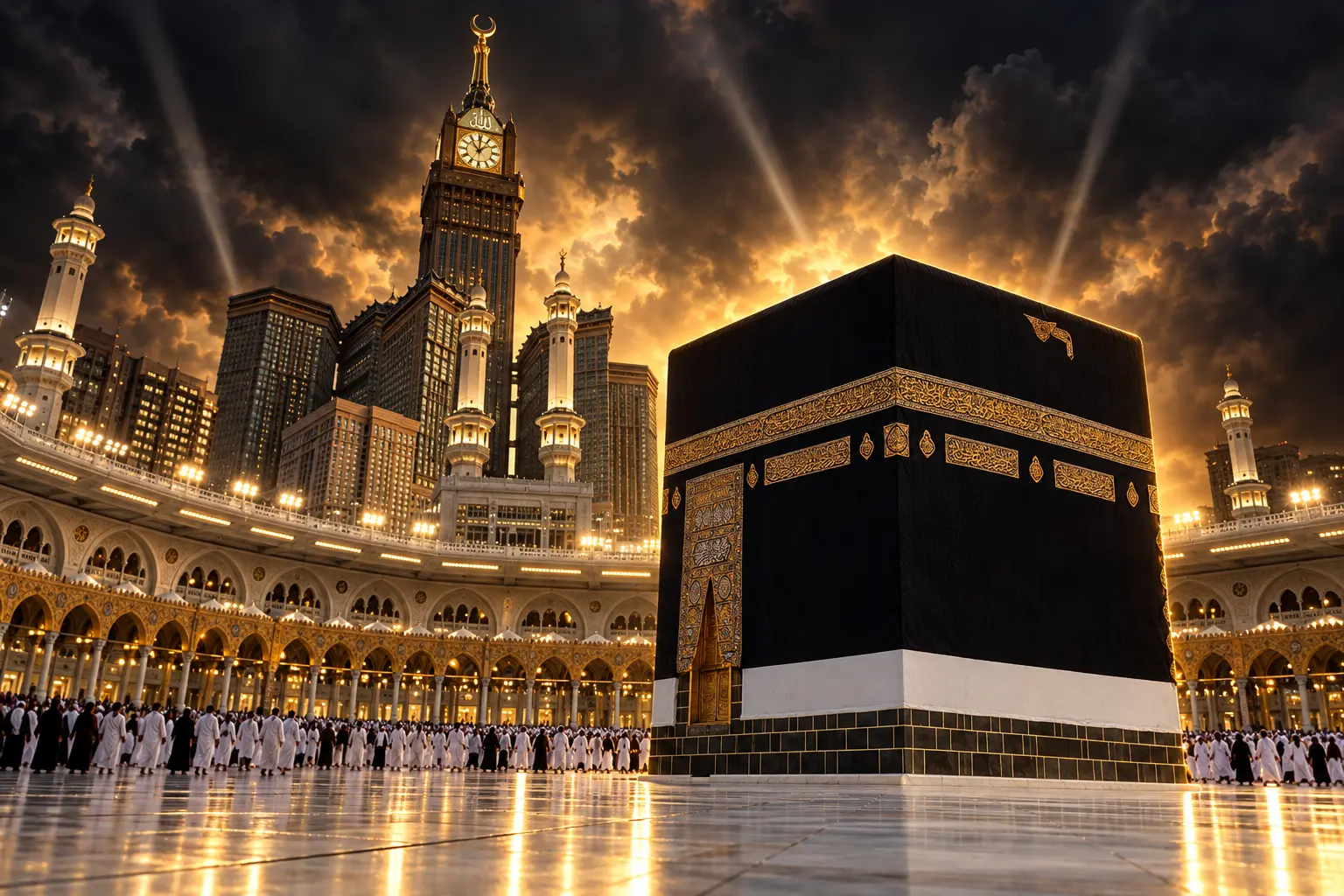
A Drone Destroyed South of Mecca
Coalition spokesman Maj. Gen. Turki al-Maliki said on September 16 that the 6:50 p.m. drone was launched by the Houthis and was stopped south of Mecca. He called it the second attempt to target the city, after a ballistic missile on July 27, 2017, and said the security of the Two Holy Mosques and of pilgrims was a red line.
The security of the Two Holy Mosques and the pilgrims is a red line, and the Joint Forces Command of the Coalition will not hesitate to take the necessary and deterrent measures against the Terrorist Houthi Militia.
Maj. Gen. Turki al-Maliki, coalition spokesman, Saudi Press Agency statement
He also said the attempt would remain a black mark in the Houthis’ record, describing it as a deliberate effort to frighten guests of the Grand Mosque. The Organisation of Islamic Cooperation, which groups 57 Muslim-majority states, condemned “heinous attacks” by the Houthis against Mecca and the Medina region, called strikes on holy sites terrorism, and backed Saudi measures to protect the sanctity of those sites.
Hazem al-Assad, a Houthi politburo member, wrote that claims about targeting Mecca “are a worn-out lie that has been used before and no longer fools anyone.” Mohammed al-Farah, another political-bureau member, called the allegation an outright lie in comments carried by the Houthi-run SABA agency. The midday alert named no group. The evening intercept is the coalition’s account; the Houthis deny the target.
Houthis Have Fired Toward This Region Before
Maliki’s clock starts in 2017. The file is older. On October 28, 2016, the coalition said it intercepted a ballistic missile about 65 km from Mecca, launched from Saada, more than 500 km from the holy city. The Houthis said the shot was a Burkan-1 aimed at King Abdulaziz International Airport in Jeddah, the main air gate for pilgrims. An airport official said no missile hit the field. Mohammed al-Bekheity, a Houthi leader, said the group would not target holy areas and accused Riyadh of fishing for sympathy.
On July 27, 2017, air defences downed another ballistic missile over the Wasaliyah area of Taif province, 69 km from Mecca. The coalition called that launch a bid to spoil Hajj. The Houthis said it was aimed at King Fahd Air Base in Taif. In both cases the argument was the same as this week: Riyadh says the holy city was in the flight path; Sanaa says the aim point was a military or airport target nearby.
MECCA-REGION INTERCEPTS, THREE DATES
| Date | What the coalition said | What the Houthis said | Public Mecca alert |
|---|---|---|---|
| October 28, 2016 | Ballistic missile destroyed 65 km from Mecca | Burkan-1 aimed at Jeddah airport | No |
| July 27, 2017 | Ballistic missile destroyed 69 km from Mecca | Aimed at King Fahd Air Base, Taif | No |
| September 15, 2026 | Drone destroyed south of Mecca at 6:50 p.m. | Targeting Mecca is a worn-out lie | Yes, 12:18-12:24 p.m. |
A Houthi cross-border missile campaign after 2015 already treated Taif, Jeddah and the Mecca approaches as in range once extended-range Burkan missiles appeared. What Tuesday added was not range. It was a civilian cell broadcast that told people in the holy city to hide from glass.
Viral posts sold a first-ever siren in Mecca’s history. Some of the clips attached to those posts were older footage. The deeper split is the one from 2016: whether a projectile stopped south or west of the haram counts as an attack on Mecca, or as a shot at the airports and bases that sit on the same approaches.
Thirteen Civilians, Seven Homes, Two Vehicles
The Mecca warning did not arrive in a vacuum. On September 12, Civil Defence said a Houthi projectile fell in Al-Tuwal governorate in Jazan, leaving two people injured and a mosque damaged, along with buildings and vehicles. That is the first time this sequence put a mosque on the damage list inside the kingdom.
On September 14, Maliki said ballistic missiles and drones hit civilian areas in Khamis Mushait, Abha and Taif, wounding 13 civilians (minor to moderate) and damaging seven homes and two vehicles. Houthi military spokesman Brig. Gen. Yahya Saree said the group had struck military facilities at King Khalid Air Base in Khamis Mushait. Saudi officials said the impacts were civilian. A Khamis Mushait resident described intense blasts and fires that burned a long time.
The coalition said it would deal with those attacks firmly and take all necessary operational measures. Houthi media said Saudi aircraft flew more than 50 strikes in reply. The Houthi-run Health Ministry in Sanaa said Saudi airstrikes in Taiz province killed three people, including two children; Riyadh did not immediately address that claim. Crown Prince Mohammed bin Salman, chairing Cabinet in Jeddah, condemned continued Houthi attacks on civilian objects and civilians, and restated the kingdom’s right to defend its territory under the UN Charter.
The East-West Pipeline Is Shut
The reason a six-minute siren in Mecca lands harder than the 2016 intercept is the rest of the map. Iran’s war with the United States has effectively closed the Strait of Hormuz since late February 2026. Saudi Arabia had been pushing crude overland to Yanbu on the Red Sea instead of out through the Gulf.
On September 10 and 11, drones from Iraqi territory hit the East-West pipeline, also called Petroline, a 1,200 km line from the eastern fields to Yanbu. The Ministry of Energy said the line “was shut down as a precautionary measure” after multiple attacks that caused injuries. The foreign ministry said the drones came from Iraq, hit the Riyadh and Medina regions, and that Riyadh would not respond at that stage so Baghdad could act. No group claimed the strike. President Donald Trump, asked in Dublin, said Iran was “probably” behind it.
THE BYPASS THAT WAS CARRYING THE OIL
- Route: About 5 million barrels a day had been moving west to Yanbu after Hormuz closed.
- Capacity: The line can pump up to 7 million barrels a day, including west-coast refinery feed.
- Price: Crude broke above $100 a barrel after the shutdown.
- Status: Still halted as a precaution; repair time has not been given by Riyadh.
Yanbu itself sat inside Tuesday’s warning list. The Houthis have said navigation through Bab al-Mandeb is safe for all except Saudi vessels. With Hormuz shut and the overland workaround on fire, the holy cities and the remaining export path now sit on the same air-raid map.
Mocha, Perim and the Bab al-Mandeb
That map shifted on the water first. Fighters aligned with Ansar Allah seized Mocha and then Perim Island in about 36 hours on September 10 and 11, after Saudi-backed National Resistance Forces withdrew. Perim, also called Mayun, sits in the Bab al-Mandeb and splits the strait into two channels. The Hanish islands, about 160 km north of the strait, fell around the same offensive. Government media later said some ground near the strait was retaken on September 13.
More than 100 US military advisers have been in the Saudi-Yemen fight on the intelligence side. Yemeni officers said promised air cover did not arrive as Mocha collapsed. Adm. Brad Cooper, the US Central Command chief, flew to Jeddah and met the crown prince as the coast fell. Washington has resisted a direct US war against the Houthis while the Hormuz campaign continues.
THE WEEK THAT PUT MECCA ON THE ALERT LIST
- September 10: Houthis take Mocha; drones from Iraq hit East-West pumping stations.
- September 11: Perim Island falls; Saudi Energy Ministry shuts the pipeline as a precaution.
- September 12: Projectile in Al-Tuwal, Jazan, injures two and damages a mosque.
- September 14: Missiles and drones on Khamis Mushait, Abha and Taif wound 13 civilians.
- September 15: Civil Defence alerts, including Mecca at 12:18 p.m.; coalition says a drone is destroyed south of Mecca at 6:50 p.m.
- September 16: Maliki calls holy-site security a red line; the OIC condemns the Mecca and Medina-region attacks.
Farea Al-Muslimi, a research fellow at Chatham House, called the Mocha-to-coast advance the most consequential change in territorial control in Yemen for years, because it gives the Houthis more say over shipping through Bab al-Mandeb, the passage from the Gulf of Aden toward the Suez Canal.
The Crown Prince Takes the File to Cairo
After Cabinet in Jeddah, Mohammed bin Salman flew to Cairo on September 15 to meet President Abdel Fattah el-Sisi. Both said they wanted freedom of navigation in the Red Sea and Bab al-Mandeb. No new troop pledge was announced. Pakistan is a partner in the Mecca joint-defence arrangement signed on August 7, and the crown prince took a call from Prime Minister Shehbaz Sharif the same week; Islamabad has not put combat units into Yemen.
Mohammed Al-Basha, a Washington-based Yemen risk adviser, has said the signs point to a large Saudi retaliation and that Riyadh does not have another option. Cinzia Bianco, a visiting fellow at the European Council on Foreign Relations, has warned that a major escalation could become an open-ended fight like the last Yemen war and could pull the kingdom deeper into the US-Iran war. Those are forecasts, not orders. What has already happened is smaller and sharper: the holy city is now on the same warning platform as Jazan and Yanbu.
The 2016 and 2017 missiles were handled as coalition intercepts, argued over in statements, and kept off the public siren in Mecca. On September 15 the phones in the holy city rang first, and the intercept claim came after dark. That is the piece of this week that did not exist in the last war.

Amazon’s Apple Prime Deals Mostly Undo the June Hikes

The Atlantic’s First Hurricane Is Aimed at Soaked Gulf Soil

Iran’s Hormuz Attacks Target the Route That Restored Crude

S&P 500 Clears 7,800 as AI Chips Outrun Yields

Russia’s No-Plague Finding Leaves a Siberian Death Unexplained

AI Server Boards Put Everyday Circuit Materials on Allocation

Glacier Collapse Buried Nepal’s Hydropower Workers in Tunnels

Congo’s Bundibugyo Outbreak Outruns the Licensed Ebola Shots

Pennsylvania Measles Deaths Follow a Long Slide in Coverage

Germany Can Miss Its 2026 Climate Cap Without Penalty
-
 NEWS1 month ago
AI Server Boards Put Everyday Circuit Materials on Allocation
-
 NEWS2 months ago
Glacier Collapse Buried Nepal’s Hydropower Workers in Tunnels
-
 NEWS2 months ago
Congo’s Bundibugyo Outbreak Outruns the Licensed Ebola Shots
-
 NEWS2 months ago
Pennsylvania Measles Deaths Follow a Long Slide in Coverage
-
 NEWS2 months ago
Germany Can Miss Its 2026 Climate Cap Without Penalty
-

 NEWS2 months ago
CISA’s Known Exploits Still Come From 2007-Era Bugs
-

 NEWS2 months ago
Texas Judge Freezes the SEC Eligibility Ban for 41 Athletes
-

 BUSINESS2 months ago
Trump’s Venezuela Oil Deal Leaves the Barrels in the Ground