
NEWS
Kennedy’s Autism Diagnosis Push Meets a Shrinking Care System
ARPA-H opened SPECTRA to speed autism diagnosis with no grant total, while Medicaid ABA spending rules tighten and wait lists still run for years.

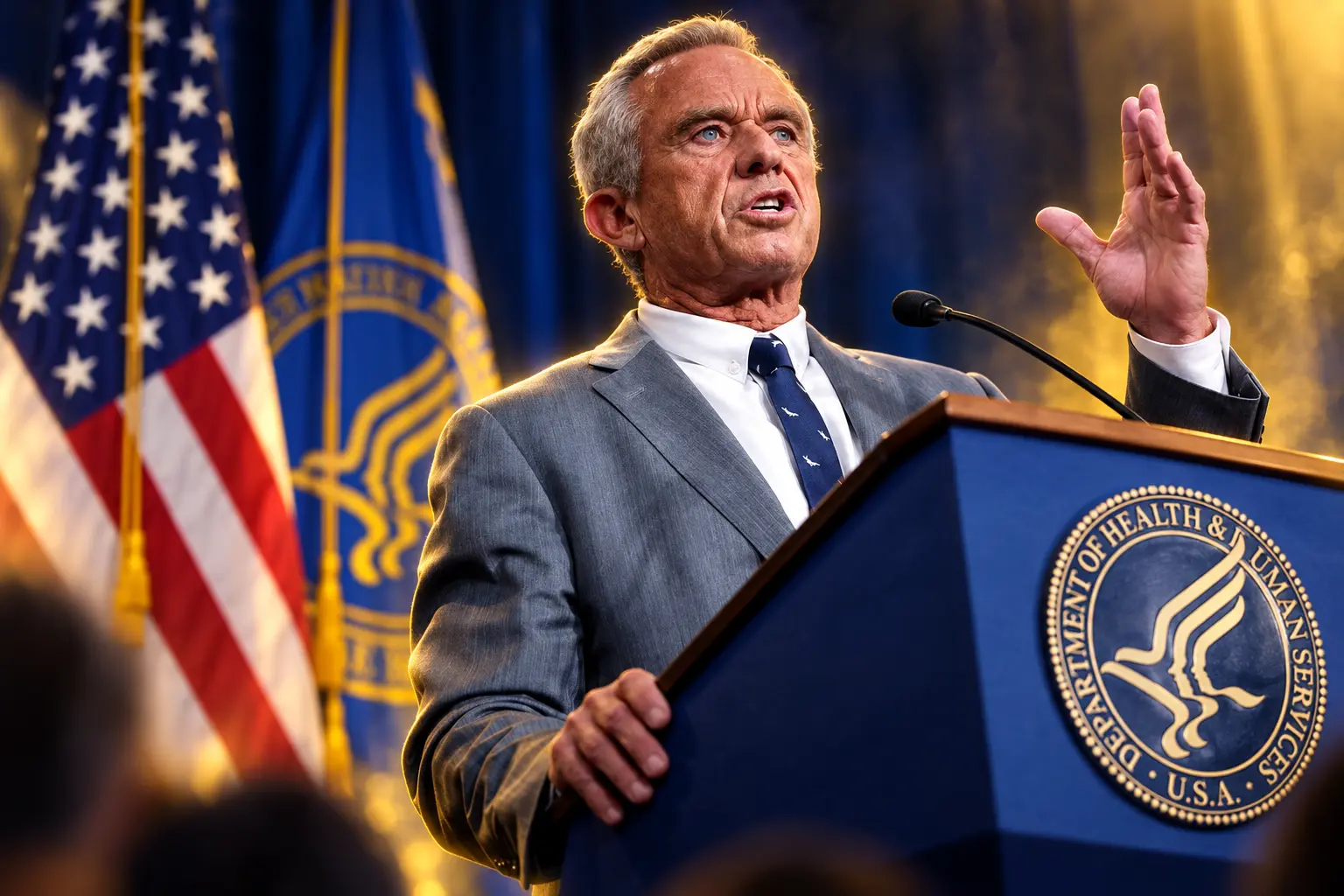
Health secretary Robert F. Kennedy Jr. launched SPECTRA on September 17, 2026, a new ARPA-H program to speed autism diagnosis and tailor care, with no grant total attached. He announced it in a keynote at Children’s Health Defense, the anti-vaccine group he once led.
The Advanced Research Projects Agency for Health is asking labs, companies, and mixed teams for tools that cut the time and specialist labor now baked into autism assessments. The same department has spent 2026 tightening Medicaid rules around applied behavior analysis, the main billed therapy for autistic children, after audits and fraud cases. Faster labels will not, by themselves, open a clinic slot.
SPECTRA Opens With No Dollar Figure
HHS described SPECTRA as Systems for Phenotypic Evaluation, Clinical Trajectories, Response, and Agency. The agency said the work should produce earlier and more accurate diagnosis, map what shapes each person’s path, and match people to more precise care. Kennedy said autism is not one-size-fits-all, and that science and care cannot be either.
On X, he framed the launch as putting American science to work on better answers and better outcomes. The post is the administration’s own clip of the pitch.
We are bringing the full power of American science and innovation to autism.
Today, HHS is launching SPECTRA to pursue better answers, more precise care, and better outcomes for people with autism and their families. pic.twitter.com/DBfnUkzZD0
— Secretary Kennedy (@SecKennedy) September 17, 2026
Neither that clip nor the paper solicitation states how much money ARPA-H will put on the table. Full proposal deadlines are still listed as to be announced. Teams must first file a solution summary, and those dates already differ by technical area.
Kennedy told the CHD room the government is no longer satisfied with describing autism and managing its consequences. He said the questions now are what drives different forms of autism, why paths differ, why some children regress, and which interventions work. Those are research questions. They are also the questions his political audience has asked for years about vaccines, a link that has no scientific evidence.
Four Technical Areas and Staggered Deadlines
ARPA-H posted notice ARPA-H-SOL-26-163 and split the call into four technical areas and due dates. The enabling-tech track, listed last, is due first.
SPECTRA SOLUTION SUMMARY DATES
| Track | What ARPA-H says it wants | Summary due |
|---|---|---|
| TA 1 Analysis | Tools that map genetic, environmental, family, metabolic, immune, and developmental factors to distinct paths | December 2, 2026, 5:00 p.m. ET |
| TA 2 Modeling | Federated, privacy-preserving AI that maps those paths and flags drivers that might be changed | December 2, 2026, 5:00 p.m. ET |
| TA 3 Precision Intervention | Individualized selection and testing of interventions across the lifespan | January 18, 2027, 5:00 p.m. ET |
| TA 4 Enabling Technologies | Tools for communication, quality of life, and assessment that runs in ordinary use | October 18, 2026, 5:00 p.m. ET |
TA 4 summaries can be filed starting October 4, 2026. TA 1 and TA 2 open November 18, 2026. TA 3 opens January 4, 2027. The order is a tell: gadgets and home measures are on a shorter clock than the biology and the treatment trials.
The program page states a working hypothesis that nonlinear interactions among genes, environment, family, metabolism, immune activity, the microbiome, and development shape distinct health and communication paths. It also says today’s model leans on costly, slow behavioral observation by specialists who are scarce in much of the country. That complaint matches what families already know about wait lists. It does not say who will pay for the care that is supposed to follow a faster yes.
Why Diagnosis Still Takes Years
HHS used CDC surveillance to set the scale. Among 8-year-olds in the Autism and Developmental Disabilities Monitoring Network’s 2022 sample, about 1 in 31 eight-year-olds identified had autism spectrum disorder, across 16 U.S. communities. CDC says reported prevalence has risen for years, and that it is unclear how much of that rise is broader definitions and better case-finding.
THE WAIT INSIDE THE PREVALENCE FIGURE
- How common: About 1 in 31 8-year-olds in that 2022 ADDM sample were identified with autism.
- How large a look: The network tracked more than 270,000 8-year-olds for that round.
- How late a label: The median age of the earliest documented diagnosis was 47 months, just under 4 years old.
- How HHS prices it: The SPECTRA release cites a widely used projection of about $461 billion a year in U.S. autism-related costs by 2025, covering medical care, support, and lost work.
Helen Tager-Flusberg, director of the Center for Autism Research Excellence at Boston University, called ARPA-H’s turn toward autism timely and said technology could change diagnosis, interventions, and support. She also said she hoped the review would pick projects without bias. That hope is the scientific community’s real filter. The bottleneck families feel is simpler. Screening is supposed to happen in toddlerhood, and a formal diagnosis still often lands years later, after a child has already missed early-service windows.
The 421 Percent ABA Spending Surge
Diagnosis is the gate that unlocks billed therapy. The main product behind that gate is applied behavior analysis, a labor-heavy service that Medicaid and private plans were pushed to cover as diagnoses rose. CMS said that between 2021 and 2025 it recorded a 421 percent jump in ABA spending in Medicaid and CHIP, against 67 percent growth in the number of children with an autism diagnosis who were receiving services. Those are different bases: dollars versus headcount. The gap is what the agency is now policing.
On August 4, 2026, CMS published a state toolkit on ABA oversight. Kennedy said it would help states shut down fraud schemes that exploit autistic children and waste taxpayer money. CMS Administrator Mehmet Oz said every dollar lost to fraud or waste is a dollar that cannot reach a child who needs it. The toolkit, the agency wrote, does not create new federal limits or cut the EPSDT duty to cover medically necessary care. States have still used the fraud era to cut rates, cap weekly hours, pause new provider enrollments, and put claims under extra review. Clinics in several states have stopped taking Medicaid patients or have grown wait lists even as they keep treating children already on the books.
WHAT THE SQUEEZE LOOKS LIKE ON THE GROUND
- The spend gap: ABA outlays in Medicaid and CHIP rose 421 percent from 2021 to 2025, while the count of diagnosed children in services rose 67 percent.
- The federal lever: The August 4, 2026 toolkit tells states to tighten medical necessity, supervision, enrollment, and fraud checks without, on paper, shrinking the benefit.
- The clinic result: Providers describe staff losses, denied hours, and longer waits for approval, including practices that have not been found guilty of fraud.
- The family bind: A faster SPECTRA label still has to clear the same prior-auth queues that are already backing up.
If ARPA-H’s tools work, more children will cross the diagnostic line sooner. The therapy those labels buy is the same service CMS is teaching states to audit more tightly. That is the second move inside the announcement, and it does not need a conspiracy to land. It is already policy.
Russell Shilling and the Family Brief
SPECTRA’s program manager is Russell Shilling, Ph.D., a retired Navy captain and former DARPA program officer. He has said both of his sons are autistic, now adults, and that the work stopped being theoretical after those diagnoses. He sat on the Medical and Science Advisory Committee at Autism Speaks and has spent years around VR therapy, education technology, and AI tools meant to run in daily life rather than in a lab.
Over the past decade, we have become much better at recognizing autism and the substantial differences among people across the spectrum. Yet our approaches to assessment and care have not kept pace, and they overlook the behavioral and biological complexity of each person.
Russell Shilling, Ph.D., SPECTRA program manager, HHS launch statement
Shilling is the person who will decide which summaries become pitches. His DARPA habit is to fund platforms other people can later productize, which matches ARPA-H’s claim that it can de-risk tools for academia and industry. It also matches the fear Tager-Flusberg left in one line: the review has to stay a science contest, not a loyalty test. Shilling’s Autism Speaks chapter will be read as either lived expertise or as a tell, depending on who is reading the proposer list.
Kennedy’s CHD Speech Framed the Launch
Kennedy gave the SPECTRA lines on a CHD stage, then ARPA-H posted the formal call the same day. He had stepped away from the group to run for office and had kept a distance after taking the HHS job. The September 17 keynote was a return. He told the room it had a strong and steadfast friend at the White House. Andrew Wakefield, the former doctor whose retracted 1998 paper tied the MMR vaccine to autism and who later lost his license, was on the same program.
During that keynote Kennedy also called autistic children “damaged,” language autistic adults and many parents have spent a decade trying to retire from federal podiums. He has kept arguing that autism tracks with vaccines. He and President Donald Trump have also tied autism to Tylenol use in pregnancy, without evidence that holds up in the literature most clinicians use. SPECTRA’s written text talks about genes, the exposome, the microbiome, and real-world function. It does not name vaccines. The first replies under Kennedy’s own launch post still asked whether the program would study shots and herbicides. That is how the announcement is being heard in the room that cheered it.
A research call can survive a messy rollout. It cannot survive a review that looks pre-cooked. Tager-Flusberg’s caution about unbiased selection is the clean version of a wider worry: that investigators will treat SPECTRA as another Kennedy causation project and stay away, or that the teams who do show up will be the ones already aligned with CHD’s map of the problem.
$50 Million From NIH, Already in the Field
SPECTRA is not the first autism data bet of this administration. In September 2025, NIH launched the $50 million Autism Data Science Initiative, funding 13 projects that pull genomic, clinical, behavioral, and services data and lean on exposomics, the study of environmental, medical, and lifestyle exposures next to biology. NIH Director Jay Bhattacharya said the work would unite genetics, biology, and environmental exposures. Some autism scientists said they had feared the money would become vaccine-injury research and were relieved when the funded list looked broader, including diet in pregnancy, adult outcomes, and a replication hub.
THE FEDERAL AUTISM RESEARCH CLOCK
- September 2025: NIH awards more than $50 million across 13 Autism Data Science Initiative projects.
- August 4, 2026: CMS publishes the state ABA toolkit after documenting the 421 percent spending rise against 67 percent growth in children served.
- September 17, 2026: ARPA-H opens SPECTRA with no posted grant total and staggered summaries beginning October 18, 2026.
ADSI is already trying to explain prevalence and cause with existing datasets. SPECTRA is trying to build the next measurement stack, including home tools due this fall. One program mines yesterday’s records. The other wants devices that score function while a child uses them. Families still need a clinician who can see them this quarter, and a payer that will sign the hours.
TA 4 summaries are due October 18, 2026, at 5:00 p.m. ET. If those tools work, they will mint diagnoses on a clock the therapy market is no longer on. The grant total for SPECTRA remains unlisted. The wait for care is not.
Disclaimer: This article is news reporting and analysis of a federal research call and related autism policy. It is for information only and is not medical advice, a diagnosis, or a recommendation about vaccines, acetaminophen, ABA, or any other treatment. Readers should talk with a licensed physician or a qualified developmental specialist before changing screening, medication, or therapy plans. Figures, deadlines, and program rules reflect the HHS, ARPA-H, CMS, CDC, and NIH materials cited here and may change as those agencies update the solicitation or coverage guidance.

Nintendo Pulls SmileBASIC After the First Switch 2 Jailbreak

Arkane Lyon’s Union Holds the Clock Microsoft Cannot Skip

Airbnb Bans Guest Chores as Homes Turn Into Hotels

Riyadh Downs a Houthi Missile After Weeks of Capital Strikes

Ariana Madix’s Empty Los Angeles House Fits a Bravo Pattern

AI Server Boards Put Everyday Circuit Materials on Allocation

Glacier Collapse Buried Nepal’s Hydropower Workers in Tunnels

Congo’s Bundibugyo Outbreak Outruns the Licensed Ebola Shots

Pennsylvania Measles Deaths Follow a Long Slide in Coverage

Germany Can Miss Its 2026 Climate Cap Without Penalty
-
 NEWS2 months ago
AI Server Boards Put Everyday Circuit Materials on Allocation
-
 NEWS2 months ago
Glacier Collapse Buried Nepal’s Hydropower Workers in Tunnels
-
 NEWS2 months ago
Congo’s Bundibugyo Outbreak Outruns the Licensed Ebola Shots
-
 NEWS2 months ago
Pennsylvania Measles Deaths Follow a Long Slide in Coverage
-
 NEWS2 months ago
Germany Can Miss Its 2026 Climate Cap Without Penalty
-

 NEWS2 months ago
Texas Judge Freezes the SEC Eligibility Ban for 41 Athletes
-

 NEWS2 months ago
CISA’s Known Exploits Still Come From 2007-Era Bugs
-

 BUSINESS2 months ago
Trump’s Venezuela Oil Deal Leaves the Barrels in the Ground