
NEWS
Hallway Witnesses Do Not Settle the Cornell Chi Phi Night
A Chi Phi DJ scored Jane Doe at 1 to 2 on a 10-point drunk scale, but he left the room, and Cornell still expelled two men while a special prosecutor holds the file.

A Chi Phi brother who lived in the room where Jane Doe says she was raped told campus police she spoke clearly and looked barely drunk. His girlfriend said Doe walked out later with four or five men and did not look distressed. Those police interviews, which became public on October 13, 2026, are being treated as a clean answer to a night Cornell already split among seven different men, with two of them expelled.
The DJ was not a defendant. He also was not in that bedroom for the hours at the center of her suit.
The DJ Who Lived in That Room
The brother told investigators on November 21, 2024, that he had been DJing the October 19 party at Chi Phi’s Xi chapter house on Cornell’s Ithaca campus. Jane Doe, then 20, has said she walked over about 11 p.m. after drinking at her sorority and in town. Her 101-page civil complaint in Manhattan, filed September 16, 2026, under Index No. 161704/2026, names seven then-members, the university, the national fraternity, her sorority, and an Ithaca bar.
When the DJ first went to his own room, he said, Doe was inside with Johnathan Newell, who appeared to be vomiting into a bowl or bucket. Doe told him, more than once, that everything was fine and that she was taking care of Newell. He said he felt she was pushing him out of the doorway and keeping him from coming in.
The next time he saw her there, he said, several people were in the room. She was fully clothed, lying on a bed, and talking.
Conversing with the other individuals in the room very clearly.
Chi Phi DJ, campus police interview, November 21, 2024
He put her at 1 to 2 on a 10-point scale of how drunk she looked. He told them all to leave so he and his girlfriend could use the room. Then he left the house with Gillio Lopes, his girlfriend, and others and went to McDonald’s. When he came back, he said, the room was empty and he went to bed.
He also told police that, in every moment he saw her, Doe never gave off a vibe that she wanted to leave. That is his account of the minutes he was in the doorway and the minutes he was in the room after people had gathered. It is not an account of the stretch after he went for food, and it is not a toxicology test.
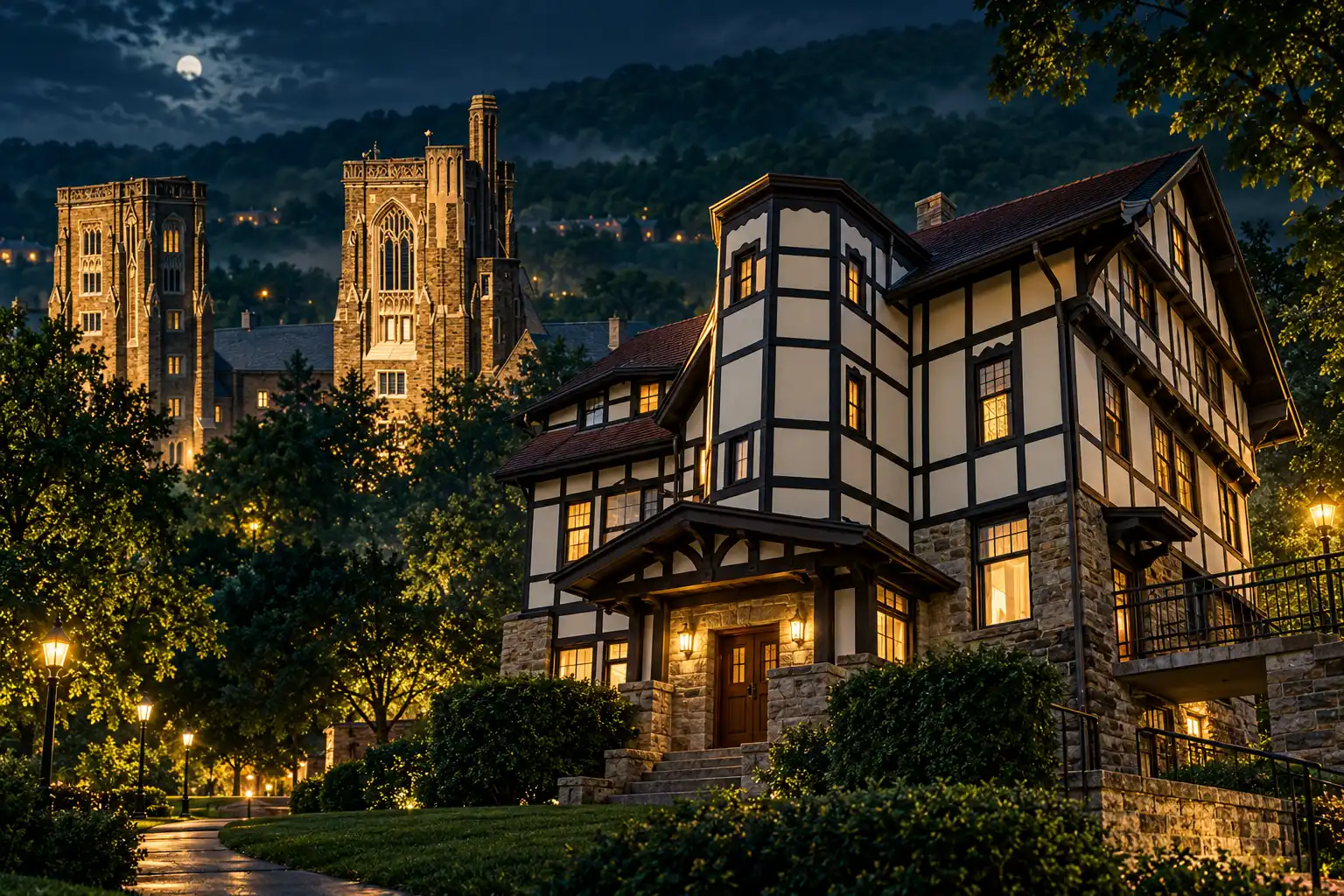
His Girlfriend Called the Exit Scary
The DJ’s girlfriend spoke to investigators on December 17, 2024, 39 days after Doe first went to the Cornell University Police Department on November 8. She had been on the McDonald’s run. When she got back, she said, brothers were standing outside the room, trying to figure out what was going on inside.
WHAT SHE TOLD POLICE
- The traffic: She was confused to hear that people had been going in and out of the room through the night.
- The feeling: She thought it did not “sound like something good” was happening inside.
- The exit: Someone told everyone to leave, and she saw Doe come out with four or five guys.
- The look: She called that number of men “scary,” and she also said Doe did not look “distressed.”
- The later guilt: She was not worried that night. After she heard drugs were involved and that Doe was saying the sex was not consensual, she felt “kinda guilty” for not helping.
She still told police there was no way of knowing something may have been amiss, because Doe and the men all looked “very calm” as they left. It seemed “consensual because no one looked visibly distressed.”
Calm at the door is being asked, in public argument, to stand in for consent. It cannot. A person can walk out of a bedroom looking composed and still have been too drunk, too high, or too boxed in to agree to what happened inside. A person can also look calm because, on that witness’s read, she was not in trouble. Those two readings of the same hallway are why the interviews do not end the night.
What Cornell’s Hearing Panel Found
A three-person Title IX panel expelled Matthew Ingalls and Johnathan Newell for sexual assault, suspended Winston Lee and Gillio Lopes, barred Diego Sarabia from campus, and ordered lighter education sanctions for Scott Norris and Scott Kretzschmar. Cornell’s public FAQ says the Office of Civil Rights and the Office of Student Conduct ran the case for months, that the parties could testify, and that the panel issued a range of sanctions after Title IX hearings. The university also says a student can violate campus rules even when no criminal charge is filed.
The panel did not treat the seven men as one event. Discipline summaries that later became public show a split.
HOW THE SEVEN WERE SANCTIONED
| Student | Title IX outcome | What the complaint alleges |
|---|---|---|
| Matthew Ingalls | Expelled; found responsible for sexual assault | Friend Doe went to meet; alleged threesome, ketamine, assault |
| Johnathan Newell | Expelled; found responsible for sexual assault | Alleged assault and a Snapchat invite upstairs |
| Winston Lee | Two-year suspension plus probation | Alleged ketamine use off her body and forced oral sex |
| Gillio Lopes | Three-semester suspension, two years of probation | Alleged sex without consent; DJ said Lopes later went to McDonald’s |
| Diego Sarabia | Persona non grata, barred from campus for three years | Alleged forcible kiss after other men came in |
| Scott Norris | No-contact order, modules, reflection paper | Alleged entry after the Snapchat message |
| Scott Kretzschmar | No-contact order, modules, reflection paper; attempted sexual exploitation | Alleged entry after the Snapchat message |
Hearings ran at least 12 days from May 2 to May 29, 2025. Investigators logged 50 interviews with 32 witnesses. All seven men denied wrongdoing in the campus process. Four of them said they had sexual contact with Doe and that it was consensual. Ingalls, in that file, said he was himself “a victim of sexual misconduct” because he was too out of it to consent to oral sex.
Jeremy Saland, the lawyer for Kretzschmar, said his client “did not know of or observe any of this conduct” and that it is “unfair and unjust to treat and accuse him as if he committed such a horrid crime.” Saland also said Kretzschmar was “part of a deplorable SnapChat” and that he never saw Doe naked or in duress. That is the defense cut of the same night the panel still marked with attempted sexual exploitation.
Cornell has said none of the men were offered essays as the sole consequence. Temporary suspensions went out when the report came in. Chi Phi’s Xi chapter was closed in 2024 and remains barred from campus. Federal student-privacy rules, the university says, stop it from putting out a student-by-student public ledger, which is why the split became visible only after records moved through other cases.
Four Men Labeled It Consensual by Morning
When the DJ woke up, he told police, he heard that several brothers had been in what he called a “consensual act.” Asked what he meant, he said Ingalls, Lee, Lopes, and Newell “all admitted to having consensual sex with [Doe].”
That label showed up hours after the party, among the men, before Doe went to campus police on November 8. Why they felt the need to call it consensual that soon is not explained in his interview. People who have done nothing wrong do not always rush to announce consent. People who know a story is about to get out sometimes do. Either reading is possible on this record. The word, on its own, does not prove the act.
The same night already had a written trail that no hallway score can erase. The complaint and campus files describe a Snapchat blast at 1:42 a.m. in a group used by chapter members, saying there was “free pussy” upstairs. Another line in that thread, according to the suit, told brothers they could “walk in and whip it out.” Doe has said she was pressured to snort ketamine, a drug she had never used, and given marijuana and high-proof liquor. The lawsuit says the assault ran until around 5:45 a.m. on October 20.
Campus police had already been through that house. The daily crime log shows a drug-related arrest at Chi Phi at 1:05 a.m. on October 19, about 22 hours before Doe arrived that night. A Title IX hearing record also notes that ketamine was in use in the house and that someone had overdosed on or about October 18. The DJ’s 1-to-2 score sits in a building where that drug was already a police problem.
Jane Doe Told Police She Was Raped
Doe went to Cornell police on November 8, 2024, and gave a sworn statement on November 14. Tompkins County District Attorney Matthew Van Houten later said that statement did not allege she was drugged against her will or gang raped, and that it described her drug use and sexual contact as “voluntary, conscious, and consensual.” He said her credibility “was never in question.” He also said the evidence in 2024 did not support charges.
That six-page write-up is not the whole interview. Gov. Kathy Hochul later said Doe “could not have been clearer that she was 100% confident that she had been raped,” and that those words never made it into the account campus police sent prosecutors. Van Houten has said his office was working from the short statement, not a 120-page interview transcript. Cornell’s FAQ says campus police did send the sworn statement and the Snapchat screenshot to the district attorney in November 2024. Ithaca police have said the alleged assault was never reported to them.
In the campus hearings, Doe described the room in language that does not match a 1-to-2 drunk score from a doorway.
I felt like bait. I felt like lions around me. It just was a totally debilitating place to be in.
Jane Doe, Title IX hearing, May 2025
She has also said, in a public statement after the suit, “What I experienced from those who raped me in the fraternity was the worst experience of my life.” On November 3, 2024, five days before she went to police, she texted Newell that “90% of what happened that night was not consensual,” that she had been given more ketamine than she could remember, and that she had told him she felt uncomfortable and did not know the people in the room.
Other messages from the days after the party cut the other way and will be exhibits if this is tried. On October 23 she texted Ingalls that “everyone knows” and that she was “incredibly stressed out” about talk on campus. In a separate chain she told Newell she liked being with him and Ingalls and that they should not feel shame. A roommate texted “You coming home tn” at 3:05 a.m. and Doe answered “idk.” That reply shows she could read a phone and type four letters. It does not show she could get dressed, get her cards, and walk out of a room she has said was full of men between her and the door.
The complaint says she had about 10 standard drinks in three hours before she arrived. There was no blood test that night. Every drunk scale in this file, including the DJ’s 1 to 2, is someone looking at her and guessing.
A Special Prosecutor Now Holds the File
Van Houten reopened the criminal inquiry on September 28, 2026, after the civil complaint landed and his office took a wave of calls. Cornell supports a criminal grand jury review of Doe’s account. Three days later Hochul pulled the case out of Ithaca.
HOW THE FILE MOVED
- October 19-20, 2024: Doe alleges she was drugged and sexually assaulted at Chi Phi after a chapter party.
- November 8, 2024: She reports to Cornell police. The chapter is suspended. The seven men face temporary campus restrictions.
- November 14, 2024: She gives a sworn statement. The DJ is interviewed on November 21. His girlfriend is interviewed on December 17.
- May 2-29, 2025: The Title IX panel hears the case and later issues split sanctions, including two expulsions.
- September 16, 2026: Doe files the civil suit in New York County Supreme Court.
- October 1, 2026: Hochul signs Executive Order 64, naming Attorney General Letitia James special prosecutor.
- October 13, 2026: Police interview transcripts with the DJ and his girlfriend become public.
Hochul’s executive order appointing a special prosecutor tells James to investigate the night described in the complaint and, if warranted, to take it to a grand jury. In her written statement that night, Hochul said newly released information had undercut her faith, and the public’s, in the district attorney’s ability to handle the case. James said every New Yorker deserves to know that a crime report will be investigated fully and fairly, and that her office will investigate the allegations fully and fairly.
No one among the seven has been criminally charged. Presence in a room, ugly group-chat talk, sex that some of the men still call consensual, and a sexual assault finding under campus rules are not the same thing in a criminal court. James’s office has said the work will take months. The DJ and his girlfriend are now named voices in a file that already includes more than 1,000 pages of campus records, a Snapchat invite, two expulsions, and Doe’s statement that she was raped.
Chi Phi’s Chapter Remains Barred From Campus
Trey Robb, interim executive director of Chi Phi, said the Xi chapter voted unanimously, three days after Doe’s police report, to take the accused men off its rolls and asked the national fraternity to expel them. The Grand Council did so, he said. “Chi Phi condemns sexual assault and drug and alcohol abuse in the strongest possible terms,” Robb said. Headquarters, he added, does not run chapters day to day and acted on what the chapter reported.
The house is still dark as a chapter. Cornell says Xi remains barred from campus. In early 2025 the university stood up a Presidential Task Force on Campus Sexual Assault; it endorsed that group’s March 2026 recommendations and has pointed to new student education, added health staff, and a Pathways tool for reporting. Trustees later hired outside counsel for a separate review of how the school handled this case. None of that work turns a hallway demeanor call into a verdict.
The two witnesses describe a woman who talked, looked after a nauseous man, walked out with a group, and did not look frantic. Doe describes ketamine, a locked-in room, and rape. Cornell’s panel believed enough of her account to throw two men out of the university and not enough of it to treat all seven the same. James now has to decide whether any of that night is a crime. The DJ’s 1-to-2 score will be in that pile. So will the Snapchat. So will the girlfriend who said it did not sound like something good, then said everyone looked calm, then said she felt guilty.
Disclaimer: This article is news reporting on a civil lawsuit and a pending criminal inquiry. It is informational only and is not legal advice, a finding of guilt or innocence, or a substitute for police files or court records. It does not tell any reader whether to sue, testify, or speak to investigators; a person with a stake in this case or in a similar report should consult a licensed criminal-defense or plaintiffs’ attorney in New York before acting. Names, sanctions, quotes, and case statuses are taken from public filings, university statements, and police interview transcripts as those records stood on the dates given above, and they can change as the special prosecutor and the civil court proceed.

Nintendo Pulls SmileBASIC After the First Switch 2 Jailbreak

Arkane Lyon’s Union Holds the Clock Microsoft Cannot Skip

Airbnb Bans Guest Chores as Homes Turn Into Hotels

Riyadh Downs a Houthi Missile After Weeks of Capital Strikes

Ariana Madix’s Empty Los Angeles House Fits a Bravo Pattern

AI Server Boards Put Everyday Circuit Materials on Allocation

Glacier Collapse Buried Nepal’s Hydropower Workers in Tunnels

Congo’s Bundibugyo Outbreak Outruns the Licensed Ebola Shots

Pennsylvania Measles Deaths Follow a Long Slide in Coverage

Germany Can Miss Its 2026 Climate Cap Without Penalty
-
 NEWS2 months ago
AI Server Boards Put Everyday Circuit Materials on Allocation
-
 NEWS2 months ago
Glacier Collapse Buried Nepal’s Hydropower Workers in Tunnels
-
 NEWS2 months ago
Congo’s Bundibugyo Outbreak Outruns the Licensed Ebola Shots
-
 NEWS2 months ago
Pennsylvania Measles Deaths Follow a Long Slide in Coverage
-
 NEWS2 months ago
Germany Can Miss Its 2026 Climate Cap Without Penalty
-

 NEWS2 months ago
Texas Judge Freezes the SEC Eligibility Ban for 41 Athletes
-

 NEWS2 months ago
CISA’s Known Exploits Still Come From 2007-Era Bugs
-

 BUSINESS2 months ago
Trump’s Venezuela Oil Deal Leaves the Barrels in the Ground