
BUSINESS
Fed Locks Bank Stablecoins to Short-Term Treasury Bills
The Fed’s GENIUS drafts lock Board-supervised payment stablecoins to 93-day Treasuries and a bank-subsidiary charter.

The Federal Reserve on Sept. 24 proposed that payment stablecoins it oversees be fully backed by short-term Treasuries, cash and overnight repos. The drafts also set a graduated capital charge and a dedicated application path for state member banks that want to issue the tokens through a subsidiary.
The package applies to Board-supervised issuers, not to every dollar token already in circulation. Most coins in use today sit with firms that answer to the OCC, a state regulator, or no U.S. banking supervisor at all.
Thursday’s Package Splits Banks From Other Issuers
The Board asked for public comment on two proposals for Board-supervised issuers under the GENIUS Act, the 2025 law that created a federal lane for payment stablecoins. The release went out at 2:30 p.m. EDT. Comments close 60 days after the notices appear in the Federal Register.
The first draft would require full reserve backing, set capital and risk-management standards, write custody rules for firms that safekeep reserve assets, and spell out which stablecoin activities Board-supervised banks may run. The second would create a tailored application process for those banks, including a business plan, financial information, and a path for appeals, hearings and final decisions.
@federalreserve requests public comment on two proposals related to establishing a regulatory framework for Board-supervised payment stablecoin issuers under the GENIUS Act: https://t.co/WD0OsCS9cS
— Federal Reserve (@federalreserve) September 24, 2026
A staff memo dated Sept. 3, released with the drafts, is blunt about who is in the room. Board-supervised permitted payment stablecoin issuers are subsidiaries of insured state member banks that the Board has approved to issue, or uninsured state-chartered firms with at least $10 billion in outstanding payment stablecoins that move into the Board’s book. That is a bank channel. It is not a rulebook for every offshore dollar token.
The OCC, FDIC and NCUA already have their own GENIUS drafts for the firms they regulate. The Fed’s paper is the missing piece for state member banks, and it is the piece that tells those banks how a stablecoin subsidiary would be funded, capped and wound down.
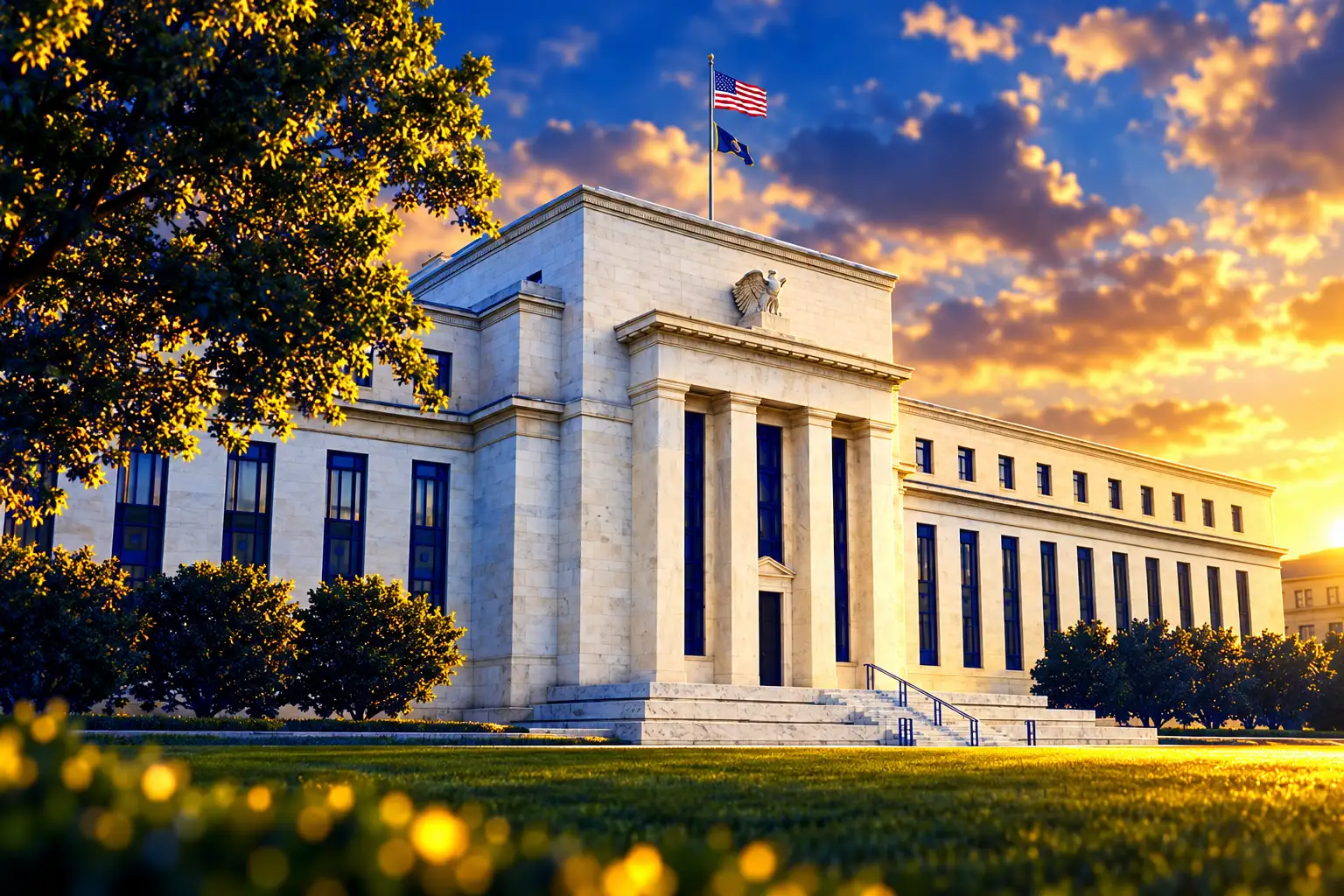
Short Treasuries Fill the Reserve Account
The memo would require reserve assets whose aggregate fair value, at all times, equals or exceeds the par value of outstanding payment stablecoins, held apart from the issuer’s other assets. The list matches the statute and then adds operational detail, including tokenized versions of some of the same instruments.
ELIGIBLE RESERVE ASSETS
- Cash and central-bank money: U.S. dollar cash and balances at a Federal Reserve Bank.
- Bank deposits: Demand deposits or insured shares payable on demand at an insured depository institution.
- Short government paper: Treasuries with a remaining maturity of 93 days or less.
- Overnight secured trades: Treasury-backed repurchase agreements and overnight reverse repos with Treasuries as collateral.
- Funds and tokens: Shares of eligible funds invested only in those assets, plus tokenized versions of some of the same instruments.
The law already limits reserves to cash, central-bank balances, demand deposits, and Treasury bills, notes, or bonds with 93 days or less remaining maturity, plus overnight Treasury repos and certain government funds. The Fed is turning that list into a daily test. Fall below one-to-one and the issuer must notify the Board, then liquidate reserves and redeem the coins unless it has a plan to get back to full backing and the Board directs it to follow that plan.
Issuers would also have to diversify so the one-to-one test still holds under stress, including concentration in uninsured deposit claims and reverse-repo counterparties. Redemption policy would have to be public, with a window of no more than two business days unless a safe harbor applies. The Board could stretch that window if it sees a threat to safety and soundness or to financial stability, or if it finds an extension is in the public interest.
Deputy Treasury Secretary Francis Brooke said on Sept. 22 that stablecoin providers already held nearly $200 billion in Treasury bills and other near-maturity Treasury securities. That is a sector stock, counted by Treasury, not a forecast. Tether’s March 31 attestation put that one issuer’s direct and indirect Treasury exposure at $141 billion, against about $183.4 billion of USDT then, a line that ranked it among the largest holders of U.S. government paper. The Fed draft does not invent that bid. It writes it into the operating rules for the issuers it will supervise, and it polices how concentrated and how short the paper can be.
The Capital Charge Falls After $50 Billion
Full backing is not the only bill. The memo would add a simple capital stack aimed at operational risk and at the credit risk that remains when reserves are uninsured deposits or thin reverse repos. Fail the minimum at a quarter-end and the issuer files a plan to get back into compliance. Fail again at the next quarter-end and it must liquidate all reserve assets and redeem the outstanding coins.
THE OPERATIONAL-RISK CAPITAL CHARGE
| Outstanding payment stablecoins | Capital rate |
|---|---|
| First $20 billion | 2.0 percent |
| Next $30 billion | 1.5 percent |
| Amounts above $50 billion | 1.0 percent |
A separate 2 percent charge would apply to reserve assets that are uninsured deposit claims and undercollateralized reverse repurchase agreements, with a look-through when those exposures sit inside eligible funds. Another add-on would equal 25 percent of the three-year average of annual revenue that does not come from reserve assets, a hook for activities the issuance charge does not capture.
The slope is the design choice. The charge is heavier on the first slice of issuance and lighter once a book is large, because staff argued operational risk does not rise one-for-one with size. For a nonbank that wanted to grow inside the Fed’s perimeter, that is still real equity. For a state member bank that already holds capital at the parent, it is a subsidiary number with a wind-down trigger attached.
The OCC got there first. Its March 2 package set capital rules for OCC-supervised issuers, including a de novo period with a $5 million floor and an ongoing requirement tied to the firm’s own risk profile. The Fed chose a published grid instead of a trust-bank-style build. Banks that can pick a supervisor will read both papers side by side before they file.
State Member Banks Get a Dedicated On-Ramp
The companion draft is the on-ramp the wire copy treated as paperwork. An insured state member bank that wants a subsidiary to issue payment stablecoins would file with its Reserve Bank. The file would include a business plan and financial information. The Board would also write procedures for appeals, hearings and final determinations.
Permitted work at the issuer itself would be narrow. The memo would limit a Board-supervised issuer to core stablecoin functions (issue, redeem, custody) and work that directly supports those functions. Staff said these firms would generally not be expected to run up material liabilities other than the coins, or to hold large assets other than reserves. That is a narrow company, sitting next to a bank, funded like a money-market product.
The Board would also use a power the statute gives it alone: a tying ban that runs to every permitted payment stablecoin issuer, including firms the Fed does not supervise. An issuer could not condition a service on the customer taking another product from the issuer or its subsidiaries, or on the customer staying away from a rival. Custody firms that hold reserve assets, coins used as collateral, or private keys would get their own principles-based minimums if they are Board-supervised.
Smaller crypto-native names that hoped GENIUS would be a light federal wrapper are not the applicants this paper is built for. The capital grid, the two-quarter liquidation trigger and the bank-subsidiary file are a product for institutions that already speak the Board’s language. That is why the dedicated path matters more than the press-release sentence about “an application process.”
What the Yield Ban Does to Issuer Revenue
Payment stablecoins are not supposed to pay interest. The statute bars yield solely for holding, using or keeping the token, and the memo would put that ban into the Fed’s rule. Certain third-party arrangements would be presumed to be prohibited payments of interest or yield, in line with the OCC’s draft.
That presumption is the fight inside the business model. Issuers earn the Treasury rate on the bills and overnight repos that back the coins. Holders of a payment stablecoin get a dollar claim, not a share of that coupon. Workarounds that route a slice of reserve income back to users through an affiliate, an exchange, or a rebate tied to how long someone holds the token are exactly the structures staff want to treat as yield unless the firm can rebut the presumption.
Barr asked for public input on whether the reserve and capital rules handle interest-rate and foreign-currency risk. Short paper still moves in price when bills cheapen in a stress tape, which is why he said even otherwise liquid government debt can come under pressure. A two-day cash-out right against a 93-day bill book is the practical form of that question. The yield ban decides who is paid for taking that mismatch. Under the drafts, it is not the holder.
Barr Wants the AML Bar Rewritten
Governor Michael S. Barr supported the issuance. He has been a skeptic of gaps in the GENIUS design, especially illicit finance in secondary-market trading, and he did not treat Thursday as the end of that argument.
Stablecoins will only be stable if they can be reliably and promptly redeemed at par in a range of conditions. This includes during market stress, when pressure can be put on the value of even otherwise liquid government debt, and during episodes of strain on the individual issuer or its related entities.
Michael S. Barr, Federal Reserve Governor, Sept. 24 statement
He said he was encouraged by the reserve-asset limits and by transparent, standardized capital requirements, and that tokens must be reliably and promptly redeemed at par if the public is going to treat them as money. He also wants the final rule to address a standard, already in the Board’s July bank anti-money-laundering proposal, that would stop the Board from a supervisory or enforcement action on an AML deficiency unless the issue is “significant or systemic.”
“I am concerned that the ‘significant or systemic’ standard may have unknown effects on the Board’s ability to effectively substantiate that an institution establishes and maintains compliant programs,” Barr said. In June he backed a joint customer-identification proposal for payment stablecoin issuers and still warned that secondary-market trades remain too easy for people who want to skip those checks. Thursday’s paper does not close that file. It imports the same enforcement threshold into the stablecoin stack and leaves Barr asking for it to be fixed before a final vote.
January 18, 2027 Is Now the Hard Date
Congress told the agencies to write the rules within a year of enactment. That mark was July 18, 2026. No final GENIUS rules were out by then, so the statute’s backstop date is the one issuers have to underwrite.
THE GENIUS ACT CLOCK
- July 18, 2025: President Donald Trump signs the GENIUS Act, creating a federal regime for payment stablecoins.
- December 19, 2025: The FDIC issues an early notice of proposed rulemaking for the firms it would supervise.
- March 2, 2026: The OCC publishes its main GENIUS capital, reserve and licensing proposal.
- June 22, 2026: The Board joins the other federal banking agencies and Treasury on a customer-identification rule for permitted issuers.
- July 18, 2026: The statutory one-year rulemaking mark passes without final rules.
- September 24, 2026: The Fed opens the two Board-supervised drafts for comment, 60 days after Federal Register publication.
- January 18, 2027: The Act takes effect on this date, or 120 days after primary regulators issue final implementing rules, whichever comes first.
Until a final package lands, the later date is the one that binds. After it, issuing a payment stablecoin in the United States without being a permitted issuer is off-limits. Digital-asset platforms get a longer fuse, into 2028, before they are barred from offering non-permitted coins to people in the United States, but the issuer ban is the one that hits first.
The comments that come in over the next 60 days after the Federal Register notice will argue over the capital slope, the two-day cash-out, the yield presumption and Barr’s AML bar. The Board still has to finish a rule, and so do the OCC, the FDIC and the NCUA. The T-bill bid Treasury already counts does not wait on that sequence, and neither does the January 18, 2027 date sitting in the statute.
Disclaimer: This article is news reporting and analysis of Federal Reserve proposals and related official papers. It is for information only and is not legal, investment, tax or regulatory advice, and it is not a recommendation to issue, hold, redeem or short any stablecoin or Treasury security. Readers who may be affected should consult a qualified banking or securities lawyer and, where relevant, a licensed compliance officer before changing products, reserves or applications. Figures, comment deadlines and supervisory statuses reflect the Board’s Sept. 24, 2026 papers and the other dated official materials cited above, and they can change in a final rule.

Nintendo Pulls SmileBASIC After the First Switch 2 Jailbreak

Arkane Lyon’s Union Holds the Clock Microsoft Cannot Skip

Airbnb Bans Guest Chores as Homes Turn Into Hotels

Riyadh Downs a Houthi Missile After Weeks of Capital Strikes

Ariana Madix’s Empty Los Angeles House Fits a Bravo Pattern

AI Server Boards Put Everyday Circuit Materials on Allocation

Glacier Collapse Buried Nepal’s Hydropower Workers in Tunnels

Congo’s Bundibugyo Outbreak Outruns the Licensed Ebola Shots

Pennsylvania Measles Deaths Follow a Long Slide in Coverage

Germany Can Miss Its 2026 Climate Cap Without Penalty
-
 NEWS2 months ago
AI Server Boards Put Everyday Circuit Materials on Allocation
-
 NEWS2 months ago
Glacier Collapse Buried Nepal’s Hydropower Workers in Tunnels
-
 NEWS2 months ago
Congo’s Bundibugyo Outbreak Outruns the Licensed Ebola Shots
-
 NEWS2 months ago
Pennsylvania Measles Deaths Follow a Long Slide in Coverage
-
 NEWS2 months ago
Germany Can Miss Its 2026 Climate Cap Without Penalty
-

 NEWS2 months ago
Texas Judge Freezes the SEC Eligibility Ban for 41 Athletes
-

 NEWS2 months ago
CISA’s Known Exploits Still Come From 2007-Era Bugs
-

 BUSINESS2 months ago
Trump’s Venezuela Oil Deal Leaves the Barrels in the Ground