
NEWS
New Zealand Vaccinates Rare Birds as H5N1 Nears Seals
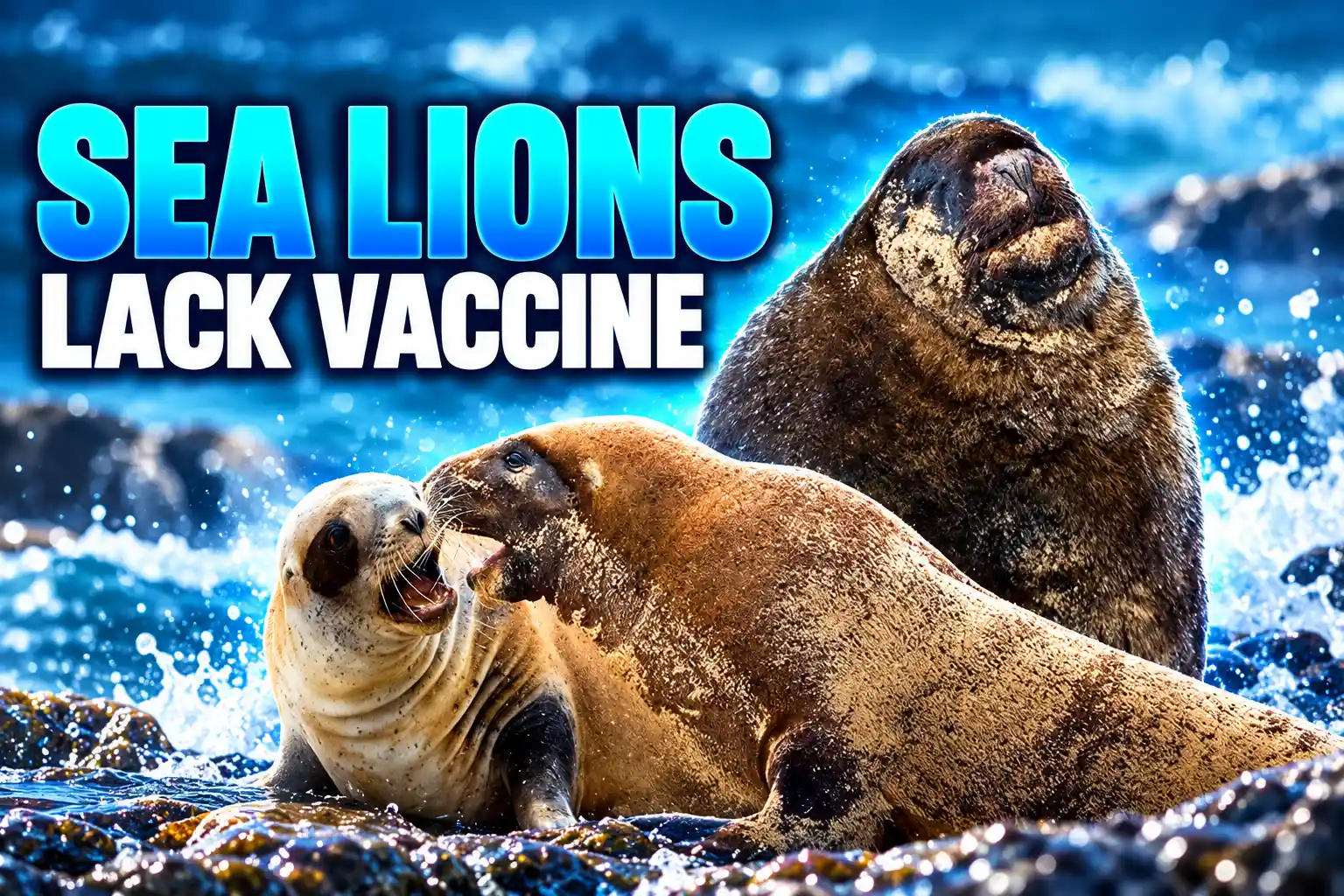
New Zealand has confirmed H5N1 in three wild birds and begun vaccinating 300 endangered birds, while nationally endangered sea lions still have no shots.

New Zealand has confirmed H5N1 in three wild birds and begun two-dose shots for 300 endangered island birds. Its rare sea lions still have no vaccine.
The Ministry for Primary Industries said on 30 August 2026 that there is no mass die-off in wildlife and no virus in poultry. The next hard season for seals is December pupping, not the Wellington beaches where the three birds were found.
Three Wild Birds, No Mass Die-Off Yet
Biosecurity Minister Andrew Hoggard announced the first case on 15 July 2026: a brown skua found on Petone Beach on 10 July, confirmed as H5N1 clade 2.3.4.4b. Two days later ministers confirmed a kāhu, or swamp harrier, from the Wairarapa, a native hunter that can pick up the virus by eating sick birds.
That harrier had been taken to Massey University’s Wildbase clinic on 9 July, the day before the skua was found. MPI chief veterinary officer Mary van Andel said highly pathogenic results came back on 17 July. The third bird, a northern giant petrel found dead on a remote Cape Palliser beach, was confirmed on 21 August.
THE THREE NZ DETECTIONS
- 10 July 2026: A member of the public finds a live brown skua on Petone Beach; Hoggard confirms H5N1 on 15 July.
- 17 July 2026: A kāhu from near Carterton is confirmed as the second case, after intake at Wildbase on 9 July.
- 21 August 2026: MPI confirms a dead northern giant petrel at Cape Palliser, the third wild-bird case and still the latest.
MPI’s 30 August situation update still lists three confirmed detections of H5, with chicken and eggs safe to eat and human risk described as very low unless someone has close, prolonged contact with large numbers of sick birds. Over the previous 12 months, surveillance tested more than 2,500 wild birds and 12,500 commercial poultry.
The Shots Are Going Into Island Birds
The Department of Conservation began a precautionary programme after Australia found H5N1 in migratory seabirds in June, and it kept going after the New Zealand cases. The first round covers about 300 core breeding birds from five intensively managed species: kākāpō, takahē, tūturuatu (shore plover), kakī (black stilt), and kākāriki karaka (orange-fronted parakeet).
Those birds live in captivity or, for kākāpō and takahē, on offshore islands. DOC senior science advisor and wildlife vet Dr Kate McInnes said they were chosen because they have small populations that depend on intensive conservation work. A 2025 trial, which DOC called a world first for these species, found the inactivated (dead-virus) vaccine was safe and produced a protective response. It cannot cause bird flu.
Deputy director-general Cat Wilson said that by 16 July, 67 of about 300 birds had received a first dose, with a booster due about a month later and the course expected to be complete by spring. On 17 July, Hoggard and Conservation Minister Tama Potaka said MPI’s chief veterinary officer had approved a second tranche so DOC could extend shots to further priority species.
WHO GETS THE FIRST SHOTS
| Wildlife group | Latest official count | H5N1 vaccine in NZ |
|---|---|---|
| Five managed bird species (core breeders) | About 300 | Yes, two doses |
| Tara iti (New Zealand fairy tern) | Nearly 50 birds more than a year old | Not in the first five |
| Pakake (New Zealand sea lion) | Less than 10,000 animals | None |
Brett Gartrell, professor of wildlife health at Massey University, said the country’s birds have never had to deal with a virus like this, and that a fast spread would put biodiversity in trouble. The first-round list is built for birds that can be caught twice without wrecking a wild colony.
Why Tara Iti Is Not in the First Five
Tara iti, the New Zealand fairy tern, is the country’s rarest endemic breeding bird. A DOC census at the end of March 2026 found nearly 50 birds more than a year old in the wild and 11 breeding pairs, about a 15 percent rise after two stronger seasons. In 1983 only three to four pairs remained.
Terns are exactly the kind of dense coastal nester that H5N1 has already hit hard overseas, including greater crested terns in South Australia. McInnes has been clear that it will not be possible to vaccinate every endangered bird, only those that can safely get both doses. Fairy terns nest on open Northland and Auckland beaches, not in the island aviaries where the first 300 birds can be handled twice.
Why Marine Mammals Sit Outside That Ring
DOC’s own 2 July notice already listed seals and sea lions among the animals this strain has killed overseas, and the public hotline (0800 80 99 66) asks people to report groups of three or more sick or dead birds, marine mammals, or other wildlife. That is surveillance, not a shot.
The global outbreak stopped being only a waterfowl story years ago. After huge seabird losses, H5N1 moved into marine mammals, then showed genetic changes linked to mammal infection and, in South America, spread between mammals over long distances. New Zealand’s first three cases are all wild birds in the Wellington region. The animals that haul out in dense breeding aggregations on subantarctic beaches are a different problem, and they are not in the 300.
Hoggard put the wider stance in plain terms after the skua result: the virus has spread across the globe, everyone else has learned how to live with it, and New Zealand will go through that process too. Living with it is a poultry and public-health phrase. For a sea lion colony that already sits in the Nationally Endangered category, one bad pupping season is not a learning curve.
Pakake Numbers Were Already Falling
The New Zealand sea lion, also called pakake or whakahao, is endemic and among the rarest sea lions on Earth. DOC’s species account puts the total at less than 10,000, with fewer than 5,000 breeding adults, down from an estimated population of over 15,000 in the early 2000s.
PAKAKE AT A GLANCE
- Status: Threatened, Nationally Endangered on the New Zealand Threat Classification System, and listed as Endangered on the IUCN Red List.
- Where pups are born: About 93 percent on the Auckland Islands and Campbell Island; about 70 percent of all pups are born on the Auckland Islands alone.
- Mainland foothold: Otago recorded 38 pups in one season from a group of about 50 breeding females, the first time in more than a century that the mainland count cleared the 35-pup mark used to define a breeding colony.
- Outlook: DOC has projected a 50 to 70 percent decline over the next three generations for a species whose main subantarctic colonies are already under pressure.
Pups are born from December to mid-January. Females leave them on beaches while they forage, sometimes for days. Those creches are the same kind of crowded shore that produced mass deaths among elephant seals and sea lions elsewhere. Most of the population is not on Otago’s watched beaches. It is on Dundas, Enderby, and Campbell, hundreds of kilometres south of the vaccination teams working through kākāpō and takahē.
The open operational question is how closely those subantarctic haul-outs are being sampled now that H5N1 is in mainland New Zealand waters. The Otago animals are counted, tagged, and argued over in town. The colonies that still produce most of the pups are not.
Australia’s Fur Seal Was the Preview
Australia confirmed its first mammal detection in Australia on 23 August 2026, in a long-nosed fur seal found dead at Beachport, South Australia, on 19 August. Australian chief veterinary officer Dr Beth Cookson said the find was not a surprise in places with high infection in wild birds, and that there was no evidence of mammal-to-mammal spread there.
A common bottlenose dolphin and a red fox in South Australia tested positive in the days after. Wildlife Health Australia’s 31 August incident note listed those marine and land mammals alongside wild-bird detections in six jurisdictions, still with no poultry cases. Agriculture Minister Julie Collins said it was not possible to avoid large losses in the natural environment.
New Zealand’s environmental network ECO, posting on 29 August, said monitoring must include seals as the summer breeding season approaches. That is the practical reading of Australia’s week: the jump into a fur seal happened after birds, not instead of them, and it happened on a populated coast, not only on a subantarctic rock.
HOW THE MAMMAL WAVE MOVED SOUTH
- 2022: Harbor and gray seals in North America are infected as the H5N1 outbreak widens beyond waterfowl.
- South America: More than 30,000 sea lions die in Peru and Chile; an estimated 17,000 southern elephant seals die in Argentina in 2023, with genetic signs of mammal-to-mammal spread.
- Heard Island, 2025: Surveys put southern elephant seal pup deaths at 13,000 of 17,000 born on the Australian subantarctic territory.
- August 2026: A long-nosed fur seal, then a dolphin and a fox, test positive on the Australian mainland.
The Heard Island figure is the one that should sit beside New Zealand’s sea lion math. A species with fewer than 5,000 breeding adults cannot absorb a pupping wipeout on the scale recorded on Heard.
A Seal Vaccine Exists Only in Trial
New Zealand is watching overseas marine-mammal vaccine work, including the Hawaiian monk seal. The Marine Mammal Center, working with NOAA, first tested a Zoetis cattle H5N1 vaccine in six northern elephant seals in July 2025 as a surrogate, then gave doses to two Hawaiian monk seals in a vaccine trial, identified as RU28 and RU99. About 1,600 Hawaiian monk seals remain.
Dr Sophie Whoriskey, associate director of Hawai‘i Conservation Medicine at the Center, called bird flu a real threat to that population. Elephant seals in the surrogate trial produced a measurable antibody response, and the two monk seals showed no serious reaction. That is still a hospital study in another country, not a tool DOC can take to Dundas Island this summer.
It won’t be possible to vaccinate all endangered birds if bird flu arrives, but we can focus on those species where the full two doses of the vaccine can be safely given to achieve protection.
Dr Kate McInnes, DOC senior science advisor and wildlife vet, 2 July 2026
McInnes was talking about birds. The same handling limit is harsher for sea lions. Two doses weeks apart, given to wild females that scatter to sea, is not a plan DOC has announced for pakake. The bird programme is the part of the response that can be finished. The mammal part is still other people’s trial data and a hotline.
Summer Breeding Starts in December
Pakake pupping begins in early December and ends by mid-January. Otago’s 38 pups in a single season were treated as a conservation win in April 2026, the first official step toward mainland breeding-colony status after five years at or above 35 births. Those pups will be on the same beaches as dogs, cars, and, if the virus moves as it did in South Australia, sick gulls and terns.
The 300 island birds should, if the booster timetable held, have both doses before that. Tara iti will be heading into another Northland nesting season without being in that first five. Sea lions will haul out with the same Nationally Endangered numbers they had before the Petone skua, and with no NZ mammal vaccine on order.
MPI still has no poultry case and no wildlife mass death to announce. The three birds are a coastal cluster, not a national die-off. December is when the species that cannot be run through an aviary twice will be packed onto sand together, which is the test the shot list was not built to meet.
Disclaimer: This article is news reporting on wildlife disease and official biosecurity statements, and it is for information only. It is not medical, veterinary, or public-health advice, and it does not tell readers how to treat people, pets, livestock, or wild animals. Anyone who has had close contact with sick or dead birds or marine mammals should seek advice from a doctor or veterinarian, and should report clusters of three or more sick or dead wild animals to MPI on 0800 80 99 66 rather than handling them. Figures and case counts are those published by MPI, DOC, and Australian authorities on the dates named above and can change as testing continues.

Kulbergs Leads Latvia’s Election With a Fragile Coalition

Tesla Held Deliveries While Rival EV Lines Collapsed

US Caps Jet-Part Licenses to Keep COMAC From Stockpiling

Greg Lui Routed $300 Million in GPU Servers Through Malaysia

Trump and Xi Back $30 Billion Relief on Toys and Coal

Glacier Collapse Buried Nepal’s Hydropower Workers in Tunnels

Congo’s Bundibugyo Outbreak Outruns the Licensed Ebola Shots

CISA’s Known Exploits Still Come From 2007-Era Bugs

Germany Can Miss Its 2026 Climate Cap Without Penalty

AI Server Boards Put Everyday Circuit Materials on Allocation
-
 NEWS1 month ago
Glacier Collapse Buried Nepal’s Hydropower Workers in Tunnels
-
 NEWS1 month ago
Congo’s Bundibugyo Outbreak Outruns the Licensed Ebola Shots
-
 NEWS1 month ago
CISA’s Known Exploits Still Come From 2007-Era Bugs
-
 NEWS1 month ago
Germany Can Miss Its 2026 Climate Cap Without Penalty
-
 NEWS4 weeks ago
AI Server Boards Put Everyday Circuit Materials on Allocation
-

 NEWS1 month ago
A Cow Rumen Enzyme Dissolves Superbug Biofilms on Gauze
-

 BUSINESS1 month ago
Trump’s Venezuela Oil Deal Leaves the Barrels in the Ground
-

 NEWS1 month ago
Pennsylvania Measles Deaths Follow a Long Slide in Coverage