
BUSINESS
Bel Doubles Babybel Output for Shoppers Who Skip Cheese Aisles
Bel is doubling Mini Babybel output in South Dakota, betting portioned dairy wins GLP-1 diets and AI grocery lists that may never say cheese.

Bel is spending $200 million to double Mini Babybel output at its only U.S. plant, a South Dakota line that already turns out 1.6 million cheeses a day. The United States already accounts for 33% of Groupe Bel’s sales and more than $1.2 billion in annual retail receipts, and the family-owned French group wants that market to supply more than half of its growth over the next five years.
Negar Sedghi, general manager of Bel’s U.S. cheese business, says the next volume will not come from the dairy case alone. GLP-1 drugs, new federal plate rules, convenience-store coolers, and shopping agents that may never see the word cheese are pulling demand into smaller packs and stranger lists. She takes that case to Dairy Innovation Strategies USA at the Sheraton Grand in Chicago on Sept. 15 and 16, 2026.
Brookings Is Adding a Second Babybel Line
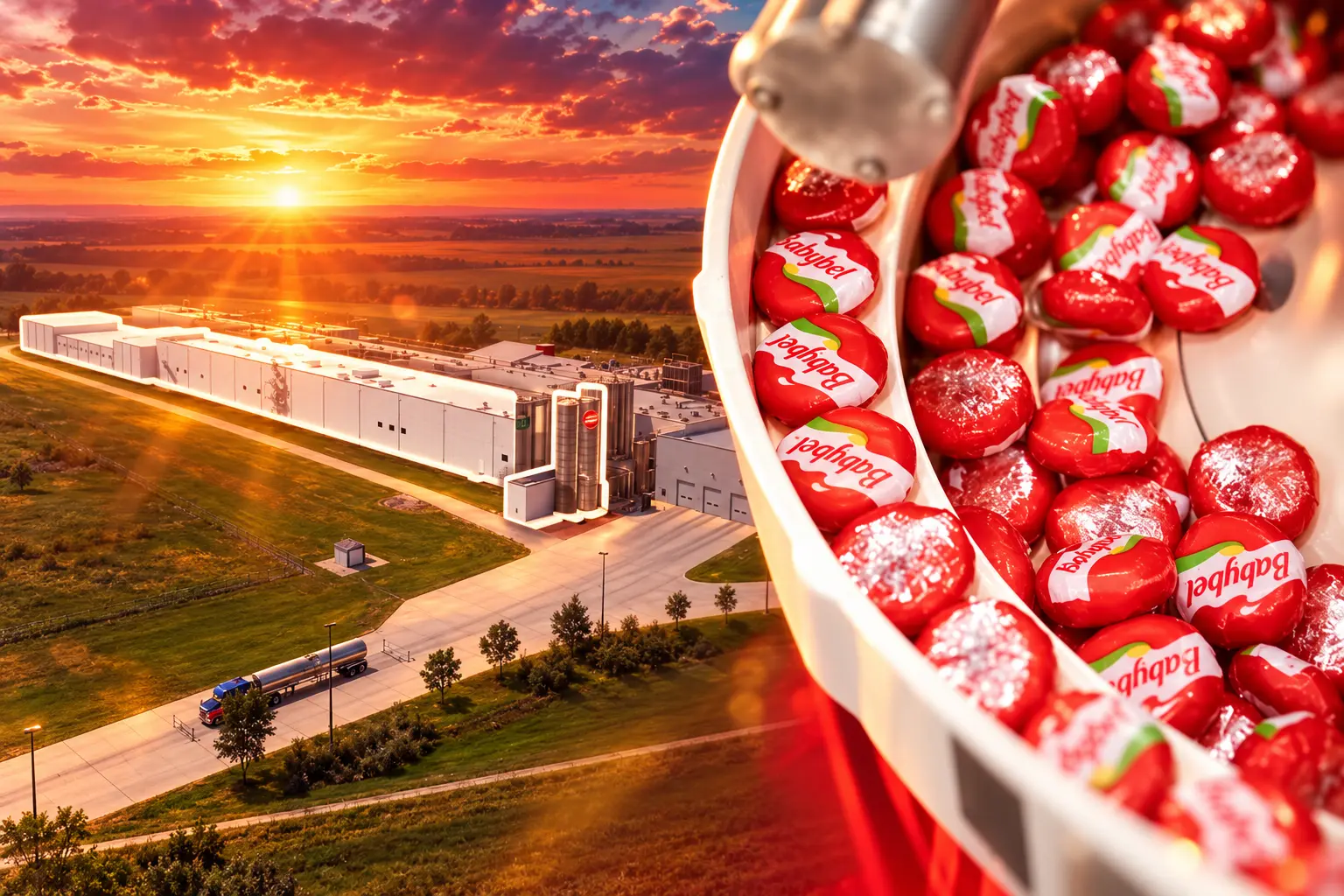
On March 11, 2026, Bel broke ground in Brookings to double the plant’s annual capacity from 10,000 to 20,000 tons. The site is dedicated to Mini Babybel, opened in 2014 after a 2013 build, and sits near South Dakota State University’s dairy program. First cheese from the new wings is due in 2028, with equipment going in during 2027.
Cécile Béliot, CEO of Bel Group, called the United States “a strategic market and a key engine of growth for Bel” and said doubling Brookings “positions us for enhanced long-term growth in the U.S.” Peter McGuinness, CEO of Bel North America, tied the spend to shoppers who want a few ingredients and complete protein in a pack they can finish in one sitting. The group’s 2025 results also logged a $350 million plan for U.S. plants, of which Brookings is the largest public piece, after a $10 million add at Little Chute, Wisconsin, that brought 50 jobs.
BROOKINGS BABYBEL, NOW AND IN 2028
| Measure | Now | After the build-out |
|---|---|---|
| Annual output | 10,000 tons | 20,000 tons |
| Cheeses per day | 1.6 million | More than 3 million |
| Milk intake | 650,000 pounds a day | 1.3 million pounds a day |
| Jobs on site | 260 | About 150 added |
The press kit for the project puts today’s run rate at 1.6 million individual cheeses a day, made with 100% American milk from South Dakota and neighboring states, equal to the output of about 10,000 cows. Six flavors leave the line: Original, Light, Mozzarella, Gouda, Monterey Jack, and White Cheddar. Each round is a good source of calcium and 4g of protein, with no artificial colors, flavors, or preservatives. Bel still uses co-makers and still imports some cheese, so the extra tons are also a bet on making more of the U.S. bag at home. A paper wrap is slated to replace cellophane in 2027. The wax stays.
BEL IN THE UNITED STATES
- Share of the group: The U.S. is Bel’s largest market, at 33% of global sales and more than $1.2 billion a year at retail.
- Recent run: The U.S. business doubled between 2018 and 2024, and Bel says it wants to double it again.
- Growth load: Sedghi said the market is expected to deliver more than half of group growth over the next five years.
- Parent 2025: Groupe Bel posted sales of €3.83 billion, up 4.7% organically, with North America up 4.9%; Babybel and Boursin had double-digit North American runs.
Sedghi said U.S. cheese volumes have risen 6-8% a year for three years, with net sales moving faster, and that snacking cheese is outrunning both its own aisle and the wider cheese set. A 160-year-old house that still prints red wax on a lunchbox round is now writing checks as if that round were a new product.
The Fridge Changes When One Adult Starts a GLP-1
Sedghi put U.S. GLP-1 use at one in eight people, “and I think even more.” A KFF Health Tracking Poll published Nov. 14, 2025, found one in eight adults taking a GLP-1 at the time, or 12%, with 18% saying they had ever taken one, six points above the share in May 2024. She expects pills to make the drugs easier to stay on, and she treats the eating shift as durable rather than a fad.
The drugs cut appetite. When hunger does show up, the bite has to carry protein so muscle does not leave with the weight, and fiber so the gut keeps moving. Portion sizes fall. That is the opening for a cheese that is already a single serving. A two-count Babybel in a flow-pack, built for a bag or a cup holder, delivers 8-10g of protein depending on the variant. High-protein meal prep has already parked Mini Babybel Light and Laughing Cow Light next to egg whites and turkey as the default cold snack, which is the household pattern she is describing, not a future one.
WHAT CHANGES ON A GLP-1
- Smaller plates: People eat less often and in smaller amounts, so a pre-cut portion beats a block that has to be sliced.
- Protein first: Users chase protein to hold onto muscle, which is why Sedghi says the protein push is “not a hype anymore.”
- The whole house: “GLP-1 changes the behaviour of the person using it and changes the behaviour of the family,” she said, because the fridge contents change and children see different food.
- Greens as a side door: A wedge of The Laughing Cow or a smear of Boursin is how she gets vegetables into a meal she would otherwise skip.
She is blunt about the junk version of the same trend. Protein printed on a cookie is, in her view, a phase that will fade once shoppers notice empty calories wearing a gym label. The lasting move is fewer salty and sweet snacks, and more of the dense, boring food that was already in her bag.
New Guidelines Put Full-Fat Dairy on the Plate
On Jan. 7, 2026, the Department of Health and Human Services and the Department of Agriculture released the Dietary Guidelines for Americans, 2025-2030, with a short command to eat real food. The fact sheet that came with them puts whole milk and full-fat dairy products back among the foods the government is willing to name, alongside protein at every meal and a warning to avoid highly processed packaged foods that are salty or sweet. Separate guideline pages call for three dairy servings a day on a 2,000-calorie pattern, and for full-fat dairy with no added sugars.
Bel’s own Brookings release says 80% of Americans fall short each day on dairy, fruit, and vegetables, the three groups the company now sells as snacks. Sedghi has been in the U.S. job for three years and says the market now moves more like Asia, with social feeds setting the pace. Babybel is sold as 100% real cheese with four ingredients. Worldwide, Bel says people eat two billion of those portions a year. The U.S. is already the brand’s largest Mini Babybel market, so a federal nudge toward full-fat dairy is a tailwind on a brand that never left full fat.
The same guidelines land on Sedghi’s other aisle. If salty and sweet packs are the foods Washington wants people to put down, a wax round and a cheese wedge are the foods a convenience store can put up without looking like it is still in the 1990s chip business.
Out-of-Home Still Makes Almost None of the Sales
Retail still pays the bills. Out-of-home, which Sedghi splits into on-the-go and on-premise, is only 3 to 5 percent of U.S. cheese sales. She put out-of-home eating at about 50% of U.S. consumption, which is the gap she wants to close, and she said Bel aims to more than double that channel in the years ahead. Groupe Bel’s 2025 results already show e-commerce and out-of-home growing at a double-digit rate for a fifth straight year at group level. The U.S. cheese share has not caught up.
The on-the-go fix is availability in convenience stores and grab-and-go wells, plus packs that fit those wells. The two-count flow-pack is the example she gives: two Mini Babybels, 8-10g of protein, no knife, no plate. Convenience stores, she said, used to skip “healthier” snacks and are now rebuilding the set, which is a rare case of the store moving toward a product that did not have to change its recipe. On-premise, the other half of her out-of-home split, got fewer details. The honest read is that Bel knows how to fill a grocery dairy door and is still learning how to fill a cooler by the register.
That is the second-order problem inside the $200 million check. Brookings is a grocery-scale answer, measured in tons and milk trucks. The volume Sedghi can still win sits in places that do not order a ton at a time. If half of American eating happens away from home and her cheese still does almost none of that eating, the new wings can hum and the brand can still miss the occasion.
How a Wax Round Gets Onto an AI Grocery List
Sedghi is a Claude user, and the prompt she walks her teams through does not mention cheese. A parent asks an agent for a birthday list for a four-year-old, ten kids, two with allergies. The agent builds a need-state list. Search words stop working the old way. The brand either appears as the snack for that party or it does not exist.
I keep telling our teams that today and tomorrow it’s all about marketing to algorithms now
Negar Sedghi, general manager of Bel’s U.S. cheese business
She said agents do not crawl only brand sites. “We discovered a few months ago that Reddit is one of the biggest sources.” Comments and reviews feed the model. “Garbage in, garbage out,” she said, so the file the machine reads has to be right, and “beautiful pictures will not work as well as they worked before.” Marketing, in her telling, becomes data work as much as mood work. Findability replaces category search. A shopper may build a list in one agent and buy it in another, so the preferred brand has to survive the handoff.
Deals with Google or Microsoft to force a brand into every cheese answer are, as far as she knows, not how the agents work. The lever she does see is the product detail page, especially inside a retailer that trains its own bot. She named Walmart’s Sparky. On Walmart’s Aug. 20, 2026, earnings call, CEO John Furner said Sparky users were up 70% from a year earlier and spent 40% more per order than shoppers who skipped it. He described a meal-plan prompt for high-protein food that returned recipes and a one-click basket. That is the cart Sedghi is trying to enter without a paid placement and without the shopper ever typing “Babybel.”
She would not put a dollar figure on the shift. It sits inside e-commerce, which she called another growth channel, and the work is still test-and-learn. “I wouldn’t say we have all the answers.” She still said Bel is “at the forefront,” with group-level partners making the company AI-ready from the inside. The unglamorous version is a cleaner Walmart database, better reviews, and fewer Reddit threads that teach an agent the wrong thing.
Salty Snacks Lose While Portioned Dairy Holds
Asked whether snacking overall is going down, Sedghi said yes, under the combined weight of GLP-1 use, the new guidelines, and louder talk about what counts as food. Salty snacks and sweet snacks are, in her words, under pressure. They are large categories and will not vanish. They are no longer the default. She pointed to deal-making across food as proof: companies are buying or rebuilding portfolios in a hurry because the old mix no longer fits a smaller, denser appetite.
Her edge claim is simple and self-serving, and she does not hide that. “We don’t have sodas in our portfolio. We don’t have potato chips in our portfolio.” Bel sells dairy, fruit, and vegetable snacks, and she called that the only U.S. snacking set built that way. On GLP-1, she said Bel was there before the trend had a name, because Mini Babybel and The Laughing Cow were already portioned and protein-dense. The International Dairy Foods Association’s tracker, updated Sept. 1, 2026, now lists more than $14.4 billion in processing capacity planned between 2025 and 2030. Brookings is one line in that wave. Cheese as a category is taking a large share of the new steel. The companies pouring concrete are not, as a group, pouring it for a bigger bag of chips.
The loser is the snack that only worked when people ate without thinking. The winner, if Sedghi is right, is the snack that was already a single serving when the drugs and the guidelines arrived. That is a flattering story for a wax-coated cheese, and it still leaves her with a 3 to 5 percent out-of-home share and an AI list that might skip dairy unless someone taught the model to care.
Sedghi Takes the Algorithm Brief to Chicago
Dairy Innovation Strategies USA runs Sept. 15-16, 2026, at the Sheraton Grand in Chicago, with more than 150 attendees and a docket that already lists nutrition, GLP-1, and digital and AI strategy as themes. Sedghi’s slot is the algorithm cart. She also said Bel has another U.S. project under way and would not describe it. The public bet remains Brookings, 150 jobs, and a 2028 start date on a line that will drink 1.3 million pounds of milk a day if it hits the plan.
WHAT WE KNOW
- The check: $200 million to take Brookings from 10,000 to 20,000 tons, with first output in 2028.
- The U.S. load: 33% of group sales now, and more than half of planned group growth over five years.
- The other plant: $10 million already spent at Little Chute, Wisconsin, adding 50 jobs.
WHAT IS UNCONFIRMED
- Second project: Sedghi confirmed another U.S. plan and refused details.
- AI budget: She would not share what share of marketing now goes to agents and product data.
- Out-of-home clock: “More than double” has no public year attached.
By 2028 the new wings are supposed to put more than 3 million Mini Babybels a day into bags that still look like the ones kids have opened for decades. The harder work starts before that cheese exists: a convenience-store hook, a cleaner product page, and a shopping agent that can recommend a wax round for a four-year-old’s party without anyone typing the word cheese.
Disclaimer: This article is news reporting and analysis of Bel’s U.S. cheese plans, public health polls, and federal dietary guidance. It is informational only and is not medical, nutrition, or dietary advice, and it is not a recommendation to start, stop, or change any GLP-1 medicine or eating plan. Readers who are using or considering these drugs, or who want personal diet advice, should speak with a licensed physician or registered dietitian before changing medication or food choices. Figures and project statuses reflect company statements, poll results, and government pages as dated in the piece and may change as plants, labels, and drug use shift.

Nintendo Pulls SmileBASIC After the First Switch 2 Jailbreak

Arkane Lyon’s Union Holds the Clock Microsoft Cannot Skip

Airbnb Bans Guest Chores as Homes Turn Into Hotels

Riyadh Downs a Houthi Missile After Weeks of Capital Strikes

Ariana Madix’s Empty Los Angeles House Fits a Bravo Pattern

AI Server Boards Put Everyday Circuit Materials on Allocation

Glacier Collapse Buried Nepal’s Hydropower Workers in Tunnels

Congo’s Bundibugyo Outbreak Outruns the Licensed Ebola Shots

Pennsylvania Measles Deaths Follow a Long Slide in Coverage

Germany Can Miss Its 2026 Climate Cap Without Penalty
-
 NEWS2 months ago
AI Server Boards Put Everyday Circuit Materials on Allocation
-
 NEWS2 months ago
Glacier Collapse Buried Nepal’s Hydropower Workers in Tunnels
-
 NEWS2 months ago
Congo’s Bundibugyo Outbreak Outruns the Licensed Ebola Shots
-
 NEWS2 months ago
Pennsylvania Measles Deaths Follow a Long Slide in Coverage
-
 NEWS2 months ago
Germany Can Miss Its 2026 Climate Cap Without Penalty
-

 NEWS2 months ago
Texas Judge Freezes the SEC Eligibility Ban for 41 Athletes
-
 NEWS2 months ago
CISA’s Known Exploits Still Come From 2007-Era Bugs
-

 BUSINESS2 months ago
Trump’s Venezuela Oil Deal Leaves the Barrels in the Ground