
BUSINESS
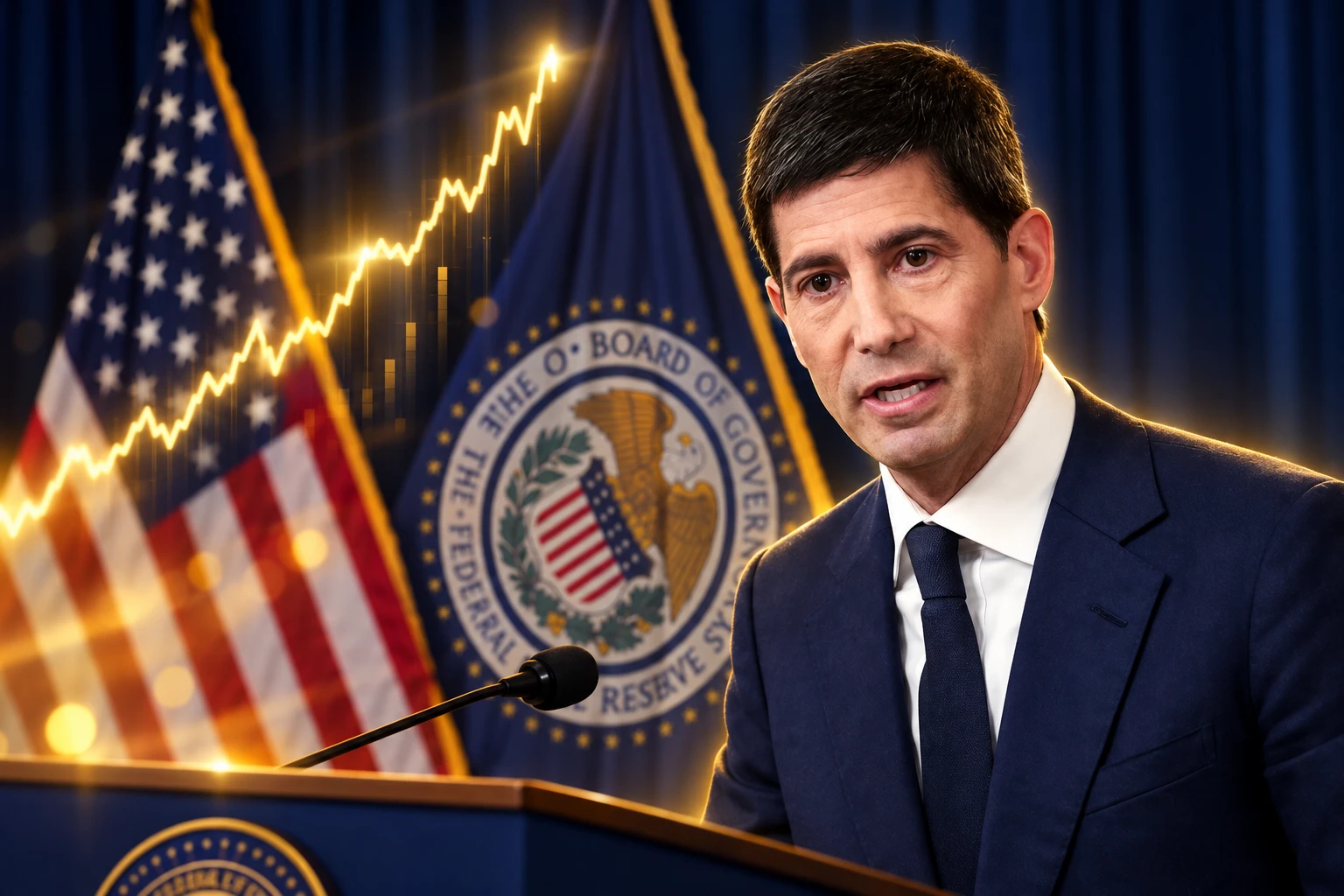
Warsh’s First Rate Hike Is Aimed at a 5% Yield
The Fed is expected to raise rates a quarter point Sept. 16, a hike that may be the last check on a 5 percent 10-year yield.

The Federal Reserve is expected to raise interest rates a quarter point on Sept. 16, lifting the target to 3.75 percent to 4 percent. That would be the first increase since July 2023, and futures put the odds at greater than 90 percent.
The more expensive money is already here. The 10-year Treasury yield climbed above 5 percent on Tuesday, a 19-year high, after weeks of Treasury buybacks failed to pin it down. President Donald Trump wants cuts. The long rate that sets mortgages is asking for proof that Chair Kevin Warsh will fight prices that have sat above 2 percent for years.
A 5 Percent Yield After Treasury’s Buybacks
Trump named Warsh in the expectation that borrowing costs would fall. In the days before this meeting he said the United States should be paying the lowest interest rate in the world, and he threatened new import tariffs if the Fed did not cut. The market that prices 10-year debt has been moving the other way.
Treasury Secretary Scott Bessent has spent the past month trying to cool that market without a Fed cut. On Aug. 19 the department doubled buybacks in the long end, lifting each operation from a $2 billion cap to at least $4 billion from Sept. 9 through Nov. 4. A later operation sought as much as $6 billion and accepted $5.2 billion. Bessent told the House Financial Services Committee on Sept. 15 that the intervention was successful and that two auctions were among the strongest in 20 years. He said critics should look at the counterfactual, the yield that might have printed without the purchases.
The 10-year still broke above 5 percent the next morning. Stanley Druckenmiller, Bessent’s former mentor, had already called the buyback plan a mistake, arguing that governments defending prices against fundamentals always lose. Oil above $100 a barrel, a Middle East war that has not closed, and a stock of public debt that recently crossed $40 trillion have been the heavier weights.
THE BOND MARKET’S RUN-UP
- May 2026: Warsh takes over as chair from Jerome H. Powell, who remains a Fed governor.
- July 29, 2026: The policy committee holds the funds rate at 3.5 percent to 3.75 percent on a 9-3 vote.
- August 19, 2026: Treasury says it will at least double long-end buybacks, to $4 billion per operation.
- August 28, 2026: Warsh, on his 100th day as chair, tells Jackson Hole that inflation is not moving toward 2 percent at sufficient speed.
- September 11, 2026: August consumer prices rise 0.4 percent on the month, led by gasoline.
- September 15, 2026: The 10-year yield climbs above 5 percent, a 19-year high, as Bessent defends the buybacks on Capitol Hill.
A quarter point on overnight funds does not, by itself, pull a 5 percent 10-year back. What can pull it back is a judgment that the people setting the overnight rate will not live with inflation stuck in the mid-3s. That is the trade Warsh walks into at 2 p.m. Eastern time.
August Gasoline Closed the Pause
The Fed’s preferred gauge, the personal consumption expenditures price index, rose at a 3.7 percent annual pace in both June and July. The six-month pace Warsh cited at Jackson Hole was 4.1 percent. Neither reading is close to the 2 percent PCE target he calls firm and fixed.
August’s consumer-price report, released Sept. 11, ended the argument that summer was cooling fast enough to wait. The all-items index rose 0.4 percent from July, after a 0.1 percent gain, and was up 3.4 percent from a year earlier. Core prices, which strip out food and energy, rose 0.3 percent on the month and 2.4 percent on the year, a tenth slower than July’s 2.5 percent annual rate. The labor market did not give the doves a cushion: unemployment was 4.1 percent in August, and payrolls rose by 162,000.
WHERE PRICES STAND AGAINST 2 PERCENT
| Gauge | Latest reading | Gap to the 2% goal |
|---|---|---|
| Headline CPI, 12-month | 3.4% (August) | 1.4 points above |
| Core CPI, 12-month | 2.4% (August) | 0.4 points above |
| Energy CPI, 12-month | 16.3% | Far above, oil-led |
| Gasoline CPI, 12-month | 27.4% | Far above |
| PCE, 12-month (Fed target) | 3.7% (June and July) | 1.7 points above |
Energy rose 2.1 percent in August after falling 1.5 percent in July. Gasoline rose 3.9 percent in August and accounted for over one third of the monthly all-items increase; over the year, gasoline is up 27.4 percent. Shelter rose 0.3 percent on the month and 3.0 percent on the year. Food rose 0.1 percent and 2.7 percent. The heat is still in fuel, and it is leaking into the rest of the basket.
John C. Williams, president of the New York Fed and vice chair of the policy committee, and Governor Christopher J. Waller had both left room to wait if inflation cooled. The August print, and oil still above $100, is the hotter data they said would clinch a hike if Warsh pushed for one.
The Standard Warsh Set at Jackson Hole
Warsh has spent the summer telling colleagues and markets that he will not pre-commit to a path of rates. He dislikes the dot plot, the chart of officials’ rate forecasts that will be updated with this meeting’s projections, and he did not submit a dot of his own in June. In that June round, nine of 19 officials saw at least a quarter-point increase by the end of 2026, and nine saw rates staying put or falling a quarter point.
He did, however, write a test. On Aug. 28, marking 100 days in the job, he told the Kansas City Fed’s symposium that short-term rates are the predominant tool, that 2 percent PCE inflation is not self-executing, and that credit markets show few signs the current 3.5 to 3.75 percent range is restraining the economy. He also owned the miss.
The responsibility for 65 months of sustained, elevated inflation sits squarely with the central bank, and that is where it belongs. Here is my standard: We must be confident that underlying inflation is moving to our objective, clearly and at sufficient speed. Otherwise, we have work to do.
Kevin Warsh, Federal Reserve chairman, Jackson Hole, Aug. 28, 2026
He added that recent readings “do not tell me that underlying trends have meaningfully improved.” Odds of a September increase jumped after that speech. Former New York Fed President Bill Dudley has said that failing to follow through now would damage Warsh’s credibility. The standard he set at Jackson Hole leaves little room to describe a hold as patience.
How Many Dissents Would Count as Resolve?
The cleanest signal of a committee that is done waiting would be a unanimous increase. That is not guaranteed, and the July meeting showed why.
On July 29 the Federal Open Market Committee voted 9-3 to keep the target at 3.5 percent to 3.75 percent. Cleveland Fed President Beth M. Hammack, Minneapolis Fed President Neel Kashkari, and Dallas Fed President Lorie K. Logan preferred a quarter-point increase. The July statement holding the funds rate said activity was expanding at a solid pace, job gains had kept up with the workforce, and inflation remained elevated relative to 2 percent, in part from energy and other supply shocks. It closed with a blunt line: “The Committee will deliver price stability.”
The three who voted no put that line to a test. Logan said that without policy restraint, inflation would likely stay above target until an unanticipated shock arrived, and that the Fed cannot count on shocks to do its job. Hammack said she was not confident prices would return to 2 percent on their own and that “now is the time.” Kashkari said he would rather tighten in small steps than wait for inflation to become entrenched. All three had also dissented at Powell’s last meeting as chair in April, when they wanted the committee to drop language that implied cuts.
A hike with those three in the majority, and with Williams and Waller joining, would look like the committee closing ranks. A hike with new dissents from the other side, officials who still want to wait, would tell the bond market the next step is in doubt. Holding, after Jackson Hole, would likely draw at least those same three opposing votes again.
The White House Needs the Hike It Opposes
Trump’s public demand is lower rates before November’s midterm elections. Affordability is the campaign problem. The 10-year yield, not the funds rate, is the benchmark for mortgages and a wide band of consumer credit. A Fed that looks unsure about 2 percent can push that long rate up even as it leaves overnight rates unchanged. That is what happened after Warsh’s July press conference, when mixed signals on the inflation goal sent longer-term yields higher and pushed expected hike dates out.
Robert Sockin, chief U.S. economist at PGIM, said a hike that is unanimous, especially if the new projections show another increase this year and perhaps again in 2027, would be a strong signal. He warned that markets would react poorly if Warsh described the move as a small calibration. Robin Brooks, a senior fellow at the Brookings Institution, wrote that investors have priced four rate increases between this meeting and next June, and that the risk is Warsh sounding dovish relative to that path, which could sell off the long end even after a hike meant to anchor it.
Mortgage rates can rise if the Fed does not hike. Long yields would then have to rebuild the inflation premium that a credible tightening would have compressed. The White House can attack a quarter-point increase on overnight funds and still benefit if the 10-year comes down. That is a sour political message. It is also the arithmetic Bessent has been trying, and so far failing, to buy with cash.
THE PRICED MOVE
- The overnight target: 3.5 to 3.75 percent now, 3.75 to 4 percent if the committee adds a quarter point.
- The market bet: Greater than 90 percent odds of that increase at 2 p.m. Eastern time on Sept. 16.
- The long rate: The 10-year Treasury yield moved above 5 percent on Tuesday, a 19-year high.
- The inflation gap: PCE at 3.7 percent against a 2 percent target, with gasoline up 27.4 percent over the year.
Strategists at Deutsche Bank, using fed-funds futures, concluded that skipping an increase on Wednesday would be the biggest dovish surprise at a scheduled policy meeting since 1994, the year the Fed began announcing decisions as soon as meetings ended. Demand picked up this week for short-term options that pay if the committee holds anyway.
Two-Thirty, the Dot Plot and October
The statement posts at 2 p.m. Warsh takes questions at 2:30 p.m. Because he has tried to kill ordinary forward guidance, those 30 minutes carry more of the policy than the vote. He has said that quasi-commitments on rates through the cycle inhibit the freedom to make the right call when it is time to decide. Markets still need to know whether this is a one-time adjustment or the first of several.
Most private forecasters see another increase in December. The next gathering is Oct. 27-28, with the decision at 2 p.m. on Oct. 28, in the final days before the midterms. Unless inflation takes a sharp turn worse, the committee can hold in October and avoid the charge that it is trying to shape the vote. Additional moves are on the table for 2027. Warsh is unlikely to map them.
The updated Summary of Economic Projections, including the dots he refuses to join, will still go out with the statement. If he waves the chart away, the other 18 sets of forecasts become the path by default, or the path dissolves. Either outcome can move the 10-year as much as the quarter point itself.
WHAT THE 2:30 P.M. SESSION HAS TO SETTLE
- The vote: A unanimous hike is the strongest inflation signal; new dissents for a hold would reopen the July fight.
- The words: Language that this is “work to do,” not a fine-tune, is what Sockin said the bond market needs to hear.
- The dots: A median that shows another 2026 increase would bound the path even if Warsh will not own a dot.
- October: Any hint that Oct. 28 is live would collide with the midterm calendar; silence leaves December as the default next date.
Quiet trading into a greater-than-90-percent hike usually means the statement is not the event. Any gap between that statement and Warsh’s tone is. The 10-year at 5 percent is the gauge that will say, within minutes, whether the committee bought credibility or sold it.
A Hold Would Be the Biggest Surprise Since 1994
A pause is still a live minority case. Analysts at Standard Chartered, John Davies and Steve Englander, argued the committee should stay on hold, writing that a market echo chamber had pushed odds up despite a limited run of new data, and that the cost of waiting is low. Aaron Klein, a former Treasury official, has predicted a hawkish delay: talk like a hawk, hold the rate, and point to financial conditions that have already tightened through the 10-year.
Ed Yardeni, the longtime market economist, has the opposite of that call. He expects Warsh to displease Trump, to sound hawkish at the press conference, and to persuade investors that a hiking cycle is starting. Loretta Mester, the former Cleveland Fed president, said there is no convincing evidence inflation is on a downward path back to 2 percent even after stripping out the oil shock, and she read the Jackson Hole speech as a case for higher rates.
WHERE EXPERTS DISAGREE
- Hike and signal more: Yardeni and Sockin treat Wednesday as the start of a cycle, with the press conference used to show the committee is not done.
- Hike as a one-off: Several officials have stressed flexibility and the October midterm calendar, which would make December the more natural second move if inflation is only slightly hotter.
- Hold and talk tough: Standard Chartered and Klein argue financial conditions have already tightened via long yields, so the overnight rate can wait.
Warsh’s own words cut against the hold. He told Jackson Hole that the Fed should not take its outlook from markets that are, in turn, taking their outlook from the Fed. He also said the people who pay for an inflation miss are not the ones trading the announcement. A chair who wrote that standard, then left the funds rate unchanged with prices at 3.7 percent and the 10-year at 5 percent, would be asking that same bond market to believe him a second time.
The decision is due at 2 p.m. Eastern time. The 10-year will answer him before he sits down at 2:30.
Disclaimer: This article is news reporting and analysis of a scheduled Federal Reserve policy meeting and related Treasury market moves. It is for information only and does not constitute investment, tax, or legal advice, a recommendation to buy or sell any security or loan product, or guidance on mortgage or business borrowing. Readers who are considering changes to investments, debt, or interest-rate hedges should consult a licensed financial adviser, tax professional, or lending officer who can review their own accounts. Figures, market prices, and policy odds reflect the official statements, data releases, and market pricing cited here as of Sept. 16, 2026, and they can change as soon as the 2 p.m. announcement and 2:30 p.m. press conference are released.

Nintendo Pulls SmileBASIC After the First Switch 2 Jailbreak

Arkane Lyon’s Union Holds the Clock Microsoft Cannot Skip

Airbnb Bans Guest Chores as Homes Turn Into Hotels

Riyadh Downs a Houthi Missile After Weeks of Capital Strikes

Ariana Madix’s Empty Los Angeles House Fits a Bravo Pattern

AI Server Boards Put Everyday Circuit Materials on Allocation

Glacier Collapse Buried Nepal’s Hydropower Workers in Tunnels

Congo’s Bundibugyo Outbreak Outruns the Licensed Ebola Shots

Pennsylvania Measles Deaths Follow a Long Slide in Coverage

Germany Can Miss Its 2026 Climate Cap Without Penalty
-
 NEWS2 months ago
AI Server Boards Put Everyday Circuit Materials on Allocation
-
 NEWS2 months ago
Glacier Collapse Buried Nepal’s Hydropower Workers in Tunnels
-
 NEWS2 months ago
Congo’s Bundibugyo Outbreak Outruns the Licensed Ebola Shots
-
 NEWS2 months ago
Pennsylvania Measles Deaths Follow a Long Slide in Coverage
-
 NEWS2 months ago
Germany Can Miss Its 2026 Climate Cap Without Penalty
-

 NEWS2 months ago
Texas Judge Freezes the SEC Eligibility Ban for 41 Athletes
-

 NEWS2 months ago
CISA’s Known Exploits Still Come From 2007-Era Bugs
-

 BUSINESS2 months ago
Trump’s Venezuela Oil Deal Leaves the Barrels in the Ground