
BUSINESS
Russia Hits Six Energy Sites After Trump’s Diesel Truce
Russia struck six Ukrainian energy facilities a day after Donald Trump declared an energy ceasefire designed to get Russian diesel flowing to U.S. markets.

Russia struck six Ukrainian energy sites on Monday, Volodymyr Zelensky said, a day after Donald Trump declared an energy ceasefire to clear a path for Russian diesel. Zelensky said 33 people were wounded in those hits, and that Ukraine had not struck Russian energy targets in return.
The Sunday post landed two days after the U.S. Treasury opened a six-month window for Russian diesel. The pause Washington wants is the one that keeps those refineries running.
Six Ukrainian Energy Sites After Trump’s Sunday Post
Trump wrote on Sunday, October 11, that an “ENERGY CEASEFIRE” was in force “effective immediately” and that “both parties have agreed.” Zelensky said he had not been told in advance. Kremlin spokesman Dmitry Peskov would not say Moscow had signed on, only that contacts were continuing.
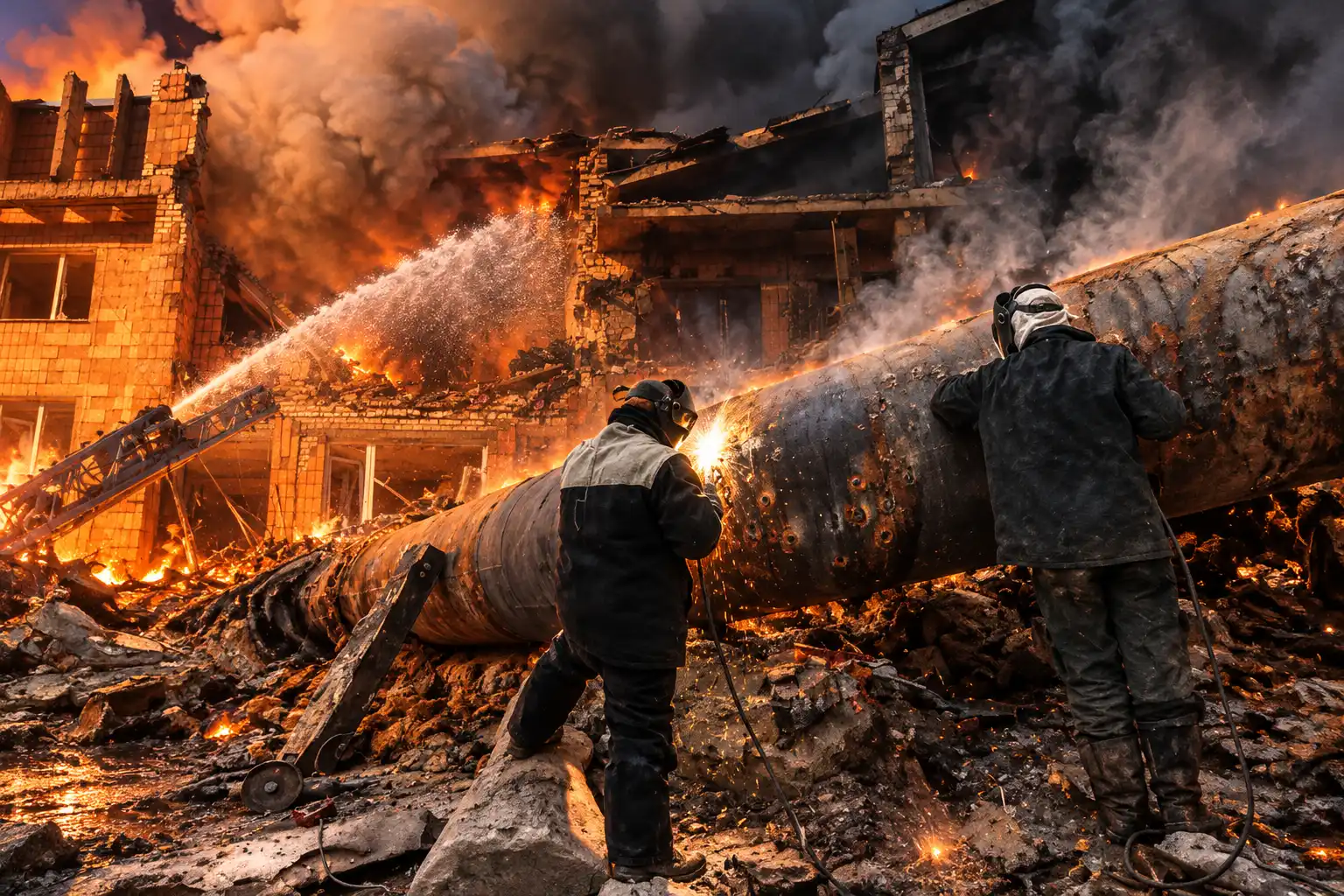
Hours after the post, Zelensky said Russian forces hit Kharkiv’s CHP-5 combined heat-and-power plant. On Monday he said six energy facilities were attacked that day, among them gas stations and grid gear. Ukrinform, Ukraine’s state news agency, said a strike on power grids blacked out Izyum. Ukrenergo, the state grid operator, reported new cuts in Kharkiv, Donetsk, and Zaporizhzhia and said rationing was in use so damaged kit would not be overloaded.
Kyiv mayor Vitali Klitschko said a drone also hit a 25-story building in the Darnytskyi district on Monday evening, killing one person and injuring 11, with cars burning in the courtyard. That blast sat beside the energy hits, not inside Zelensky’s count of 33 wounded at fuel and power sites.
FROM THE DIESEL CALL TO THE GRID HITS
- October 9, 2026: Trump says a call with Vladimir Putin produced an immediate diesel release, and the Treasury issues General License 135 the same afternoon.
- October 11, 2026: Trump posts that an energy ceasefire is in force. Zelensky says Kharkiv’s CHP-5 is hit the same day and that Ukraine’s forces have orders to hold their own energy strikes.
- October 12, 2026: Zelensky says six energy sites are hit and 33 people are wounded. Sergei Lavrov says Zelensky has not earned a respite. Ukrenergo reports fresh cuts in three regions.
- October 13, 2026: Peskov says contacts on a possible energy ceasefire are still going. Russia’s Defence Ministry says its overnight attacks did not hit energy-related targets.
Ostap Yarysh, a former Pentagon correspondent, wrote that Putin was not even pretending to take the ceasefire seriously after the Kharkiv plant was struck. The first social posts had treated Trump’s message as a closed deal that would freeze Ukrainian refinery raids. Replies on those posts noted that both capitals said they had not heard of an agreement, and that he had run a similar claim the previous month.
General License 135 Unlocks Russian Diesel Until April
The ceasefire talk is downstream of a fuel deal. On Friday, October 9, Trump said Russia would send more than 300,000 metric tons of diesel, equal to 2.25 million barrels, to U.S. and global markets at once, then 500,000 tons in November and 1 million tons after that. A further 3 million tons, he said, would depend on “the condition of their Diesel Refineries,” which Ukrainian drones have been hitting for months.
The same day, OFAC Director Bradley T. Smith signed General License 135. It authorizes Russian diesel imports through April 7, 2027, including into the United States, and it blocks any debit to U.S. accounts of Russia’s central bank, National Wealth Fund, or finance ministry. AAA put the U.S. diesel average at $6.28 a gallon on Thursday, October 8. Midterm elections are on November 3.
U.S. Energy Information Administration figures put daily use by the transport sector at about 2.94 million barrels, so the first 2.25 million barrels cover less than a day of that demand. The November load and the 1 million tons that follow, taken together, cover less than four days. East Coast distillate stocks 32% below average in September, against the five-year seasonal mark, which is why a thin diesel pile is a political problem even when a single cargo cannot refill it.
TRUMP’S STATED DIESEL VOLUMES
| Load | Volume | Timing |
|---|---|---|
| First release | More than 300,000 metric tons (2.25 million barrels) | Immediate |
| Second release | 500,000 metric tons | November |
| Third release | 1 million metric tons | “Immediately thereafter” |
| Extra release | 3 million metric tons | “A short period,” if refineries allow |
Industry sources said Russia could meet the first 300,000 tons only if Ukraine stops hitting refineries and if a large plant in the European part of the country comes back online. Russia had been able to export about 100,000 tons of diesel a day before Ukrainian drone raids on refineries began in 2024. A domestic export ban, in place since July and extended for countries without bilateral deals through October 31, was partly lifted on Saturday, Moscow said.
Why Ukraine Was Told to Stop Hitting Refineries
Trump has blamed Ukrainian strikes on Russian oil kit for high pump prices and has told Kyiv to knock it off so the diesel deal can be filled. A White House official said he does not treat the two air campaigns as equal and has demanded that Ukraine halt refinery strikes first. A person familiar with the talks said U.S. officials have also threatened to cut intelligence sharing and weapons purchases if those strikes continue.
That demand lands on the one tool that actually touches the fuel Trump wants. Russia has around 30 large oil refineries. None of that class is working in Ukraine, so a truce that covers refineries and not the grid would freeze Kyiv’s long-range campaign while leaving Moscow’s winter strikes intact. Zelensky has said Ukraine will stop hitting Russian energy sites if Russia stops hitting Ukrainian power, and that Kyiv is ready to sign guarantees. He has refused a refinery-only pause.
BBC Verify has recorded 273 strikes on Russian-controlled oil and gas facilities in 2026, more than double the 124 logged over the same span in 2025. ACLED, the Armed Conflict Location and Event Data project, recorded 2.4 times as many reported Russian attacks on Ukraine’s energy network this year. ACLED’s Tetiana Gaviuk, an analyst for Europe, said Ukrainian forces have averaged three attacks a month on Moscow-area fuel sites since May, a small slice of a wider campaign against plants in Yaroslavl, Bashkortostan, Tatarstan, and Leningrad. The Kapotnya refinery in Moscow, hit in June and again on September 20, could stay offline for months, potentially into 2027, she said.
Last night, Russian oil refineries were not burning. But at midnight a Russian jet-powered Shahed drone hit a gas plant in Ukraine. This is Putin’s answer to Trump.
Volodymyr Zelensky, president of Ukraine, speaking in Warsaw
He told an interviewer the same day that Ukraine “did not attack, while Russia attacked our gas stations, energy infrastructure, and other facilities,” and that he thought this was “Putin’s answer to President Trump.” Naftogaz said Russian strikes hit its Kharkiv-region gas production sites overnight and started a fire. Zelensky also said that in the week before the Sunday post, Russia had carried out more than 200 strikes on electricity generation and transmission in Ukraine, plus 17 on gas and oil sites.
A Winter Blueprint Aimed at 90 Percent Cuts
The overnight hits fit a campaign that is already written down. Schemes, working from a copy obtained from Ukrainian defense sources, described an August 2026 Russian brief titled Analytical Brief: Analysis Of Ukraine’s Power Generation And Utilities Sector. Energy Minister Denys Shmyhal briefed partners on Russia’s strike plans at a September 17 meeting in Paris, then said on television that the papers laid out, in tables, how much of each weapon would be needed to wreck each target.
The brief names four priority goals: power generation and supply, water, sewage, and heating. It calculates how many missiles, drones, and bombs would be needed to cut power in Kyiv, Kharkiv, and Odesa by as much as 90 percent and to squeeze heat and water in those cities. A list of 60 key targets includes the three nuclear plants Ukraine still controls, 10 major hydro plants, and substations and interconnectors near the western border that bring in European power. Russian officials have not commented on the document.
WHAT THE AUGUST BRIEF SETS AS PRIORITIES
- Power and heat: Generation, supply, and heating sit at the top of the list, with hydro and nuclear plants named among 60 key targets.
- Water and sewage: Utilities are treated as war targets alongside the grid, not as collateral.
- The 90 percent case: The brief models deep blackouts in Kyiv, Kharkiv, and Odesa, then lists other priority cities from Dnipro to Lviv.
- Western interconnectors: Substations and lines that import European electricity are marked for disruption so the rest of the system cannot be backfilled.
Oleksandr Kharchenko, director of the Kyiv-based Energy Industry Research Center, said papers of this type have circulated since 2023 and that this one is a concept brief for senior officials, not a combat order. Ukraine’s Prosecutor-General’s Office is investigating 3,374 Russian strikes on 1,177 energy facilities. Prime Minister Serhiy Koretskiy said a September 30 raid on Kyiv-area energy sites was the heaviest there since 2025. Peskov, in early October, cast stepped-up strikes as retribution for Ukrainian hits on Russian energy and logistics.
The Fourth Time Trump Has Called This Truce
Sunday’s post was not the first. Trump wrote on September 14 that Ukraine had agreed not to hit Russian energy targets and that Russia had agreed to do the same. Neither side confirmed a deal then, and strikes on energy sites continued. A 30-day energy pause was floated in March 2025, soon after he returned to office, and another attempt early this year lasted a few days.
Asked on Monday about reports that Russia had already broken the new ceasefire, Trump said he was “not sure about that” and would “take a look,” then added that there had been “violations on both sides.” He said Zelensky and Putin “have to get together and end that ridiculous war,” and that they had agreed “because I said you agree.” He has called the war “a disaster if you see the numbers.”
Zelensky said the ceasefire could still be “a major step toward ending the war, if the Americans truly step in now and make sure Russians respect” it. He offered a separate 60-day full ceasefire so Ukraine could hold elections, which martial law now blocks. Peskov rejected that idea, saying Russia does not want a ceasefire and wants a peace deal, and that the 60 days would be used to regroup. Putin, he said, would order a halt only on polling day itself.
UK Prime Minister Andy Burnham said Britain strongly supports Trump’s call for a sustained energy ceasefire to start now. France, Canada, and the European Union also voiced support. EU foreign policy chief Kaja Kallas said the bloc would welcome an energy ceasefire “when it holds,” and that ministers had not yet seen Russia stick to it. Estonia’s foreign minister said the ceasefire was “not working.”
Lavrov Says Zelensky Has Not Earned a Respite
Moscow’s public line on Monday was not a yes. Lavrov, asked about a pause, said Zelensky had not earned one and that Russia would not again “fall for assurances and promises.” He treated Zelensky’s surprise at Trump’s post as proof that Kyiv wanted a break by any public initiative it could grab. Peskov kept repeating that contacts were underway and declined to say whether any talk covered only refineries.
I do not think he deserves a respite. I don’t think we will fall for assurances and promises again.
Sergei Lavrov, Russian foreign minister, to reporters in Moscow
That is the bargain in plain speech. Washington needs Ukrainian drones off Russian diesel plants so cargoes can be promised into a tight market. Moscow wants the revenue and has not agreed, in public, to spare Ukrainian power stations in return. Zelensky said on X that the Monday strikes showed Russia was “unwilling to accept an energy ceasefire,” and that this is what happens “when Russia sees the prospect of higher revenues for its war machine.”
Putin has said Ukrainian refinery strikes have cost Russia about 1 percent of GDP, around $26.6 billion on that accounting. Exports of 300,000 tons of diesel would fetch roughly $400 million, with only a slice of that reaching the state budget, because Russia taxes oil output more than fuel exports. The political value in Washington is the appearance of supply. The military value in Ukraine is heat and light through winter.
The First Tranche Covers Less Than a Day of U.S. Use
Even if every promised ton sailed, the physics are small. The opening 300,000 tons are less than a day’s U.S. transport demand. Tankers that can legally move the fuel remain a live problem, because many Russian ships are still under sanction, and damaged refineries may not produce the extra barrels on the timetable Trump named. License 135 is a waiver, not a repeal of the 2022 import ban written into law, and it can be pulled.
WHY THE CARGOES MAY MOVE SLOWLY
- Refinery damage: Trump tied the extra 3 million tons to the state of plants Ukraine has been hitting, and industry sources said the first 300,000 tons need a halt in those raids.
- Export rules: Russia’s diesel export ban still runs to October 31 for countries without bilateral deals, even after Saturday’s partial lift.
- Ships and banks: Sanctioned tankers and the ban on debiting Russian state accounts at U.S. banks both sit outside the waiver’s easy path.
- Europe’s caps: EU and UK import bans and the product price cap remain in force, so the new hole is American licensing, not a global green light.
WHAT WE KNOW
- Monday’s tally: Zelensky said six energy facilities were hit on October 12 and that 33 people were wounded at those sites.
- Sunday’s plant: He said Kharkiv’s CHP-5 was struck on October 11, hours after Trump’s ceasefire post.
- The license: General License 135 is in force through 12:01 a.m. EDT on April 7, 2027, for Russian-origin diesel.
- Kyiv’s hold: Zelensky said Ukraine did not attack Russian energy sites in that window and will keep holding if Russia does the same.
WHAT IS UNCONFIRMED
- Moscow’s yes: Peskov has not said Russia agreed to the Sunday ceasefire, only that contacts continue.
- Tuesday’s pause: The Defence Ministry said overnight attacks on October 13 spared energy-related targets; that claim has not been matched by a signed truce.
- Pump prices: No public schedule shows the first 300,000 tons arriving at a named U.S. port under the new license.
On October 13 Trump still said both sides had agreed to stop hitting energy infrastructure. Zelensky said Ukraine would sign if Russia would. The waiver for Russian diesel runs into April. The grid in Kharkiv, Donetsk, and Zaporizhzhia was already on rationed power when that clock started.

Nintendo Pulls SmileBASIC After the First Switch 2 Jailbreak

Arkane Lyon’s Union Holds the Clock Microsoft Cannot Skip

Airbnb Bans Guest Chores as Homes Turn Into Hotels

Riyadh Downs a Houthi Missile After Weeks of Capital Strikes

Ariana Madix’s Empty Los Angeles House Fits a Bravo Pattern

AI Server Boards Put Everyday Circuit Materials on Allocation

Glacier Collapse Buried Nepal’s Hydropower Workers in Tunnels

Congo’s Bundibugyo Outbreak Outruns the Licensed Ebola Shots

Pennsylvania Measles Deaths Follow a Long Slide in Coverage

Germany Can Miss Its 2026 Climate Cap Without Penalty
-
 NEWS2 months ago
AI Server Boards Put Everyday Circuit Materials on Allocation
-
 NEWS2 months ago
Glacier Collapse Buried Nepal’s Hydropower Workers in Tunnels
-
 NEWS2 months ago
Congo’s Bundibugyo Outbreak Outruns the Licensed Ebola Shots
-
 NEWS2 months ago
Pennsylvania Measles Deaths Follow a Long Slide in Coverage
-
 NEWS2 months ago
Germany Can Miss Its 2026 Climate Cap Without Penalty
-

 NEWS2 months ago
Texas Judge Freezes the SEC Eligibility Ban for 41 Athletes
-

 NEWS2 months ago
CISA’s Known Exploits Still Come From 2007-Era Bugs
-

 BUSINESS2 months ago
Trump’s Venezuela Oil Deal Leaves the Barrels in the Ground