
BUSINESS
South Sudan’s Aid Food Stops at Illegal Checkpoints
WFP’s Malakal warehouse is down to under 300 tonnes as soldiers tax Nile barges and Juba leaves hunger almost unfunded.

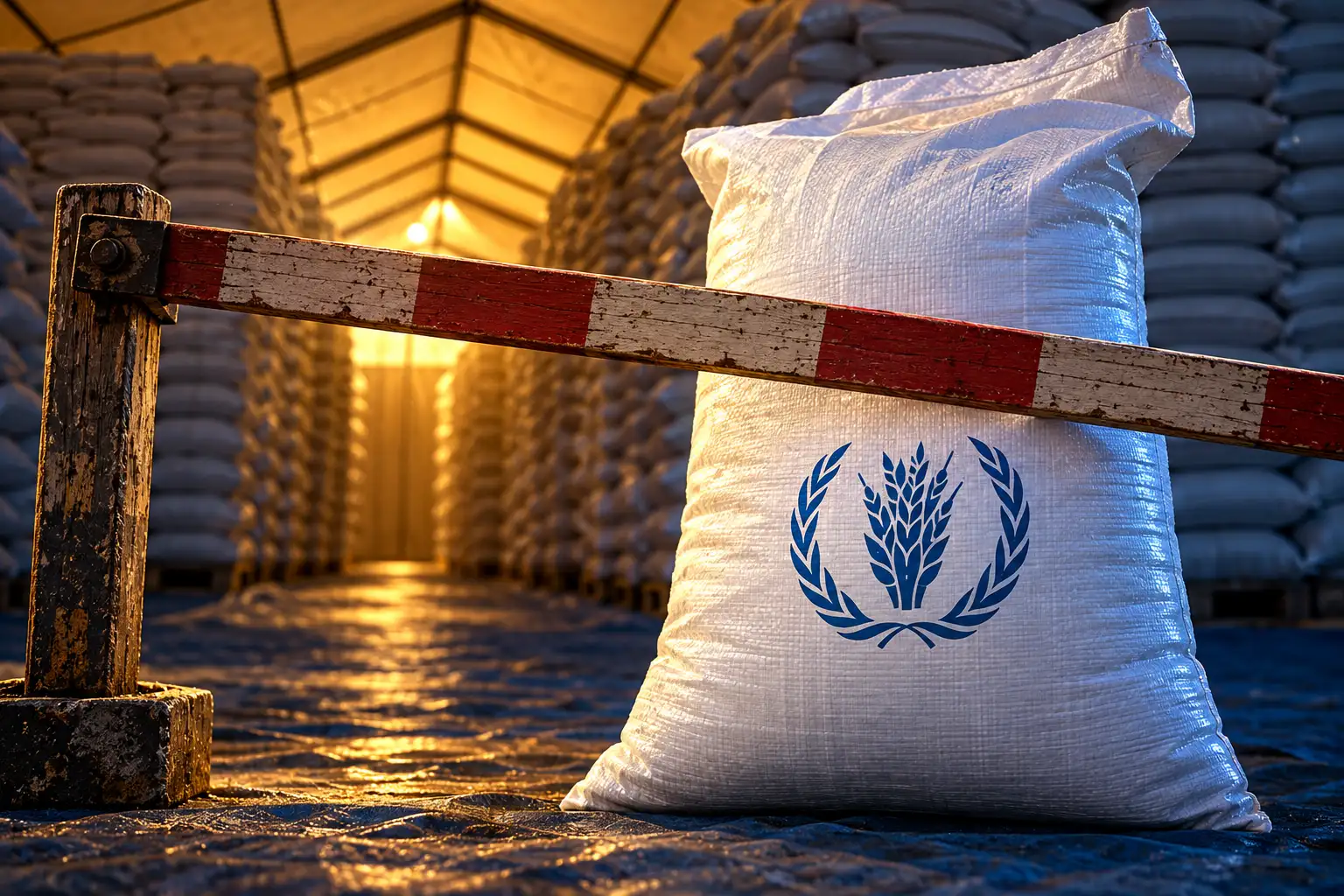
The World Food Programme’s northern hub in Malakal now holds less than 300 metric tons of food, down from 10,000 metric tons a year earlier. More than 7.8 million people in South Sudan already face acute hunger, and the food still inside the country is being taxed on the Nile, delayed at illegal barriers, and in Jonglei taken at gunpoint.
Matthew Hollingworth, the agency’s assistant executive director for programme operations, told a 15 September briefing in Geneva that donors no longer supply what they once did. He also put a second set of names on the table: soldiers on the river, local authorities who cannot clear a convoy, and a government he said must start paying for its own people.
Malakal’s Warehouse Fell From 10,000 Tonnes
Hollingworth had run WFP’s South Sudan office until 2022. On a September visit he walked the same Malakal compound that once prepositioned food for about half a million people across Greater Upper Nile when the rains eased. Last year the sheds held 10,000 metric tons, staged for the moment roads reopened. In September they held less than 300 metric tons.
He was blunt about why the stacks shrank. Need had not fallen. The caseload had not improved. Humanitarian agencies, he said, simply no longer have the resources they once had. WFP listed an immediate gap of $86 million and a $416 million shortfall over the next six months. An August operations note still carried a $258 million hole for the rest of 2026.
THE MALAKAL DRAWDOWN
- Northern hub: Stocks fell from 10,000 metric tons a year earlier to less than 300 metric tons in September.
- National hunger: 7.8 million people, more than half the country, face high levels of acute food shortage.
- Nutrition load: 2.2 million children and 1.2 million pregnant and breastfeeding mothers need urgent support.
- Cash on hand: WFP says it needs $86 million now and $416 million over six months to keep feeding refugees, displaced families and host communities.
In July the country office still reached 2.36 million people with 15,981 metric tons of food and $13.49 million in cash. The Famine Early Warning Systems Network later found that in August WFP reached 1.7 million of 2.2 million people it had targeted, about 20 percent of the population FEWS NET counts as in need. The warehouse in Malakal is where that shrinkage becomes visible in a single room.
Armed Youth Took the Mogok Convoy’s Food
On 29 September, after those Geneva numbers were already public, a river convoy in Ayod County showed what happens to food that does get moving. Armed youth in Chuilbong assaulted and threatened two humanitarian staff at gunpoint to stop life-saving cargo reaching government-held Mogok, WFP said in a 5 October statement from Juba. Local authorities were present. Negotiations for safe passage had already run their course.
Unable to get a guarantee of safety, WFP ordered the team to offload under duress. The forced offloading of 162.54 metric tons had been meant to feed 19,590 people in Mogok for one month. The rest of the convoy, including staff from cooperating partner Action Against Hunger and 291.48 metric tons for Ayod South, made it back to Malakal on 2 October.
WFP’s South Sudan account put the same figures on the record the next day, and called the staff what the statement already called them: not a target.
#Humanitarian aid must never be a target
WFP strongly condemns the assault on humanitarian workers and the forced offloading of 162.54 metric tonnes of life-saving food assistance in Ayod County, Jonglei State.
Read the details here 👉https://t.co/Fg1gn2WL4v#SouthSudan pic.twitter.com/CnNzMPwSXD
— WFP South Sudan (@WFP_SouthSudan) October 6, 2026
The people waiting in Mogok did not become less hungry because the sacks changed hands on the riverbank. The guns were local. So were the authorities who could not move them. That is a different problem from an empty donor ledger, and it sits on the same road.
Why WFP Food Stalls on the Nile
Hollingworth spent as much of the Geneva briefing on the river as on the appeal. Humanitarian food, commercial food and other cargo moving on the Nile, he said, face illegal checkpoints and illegal taxation by soldiers for the whole journey. The extra cost slows deliveries. For many traders it has become a reason to stop sailing.
Honestly speaking, today in Malakal, if a family is eating something other than tomatoes, okra, chilies and onions that are grown locally, anything else they are eating has been flown into Malakal, because it no longer arrives by road or by barge, because it’s too expensive, because the transporters have to pay so many illegal taxes on the way.
Matthew Hollingworth, WFP assistant executive director, Geneva briefing
He called the pattern daylight robbery and said it had grown over five years. When WFP pays people in cash, the same taxes shrink what that cash can buy, because the goods never arrive. Flying food into Malakal burns the scarce dollars the appeal is trying to raise. The checkpoint operators collect a private tariff on a public emergency, and they do it whether the sacks are marked WFP or not.
The war in Sudan, which began in April 2023, made that tariff more expensive. Hollingworth said the fighting had been catastrophic for the north of South Sudan, pushing up prices because goods that used to come in from Sudan now take harder routes. About 3,000 refugees and returnees still cross each week. They arrive into markets where a tomato can be local and a bag of grain cannot.
Juba’s Hunger Line Is SSP 17.74 Billion
The same briefing turned from donors to the state. “The burden cannot only sit with humanitarian and development workers,” Hollingworth said. “The Government of South Sudan has to start mobilizing their own funds to support their own people.” He added that the humanitarian system cannot replace what a government owes its own citizens, and that Juba could move money or move surplus food grown in parts of the country that still harvest.
Eight days before that speech, Finance Minister Kuol Daniel Ayulo tabled a draft 2026/27 budget of SSP 11.34 trillion. Oil is supposed to bring in SSP 9.01 trillion, about 79.5 percent of the envelope. Non-oil revenue is projected at SSP 2.32 trillion. Social and humanitarian affairs are down for SSP 17.74 billion. Security is down for SSP 710.89 billion. Elections scheduled for 22 December are down for SSP 183 billion.
WFP’s own market monitor for 31 August to 6 September put the informal exchange rate at SSP 7,312 per dollar and the official rate at SSP 5,627, a 30 percent premium. At the informal rate the humanitarian line converts to about $2.4 million. WFP’s immediate gap is about 35 times that figure.
THE MONEY BESIDE THE HUNGER
| Item | Amount |
|---|---|
| WFP immediate funding gap | $86 million |
| WFP gap over six months | $416 million |
| Juba social and humanitarian line | SSP 17.74 billion (about $2.4 million) |
| Juba security line | SSP 710.89 billion (about $97 million) |
| Juba elections line | SSP 183 billion (about $25 million) |
The ministry line is not the whole of public wages or transfers to states, and it should not be read as if South Sudan spends nothing on civilians. It is the named hunger-and-welfare slice in a budget that still lives on oil, and it is smaller than WFP’s six-month hole by two orders of magnitude. Hollingworth asked Juba to put its own resources against the same families donors are leaving. The draft numbers show how far that request has to travel.
Half Rations Were the Last Refugee Shield
WFP and UNHCR warned in August that more than 650,000 refugees and asylum seekers were at risk of losing food. By then the agency had already shrunk support and halved remaining rations to 240,000 of the most vulnerable refugees, about one-third of the refugee population. Without new money, it said, it would end assistance altogether after September. A UN humanitarian update later said all refugee food assistance was due to end on 1 October unless funds arrived.
WFP South Sudan country director Mutinta Chimuka was still in the Renk transit centre in early October, looking at nutrition work that she said funding gaps could reverse, with children then at greater risk of illness and death. The agency has not announced a full restoration of the refugee ration. It has also not announced that the 1 October cliff was called off.
WHO LOSES THE PIPELINE
- Refugee rations: Support had already been cut to half-rations for 240,000 people, with a US$37 million funding gap for its refugee response on the August books.
- IDP and refugee break: The July country brief warned of pipeline breaks for 400,000 refugees and internally displaced people after September distributions.
- Nutrition: The same brief said the nutrition programme faces a pipeline break from October.
- New arrivals: About 3,000 refugees and returnees still cross from Sudan each week, adding to 1.4 million who have entered since 2023.
In Wedweil settlement, a Sudanese mother of five named Esraa had been stretching WFP cash worth about $25 a month per refugee by roasting groundnuts and watermelon seeds to sell. “There are no bombs and the children are happier,” she said in August. “I feel safe here.” Deputy country director Adham Effendi said food assistance is often the difference between coping and crisis for refugees and the South Sudanese families hosting them. That difference is what the September calendar was built to erase.
Zainab Musa, a mother of six who had just crossed from Sudan into the Renk transit centre, put the same math in plainer words. “The humanitarian situation is hard and there is nothing to eat, just hunger,” she said. She planned to go on to her grandfather in Bunj, in Maban county. The transit centres were not built for this volume. Some families wait months for onward transport to Malakal.
Flooded Fields and a Growing Drought
The Integrated Food Security Phase Classification, in its April to July 2026 update, counted 7.8 million people in Phase 3 or worse, about 55 percent of an analysed population of 14.2 million. About 5.3 million were in Crisis. A further 2.5 million were in Emergency. The same snapshot placed 73,000 people in Catastrophe in Akobo, Fangak, Nyirol and Uror in Jonglei, and in Luakpiny/Nasir and Ulang in Upper Nile.
FEWS NET’s September-to-January outlook kept that map ugly into harvest. It projects Emergency hunger in 32 counties and Crisis in 40 counties across Jonglei, Upper Nile and parts of Unity, Warrap, Lakes and Northern Bahr el Ghazal, with an atypically early 2027 lean season after a below-average harvest. Hollingworth said at least four locations in Jonglei were living in fear of famine, and that WFP could not serve them without the $416 million.
In Canal/Pigi, he met families whose farmland, seven years after the original floods, is still under water. The water is no longer clean. On the ground that is not submerged, a drought is taking the small harvest. Peter Maker, a displaced resident there, said insecurity and new arrivals made it hard to farm or travel for work. “Although I am able-bodied and qualified to work, insecurity prevents me from travelling for opportunities or farming safely outside, leaving us heavily reliant on the UN and aid,” he said.
Malakal’s former Protection of Civilians site, redesignated this year as an internally displaced people’s settlement, still holds nearly 40,000 people in more than 6,000 households. The International Organization for Migration has warned that water, sanitation and hygiene work in Bentiu and Malakal is at risk without money, and that without drainage pumps and dyke repairs Malakal faces a higher flood risk in the rains. The same town is where WFP’s northern warehouse now holds less than 300 metric tons.
Sudan’s War Follows People Across the Border
Najah al-Tayieb al-Fadhul, a Sudanese mother of four, reached a transit centre in December 2023 after her husband was killed by Sudanese armed forces in front of her. She has hustled for casual work with aid groups in Renk and sometimes earns about $2.50 a day in the market. She has a college degree and a child with heart disease she cannot treat. “There are massive cases of hunger, sickness and malnutrition among the children,” she said. “WFP only helped us here with the small ration for the children in particular.”
Hapsa Hassan, a mother of four Hollingworth met in Renk, had walked almost 200 kilometres from Damazin in Blue Nile. She got a WFP ration and UNICEF nutrition support for her children, which he said was not enough. Her sharpest fear was her teenage daughter, who would have to leave the transit camp each day to look for food and work. He described the crossing as out of the frying pan into the fire: people fleeing Sudan into communities that cannot feed themselves.
Nura Mohammed Ahmed, a Sudanese refugee in the same transit system, described the choice that remains when the ration stops. “Many people died here because of hunger and lack of nutrition,” she said. “There’s nothing, or food that can give us strength. The only solution is to return to war-torn Sudan despite the risks, or die here from hunger.”
Donors can still refill a warehouse. They cannot, from Geneva, move a barge past a soldier who has decided to collect. On 29 September the people with guns in Chuilbong made that point with 162.54 metric tons of food that never reached Mogok. The less than 300 metric tons left in Malakal will not last longer because the river is closed.

Nintendo Pulls SmileBASIC After the First Switch 2 Jailbreak

Arkane Lyon’s Union Holds the Clock Microsoft Cannot Skip

Airbnb Bans Guest Chores as Homes Turn Into Hotels

Riyadh Downs a Houthi Missile After Weeks of Capital Strikes

Ariana Madix’s Empty Los Angeles House Fits a Bravo Pattern

AI Server Boards Put Everyday Circuit Materials on Allocation

Glacier Collapse Buried Nepal’s Hydropower Workers in Tunnels

Congo’s Bundibugyo Outbreak Outruns the Licensed Ebola Shots

Pennsylvania Measles Deaths Follow a Long Slide in Coverage

Germany Can Miss Its 2026 Climate Cap Without Penalty
-
 NEWS2 months ago
AI Server Boards Put Everyday Circuit Materials on Allocation
-
 NEWS2 months ago
Glacier Collapse Buried Nepal’s Hydropower Workers in Tunnels
-
 NEWS2 months ago
Congo’s Bundibugyo Outbreak Outruns the Licensed Ebola Shots
-
 NEWS2 months ago
Pennsylvania Measles Deaths Follow a Long Slide in Coverage
-
 NEWS2 months ago
Germany Can Miss Its 2026 Climate Cap Without Penalty
-

 NEWS2 months ago
Texas Judge Freezes the SEC Eligibility Ban for 41 Athletes
-
 NEWS2 months ago
CISA’s Known Exploits Still Come From 2007-Era Bugs
-

 BUSINESS2 months ago
Trump’s Venezuela Oil Deal Leaves the Barrels in the Ground