
NEWS
Congo’s Bundibugyo Ebola Outbreak Crosses 7,000 Without a Matching Vaccine
Congo’s Bundibugyo Ebola outbreak has reached 7,022 cases in seven provinces, while the only licensed Ebola vaccine still does not cover this species.

Congo’s government counted 7,022 confirmed Bundibugyo Ebola cases and 3,398 deaths as of September 10, with the virus now listed across seven provinces. A 23-year-old man who died on September 8 tested positive in South Ubangi, a northwestern province that does not border the six already hit.
Africa CDC had warned on Thursday that new infections were falling in Ituri, the epicenter, and rising in North Kivu and Haut-Uele, under a health-worker strike and fighting around Goma. The only licensed Ebola vaccine in the 70,000-dose stockpile was built for Zaire virus, not Bundibugyo.
The Virus Reaches a Seventh Province
Government figures released Friday put recoveries at 1,671 and the crude fatality ratio at 48.4 percent, with cases now logged in 62 health zones. Congo’s public health institute said contact tracing for the South Ubangi death is underway. The man had traveled from eastern Congo and spent time outside the country before arriving in a province that borders the Republic of the Congo and the Central African Republic.
That geography is the part the Thursday briefing was pointing at. Yap Boum, Africa CDC’s head of emergency preparedness and response, said new North Kivu cases had more than doubled to 381 in the latest three-week period, from 165 in the period before, and that the virus had reached two more health zones there. Rwanda-backed M23 rebels control Goma, the provincial capital, which has made the usual move of teams, samples and pay much harder.
WHAT WE KNOW
- The count: Congo’s sitrep as of September 10 lists 7,022 confirmed cases, 3,398 deaths and 1,671 recoveries across seven provinces.
- The new province: A 23-year-old man died on September 8 in South Ubangi and tested positive for Bundibugyo virus.
- The map: South Ubangi does not share a border with Ituri, North Kivu, South Kivu, Haut-Uele, Tshopo or Bas-Uele, the six provinces already in the tally.
WHAT IS UNCONFIRMED
- Local spread: Acting governor Jean-Rene Galekwa Vundawe announced the laboratory result; whether the virus is transmitting inside South Ubangi is not established.
- The route: Officials have given more than one version of the man’s path through eastern Congo and neighboring countries, so the chain of exposure is still being rebuilt.
Daily counts in Ituri have eased enough that some voices in Kinshasa now talk as if the peak has passed. The map is doing the opposite. A single travel-linked death on the far northwest border, with no licensed shot matched to this species, is how an eastern outbreak becomes a national one.
Ervebo Does Not Cover This Species
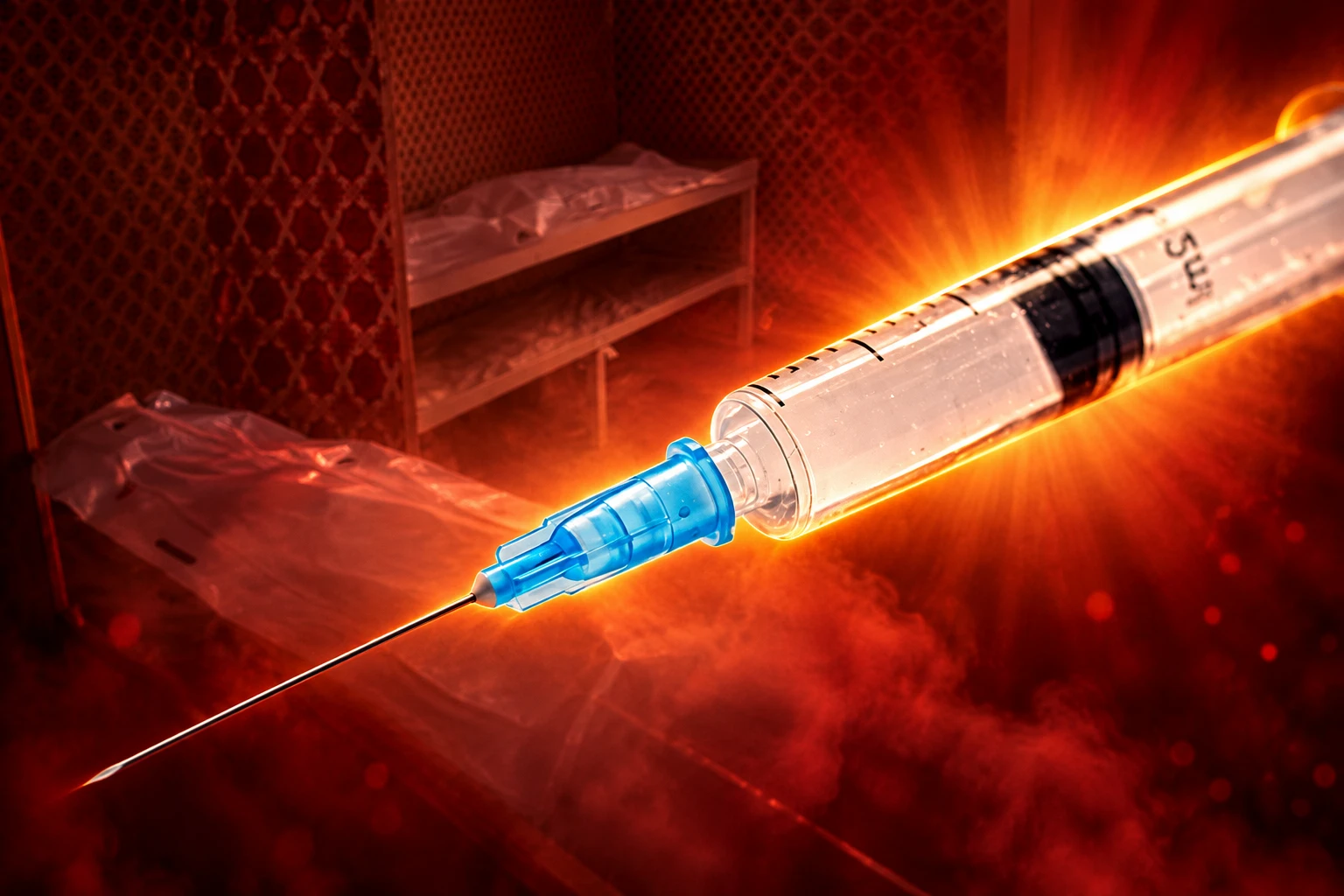
This is Congo’s 17th Ebola outbreak and the second Bundibugyo outbreak recorded in the country, after 2012. Almost every earlier wave was Zaire virus, the species for which Merck’s Ervebo was licensed in 2019. The U.S. label is blunt about the rest of the family.
ERVEBO does not protect against other species of Ebolavirus or Marburgvirus.
U.S. Food and Drug Administration, Ervebo prescribing information
That limitation is why the 2018 North Kivu campaign cannot be copied. WHO’s Strategic Advisory Group of Experts on Immunization reviewed extra laboratory and animal data on August 19 and still found insufficient evidence for mass Ervebo use against Bundibugyo disease, with efficacy in humans unknown. WHO says the shot should be given for this outbreak only inside a research protocol.
Africa CDC and the Congolese government pushed a wider rollout anyway, after test-tube and animal studies showed some cross-reaction. Blood from Ervebo recipients bound Bundibugyo virus in three studies. Vaccinated ferrets survived a challenge that killed control animals within 10 days, and three of four vaccinated monkeys survived against one of four controls. Myron Levine, the University of Maryland vaccinologist who chaired the WHO expert panel, said almost everyone on the call was surprised by those numbers.
Placide Mbala Kingebeni, Africa CDC’s director for research, clinical trials and innovation, has argued that a partial shield is better than waiting. Congo has received 70,000 doses. As of September 6, WHO counted 2,007 people vaccinated across six health zones in Tshopo, Bas-Uele and Ituri, a rounding error beside 7,022 confirmed infections. Kingebeni said a larger Ituri campaign would start the week of September 14, and that a limited supply of doses remains the constraint. The does not protect against other species line on the label has not been rewritten.
Why North Kivu’s New Cases Doubled
Ituri still holds most of the outbreak. WHO’s bulletin as of September 7 put 5,406 confirmed cases there, including 1,114 in the previous 21 days, across 28 of 36 health zones. North Kivu was already the second-worst province, at 1,066 cases, with 453 of those in the same 21-day window and a case fatality ratio of 65.4 percent, among the highest in this wave. Investigations into that death rate were still open.
WHERE THE CASES SIT
| Area | Confirmed cases | Recent window |
|---|---|---|
| Ituri (as of Sept. 7) | 5,406 | 1,114 new in 21 days; Africa CDC says recent weeks have declined |
| North Kivu (as of Sept. 7) | 1,066 | 453 new in 21 days; 381 vs 165 in successive 3-week periods |
| National (as of Sept. 10) | 7,022 | 3,398 deaths; 62 health zones in 7 provinces |
WHO listed 24,719 contacts still needing follow-up as of September 7, with 21,359 of them seen in the previous 24 hours, and 71 new confirmed cases that day from 17 health zones in Ituri, North Kivu and Haut-Uele. About one million internally displaced people live in Ituri alone, in camps where water, sanitation and clinic access are already thin. Delayed detection, WHO said, keeps feeding spread inside households, communities and health facilities.
South Kivu has reported no new confirmed case since May 29. Uganda, which declared cases at the same time as Congo, reported 21 confirmed and probable infections and 3 deaths, with the last case confirmed on June 21. One patient was treated in France and two in Germany. The U.S. CDC still rates the risk of spread inside the United States as very low and has reported no associated cases there.
Unpaid Crews Emptied the Checkpoints
The species gap would be easier to manage if the people who find cases, bury the dead and staff the gates were being paid. They have not been, in large numbers, since the outbreak was declared on May 15. Public Health Minister Roger Kamba has said money exists and blamed delays on padded lists, estimating that 15 to 20 percent of names submitted for some recent Ebola payments were fictitious.
WHERE THE RESPONSE STOPPED
- Rwampara: Epidemiologists, drivers and gravediggers walked off the treatment center, blocked the road and burned a tire at the gate after two months without pay.
- Bunia: The Elikya treatment center stood still after doctors, nurses and security staff struck over two months of unpaid performance bonuses.
- Haut-Uele: Six Ebola checkpoints stopped reporting in mid-August during a strike; five were still silent almost two weeks later.
- Ituri gates: Three checkpoints in the epicenter also struck over wages.
- North Kivu: Only 5 of 18 responders staffing checkpoints had been paid by August 19, and community-engagement workers there and in Tshopo had gone unpaid for three months.
Bahati Claude, a health worker at Rwampara, said they did not know how it was possible not to have been paid for two months. Prime Minister Judith Suminwa toured treatment hubs in Rwampara and Mongbwalu the day before one of the Bunia walkouts. Attacks on teams and clinics, which the United Nations has tied to fear and mistrust, have piled on top of the payroll fight. A vaccine trial that needs intact rings of contacts cannot run if the people who compile those rings are at the gate burning tires.
1,000 Cases Took 40 Days This Time
The 2018-2020 North Kivu and Ituri outbreak, caused by Zaire virus, reached 3,481 cases and 2,299 deaths and eventually bent because responders could put Ervebo into rings of contacts. The U.S. CDC notes that this Bundibugyo wave surpassed 1,000 confirmed cases within 40 days of response activation, against about 235 days in 2018, or about six times longer then to the same mark. WHO has already called this the largest Ebola outbreak ever recorded in Congo, whatever the species, and has said it remains on a path that could pass the 2014-2016 West Africa epidemic, which infected more than 28,600 people and killed more than 11,000, mainly in Guinea, Liberia and Sierra Leone.
THREE OUTBREAKS, ONE TOOLKIT GAP
| Outbreak | Cases | Deaths | Days to 1,000 cases | Licensed vaccine |
|---|---|---|---|---|
| West Africa, 2014-16 (Zaire) | More than 28,600 | More than 11,000 | Longer climb; no licensed shot at the start | None at the start |
| DRC, 2018-20 (Zaire) | 3,481 | 2,299 | About 235 | Ervebo (Zaire) |
| DRC, 2026 (Bundibugyo) | 7,022 | 3,398 | 40 | None for this species |
Historical Bundibugyo outbreaks were smaller and still lethal. WHO cites a 30 percent fatality ratio in Uganda in 2007 and 50 percent in Congo in 2012. The current crude ratio of 48.4 percent sits in that band, and WHO says late detection and thin early care are keeping it there. Incubation runs from 2 to 21 days, and people are not infectious until symptoms start, which is why a traveler can leave South Kivu in July and die in South Ubangi in September without anyone seeing the chain in real time.
In Bunia, parents are now watching the same gap show up at the school gate after the post-holiday return. Angele Magani, the mother of a schoolboy there, said she was very worried because she did not know which child came from which family or the health of the people in that house.
Trials Run Months Behind the Outbreak
Specific Bundibugyo shots exist only as experiments. The Coalition for Epidemic Preparedness Innovations moved in June to fast-track three Bundibugyo vaccine candidates from IAVI, Moderna and the University of Oxford with the Serum Institute of India, later adding a fourth rVSV project at Public Health Vaccines. Oxford opened BD-EBOV-01, the first Phase I study of a Bundibugyo-specific vaccine, on July 13; the first volunteers enrolled on July 20 and the first dose went in on July 24, in 50 healthy adults. Serum Institute had already made 620,000 doses at risk, with 4,000 set aside for research. The U.S. State Department committed $50 million to CEPI in June, and CEPI added $4.17 million in August for studies of whether existing Zaire shots, including Ervebo, raise Bundibugyo antibodies. Gavi put $40 million from its First Response Fund toward access. That is not a licensed product in Ituri.
WHAT IS IN THE FIELD
- Ervebo doses: 70,000 received; 2,007 people vaccinated as of September 6, in six health zones in Tshopo, Bas-Uele and Ituri.
- SAGE rule: Research protocol only; no mass campaign for Bundibugyo disease.
- Treatment trial: PARTNERS enrolled its first patient on July 2 and had more than 300 confirmed cases across five Ituri facilities, testing MBP134 and remdesivir.
- Money on paper: Africa CDC and WHO launched a joint plan seeking $518 million for June through November.
WHO has designed a ring trial that would offer Ervebo to half the contacts of each case and a placebo to the rest, the same structure that proved the shot against Zaire in Guinea in 2015. MSF, Africa CDC and Congolese partners sketched a different study, BRAVO, that would vaccinate front-line workers without a placebo and later read results off who tests positive. Armand Sprecher, an MSF public health specialist, asked how many people should die to answer a question that Bundibugyo-specific vaccines might soon make moot. Ira Longini, a University of Florida biostatistician who helped design the WHO trial, said that if everyone is simply given the shot, no one will learn whether it works.
No scientific question or clinical trial can justify delaying public health action which can save at least one life.
Placide Mbala Kingebeni, Africa CDC director for research, clinical trials and innovation
Reena Doshi, a WHO epidemiologist, put the other risk in one question: what happens if health workers get Ervebo and then fall sick? Trust in any later Bundibugyo shot would go with them. Kingebeni said the first vaccination work targeted newly affected provinces to slow further spread. That is the logic of a firebreak. South Ubangi is already on the far side of it.
Contact tracing for that single northwestern death is still being stood up. The vials in the stockpile still name a different virus, and the crews who would form the rings are still waiting on pay.
Disclaimer: This article is news reporting on an active outbreak and on vaccine and trial policy. It is informational only and is not medical advice, a diagnosis, or a recommendation to take or refuse any vaccine, drug or trial. Readers who have symptoms, travel risk or questions about immunization should consult a qualified physician or local public-health authority. Case counts, death totals, trial status and vaccine-use rules reflect the government, WHO, CDC, FDA and Africa CDC sources cited here as of their stated dates and will change as the outbreak and the studies move.

Nintendo Pulls SmileBASIC After the First Switch 2 Jailbreak

Arkane Lyon’s Union Holds the Clock Microsoft Cannot Skip

Airbnb Bans Guest Chores as Homes Turn Into Hotels

Riyadh Downs a Houthi Missile After Weeks of Capital Strikes

Ariana Madix’s Empty Los Angeles House Fits a Bravo Pattern

AI Server Boards Put Everyday Circuit Materials on Allocation

Glacier Collapse Buried Nepal’s Hydropower Workers in Tunnels

Congo’s Bundibugyo Outbreak Outruns the Licensed Ebola Shots

Pennsylvania Measles Deaths Follow a Long Slide in Coverage

Germany Can Miss Its 2026 Climate Cap Without Penalty
-
 NEWS2 months ago
AI Server Boards Put Everyday Circuit Materials on Allocation
-
 NEWS2 months ago
Glacier Collapse Buried Nepal’s Hydropower Workers in Tunnels
-
 NEWS2 months ago
Congo’s Bundibugyo Outbreak Outruns the Licensed Ebola Shots
-
 NEWS2 months ago
Pennsylvania Measles Deaths Follow a Long Slide in Coverage
-
 NEWS2 months ago
Germany Can Miss Its 2026 Climate Cap Without Penalty
-

 NEWS2 months ago
Texas Judge Freezes the SEC Eligibility Ban for 41 Athletes
-
 NEWS2 months ago
CISA’s Known Exploits Still Come From 2007-Era Bugs
-

 BUSINESS2 months ago
Trump’s Venezuela Oil Deal Leaves the Barrels in the Ground