
BUSINESS
Miliband Names Ethnic Cleansing and Parks Gaza Genocide
Britain names West Bank ethnic cleansing as fact, then parks a Gaza genocide ruling for an ICJ calendar that runs into 2029.

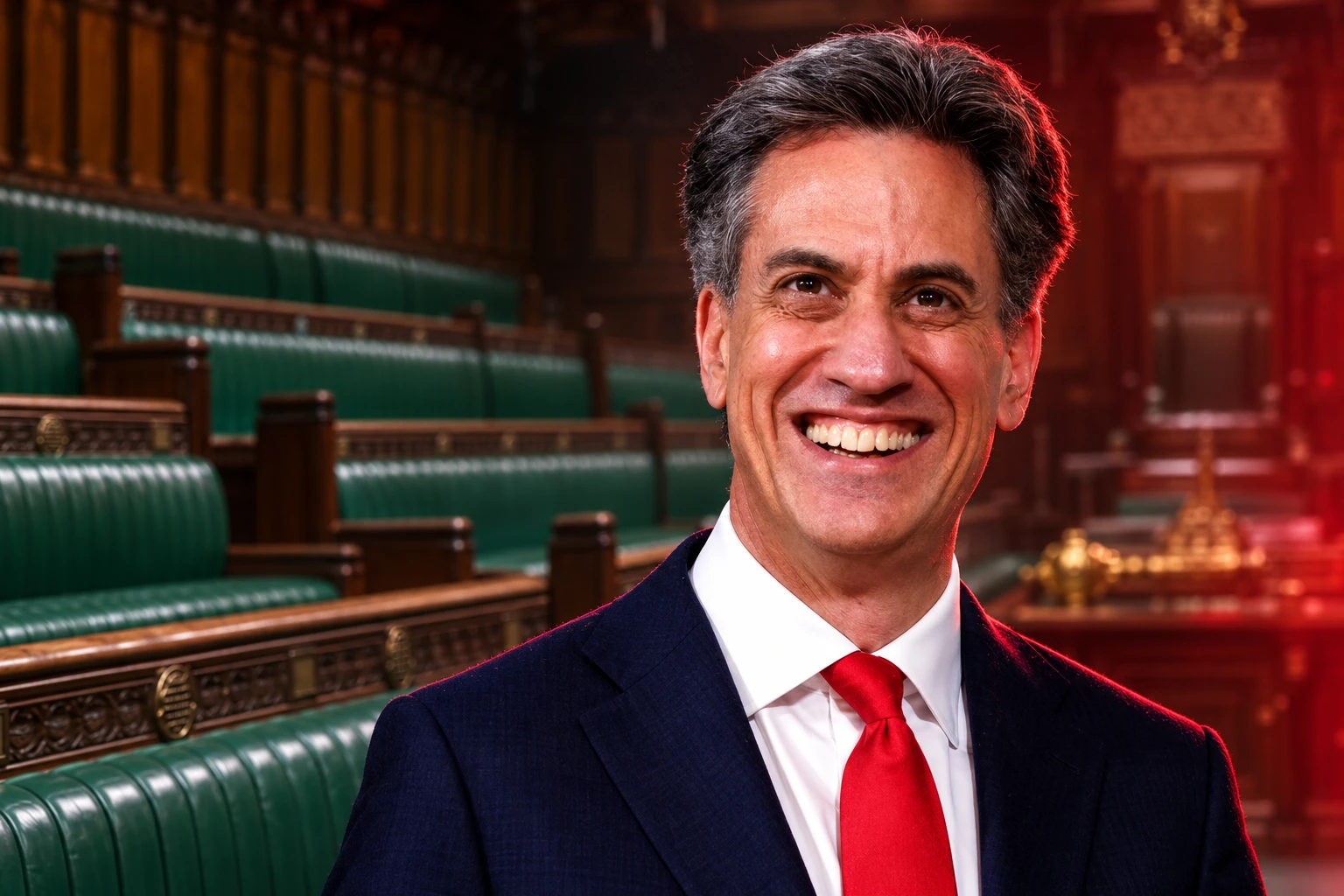
Ed Miliband told the Commons on Tuesday that Britain will wait for the International Court of Justice before it decides whether Israel committed genocide in Gaza. In the same statement he named ethnic cleansing in the West Bank as government fact, called the occupation unlawful, and set out a ban on settlement goods.
The foreign secretary, in the post since July under Prime Minister Andy Burnham, said the United Kingdom would not pre-judge the court. He also said international reports now supply “increasing evidence” that war crimes appear to have been committed.
Britain Names Ethnic Cleansing, Then Parks Genocide
Miliband’s Gaza line was process. His West Bank line was a finding. He told MPs the British government “agrees that there is ethnic cleansing of Palestinians in areas of the West Bank, perpetrated by settler terrorists,” and that Israeli ministers have “turned a blind eye” and, at times, backed forced displacement.
I recognise the gravity of saying this, but the truth is the least the people who face such suffering deserve. And it should be the prelude to justice.
Ed Miliband, UK foreign secretary, House of Commons, 8 September 2026
On Gaza he would not use the same voice. He said Britain has always waited for “full, robust and fair judicial processes” and for “competent courts” before it reaches a conclusion on genocide, and that this was the practice after Rwanda, Srebrenica and Cambodia. “It is right that this issue has been brought before the ICJ,” he said, “and I want to make it clear that we support the court in coming to its determination.”
He put a number on the war. “Over 70,000 people have been killed, at least 20,000 of them children.” He called the last three years in Gaza “a stain on the conscience of the world and of this country too,” and said the 7 October 2023 attacks “cannot justify what has happened in Gaza.” Burnham, he added, was right that Labour in office “has not done enough.”
That is the split the speech was built around. London will now say ethnic cleansing out loud. It will still not say genocide until The Hague does.
London Now Calls the Occupation Unlawful
The legal shift underneath the language is older than Tuesday’s adjectives. In July 2024 the court, in a 2024 advisory opinion on the occupation, said Israel must stop new settlement work and evacuate settlers from occupied territory. It also said other states should stay out of trade and investment that help keep that presence in place.
Until this week the UK’s public line was narrower. Settlements were illegal. The occupation as a whole was left unsaid. Miliband closed that gap. “The official view of the British government is that the occupation is unlawful,” he said, “because of Israel’s entrenchment of its control, its intention to extend permanent sovereignty, and its expansionist agenda via illegal settlements.”
Britain already recognised the state of Palestine in September 2025, with provisional borders drawn on land occupied in 1967. Miliband tied Tuesday’s package to that map. He quoted Israeli finance minister Bezalel Smotrich on a project to “bury the idea of a Palestinian state,” and pointed at the E1 plan east of Jerusalem, 1,200 homes with a bid deadline of 19 October, as a cut through the West Bank that would leave a Palestinian state unviable.
He still drew a line around Israel inside the Green Line. The sanctions, he said, target settlements and settlement expansion, not Israel. He repeated his opposition to the Boycott, Divestment and Sanctions campaign. Trade with Israel proper, he insisted, continues.
What the Settlement Ban Covers
The Commons package is a mix of slow law and fast names. The import and advertising bans need legislation. Miliband said that work will take six to nine months, with “appropriate religious exemptions.” Personal sanctions on extremist settlers, and a wider human-rights tool against settlement expansion including E1, start now.
THE WEST BANK PACKAGE
| Measure | When it bites | What it hits |
|---|---|---|
| Import ban | Six to nine months | Goods from illegal settlements |
| Services sanctions | Six to nine months | Construction, infrastructure, financing, real estate |
| Advertising ban | Six to nine months | Settlement property ads in the UK |
| Personal sanctions | Immediate | Settlers accused of backing or inciting violence |
| Human-rights regime | Immediate | Swifter action against expansion, including E1 |
| Arms double lock | Immediate for new licences | Exports that “materially contribute to the occupation” |
France and Canada are joining the import ban. A joint statement from 12 foreign ministries, Canada, Denmark, Finland, France, Iceland, Ireland, Norway, Poland, Portugal, Spain, Sweden and the UK, said they will introduce or back restrictions on trade in settlement goods.
The money at stake in Britain is small beside the main account. A House of Commons Library briefing puts UK-Israel trade around £6 billion in 2025, and UK trade with the Occupied Palestinian Territories around £38 million. Settlement goods already sit outside tariff preferences under the UK-Israel deal; a GOV.UK notice to importers lists postcodes that cannot claim those rates. The new step is a ban, not a tariff tweak. About 140 Labour MPs had asked for that ban in June.
Miliband’s own pitch was domestic as much as legal. “I do not believe that the British people want us supporting the occupation by accepting products from settlements in our shops and supermarkets.” To firms that finance or build for expansion, he said: “You will face the full force of UK sanctions.”
New Arms Licences Face a Double Lock
The weapons line is where Gaza and the West Bank meet. Britain has already frozen licences assessed as going into the Gaza war. That freeze, Miliband said, “remains fully in place.” He then added a second gate: the government will refuse all licence applications for arms and other exports that “materially contribute to the occupation,” “in effect a double lock against arms sales,” for as long as the occupation lasts.
THE LICENCE MATH
- The 2024 freeze: The government suspended around 30 arms export licences from a total of approximately 350, covering components for fighter aircraft, helicopters, drones and ground targeting.
- Tuesday’s add-on: New applications that “materially contribute to the occupation” will be refused for as long as that occupation persists.
- The trade beside it: About £6 billion in UK-Israel trade in 2025, against about £38 million with the Occupied Palestinian Territories.
- The Gaza toll he cited: Over 70,000 killed, at least 20,000 of them children.
It is still not a full embargo. The 2024 decision left the rest of the licence book open, including trainer aircraft and naval kit judged unused in Gaza. Campaign Against Arms Trade said in May that the Department for Business and Trade had since issued an open individual licence worth £8.7 million for targeting-equipment components, on the basis that the goods were for re-export and that the government of Israel was not the end user. The double lock closes a political gap. It does not, on the figures already public, empty the cupboard.
The Hague Calendar Runs to 2029
Waiting for the ICJ has a date attached, and it is not a date inside this parliament’s comfort. South Africa’s genocide case against Israel, filed in December 2023, is still in writing. On 21 May the court ordered a second round of pleadings. South Africa’s reply is due on 22 November 2027. Israel’s rejoinder is due on 22 May 2029. No date has been set for oral hearings on the merits.
THE FILE IN THE HAGUE
- December 2023: South Africa opens the genocide case.
- 19 July 2024: The court issues its advisory opinion that the occupation is unlawful.
- 16 September 2025: A UN Human Rights Council commission of inquiry finds genocide in Gaza.
- 21 May 2026: The court sets 22 November 2027 and 22 May 2029 for the next written round.
- 8 September 2026: Miliband tells the Commons Britain will wait for that court.
From Tuesday’s statement to Israel’s next filing is two years and eight months. From the original application to that filing is five years and five months. The court has already issued binding provisional measures on aid and prevention. South Africa’s government, in an August dossier, said Israel has not complied.
The UN inquiry Miliband gestured toward is not the court, and it did not wait. On 16 September 2025 the Independent International Commission of Inquiry, chaired by Navi Pillay, said Israel had committed four of the five genocidal acts in the 1948 convention.
WHAT THE COMMISSION SAID IT FOUND
- Killing: Attacks on protected objects and civilians, and deaths from imposed conditions.
- Serious harm: Direct attacks, abuse of detainees, forced displacement, environmental destruction.
- Conditions of life: Siege, blocked aid, wrecked health care, and other measures it said were calculated to destroy the group in whole or in part.
- Preventing births: Including an attack on Gaza’s largest fertility clinic.
Pillay said, “The Commission finds that Israel is responsible for the commission of genocide in Gaza.” Israel’s then ambassador in Geneva, Danny Meron, called the report cherry-picked and said it could not prove genocidal intent. The commission does not speak for the United Nations as a whole. Only a competent court can make the legal finding the UK says it is waiting for. That is the waiting Miliband renewed.
Herzog Calls the Package a Grave Miscalculation
Israeli President Isaac Herzog, speaking as the statement landed, called the move “a grave miscalculation, a decision that will fall on the wrong side of history,” and “a gross interference in the democratic elections of a sovereign nation.” Israel votes in October. “Sanctions are not a solution,” he said. He argued the measures would hurt Palestinians who work in the settlement economy.
Foreign minister Gideon Saar said, “If Britain acts against Israel, Israel will act against Britain.” Smotrich called for the British ambassador to be expelled. Former prime minister Yair Lapid called the decision “a serious mistake” that would “strengthen the extremist voices in Israel” and encourage Hamas. Israel, officials said, was preparing a formal response.
In Washington the temperature was already high. Mike Huckabee, the US ambassador to Israel, had accused the British government of “Jew hate” over Miliband’s earlier comments on aid into Gaza, and told the BBC the coming sanctions amounted to “discrimination against the Jewish people.” He raised the prospect of US state-level restrictions on British firms, naming Florida. Burnham spoke to President Donald Trump by phone on Monday afternoon and told him what was coming.
Diplomats Already Told Washington the Hit Is Symbolic
The public text is a “new approach.” The private text is smaller. British diplomats have told United States officials the settlement measures are largely symbolic and will not materially change wider trade or security ties with Israel, according to people familiar with those briefings. A quiet effort is under way to keep the announcement from becoming Burnham’s first serious rupture with the Trump White House.
That briefing matches the arithmetic. A £38 million Occupied Territories account cannot move a £6 billion relationship. Settlement produce can be relabelled; UK officials have long known origin fraud is the weak point in the existing postcode list. The import ban still has to be written, voted, and applied, and it will not take effect before spring 2027 at the earliest. The genocide file stays in The Hague until at least May 2029, and likely well after that.
Labour MPs who wanted a full arms embargo and an immediate trade cut got a double lock on new occupation-related licences, a delayed goods ban, and a word they have been asking the government to use, ethnic cleansing, applied to the West Bank. They did not get the word they have been asking for on Gaza. Miliband said the UN General Assembly later in September would “shine the clearest and harshest spotlight on what is happening and what must change.” The court he is waiting for has already reserved “the subsequent procedure for further decision.”

Amazon’s Apple Prime Deals Mostly Undo the June Hikes

The Atlantic’s First Hurricane Is Aimed at Soaked Gulf Soil

Iran’s Hormuz Attacks Target the Route That Restored Crude

S&P 500 Clears 7,800 as AI Chips Outrun Yields

Russia’s No-Plague Finding Leaves a Siberian Death Unexplained

AI Server Boards Put Everyday Circuit Materials on Allocation

Glacier Collapse Buried Nepal’s Hydropower Workers in Tunnels

Congo’s Bundibugyo Outbreak Outruns the Licensed Ebola Shots

Germany Can Miss Its 2026 Climate Cap Without Penalty

CISA’s Known Exploits Still Come From 2007-Era Bugs
-
 NEWS1 month ago
AI Server Boards Put Everyday Circuit Materials on Allocation
-
 NEWS2 months ago
Glacier Collapse Buried Nepal’s Hydropower Workers in Tunnels
-
 NEWS2 months ago
Congo’s Bundibugyo Outbreak Outruns the Licensed Ebola Shots
-
 NEWS2 months ago
Germany Can Miss Its 2026 Climate Cap Without Penalty
-
 NEWS2 months ago
CISA’s Known Exploits Still Come From 2007-Era Bugs
-

 NEWS2 months ago
Pennsylvania Measles Deaths Follow a Long Slide in Coverage
-
 BUSINESS2 months ago
Trump’s Venezuela Oil Deal Leaves the Barrels in the Ground
-

 NEWS2 months ago
A Cow Rumen Enzyme Dissolves Superbug Biofilms on Gauze