
ENTERTAINMENT
SoundCloud Puts Zero-Commission Sales Behind a $99 Plan
SoundCloud’s zero-commission track sales are live for about 200 Artist Pro users, a $99-a-year gate aimed at stopping fans from buying elsewhere.

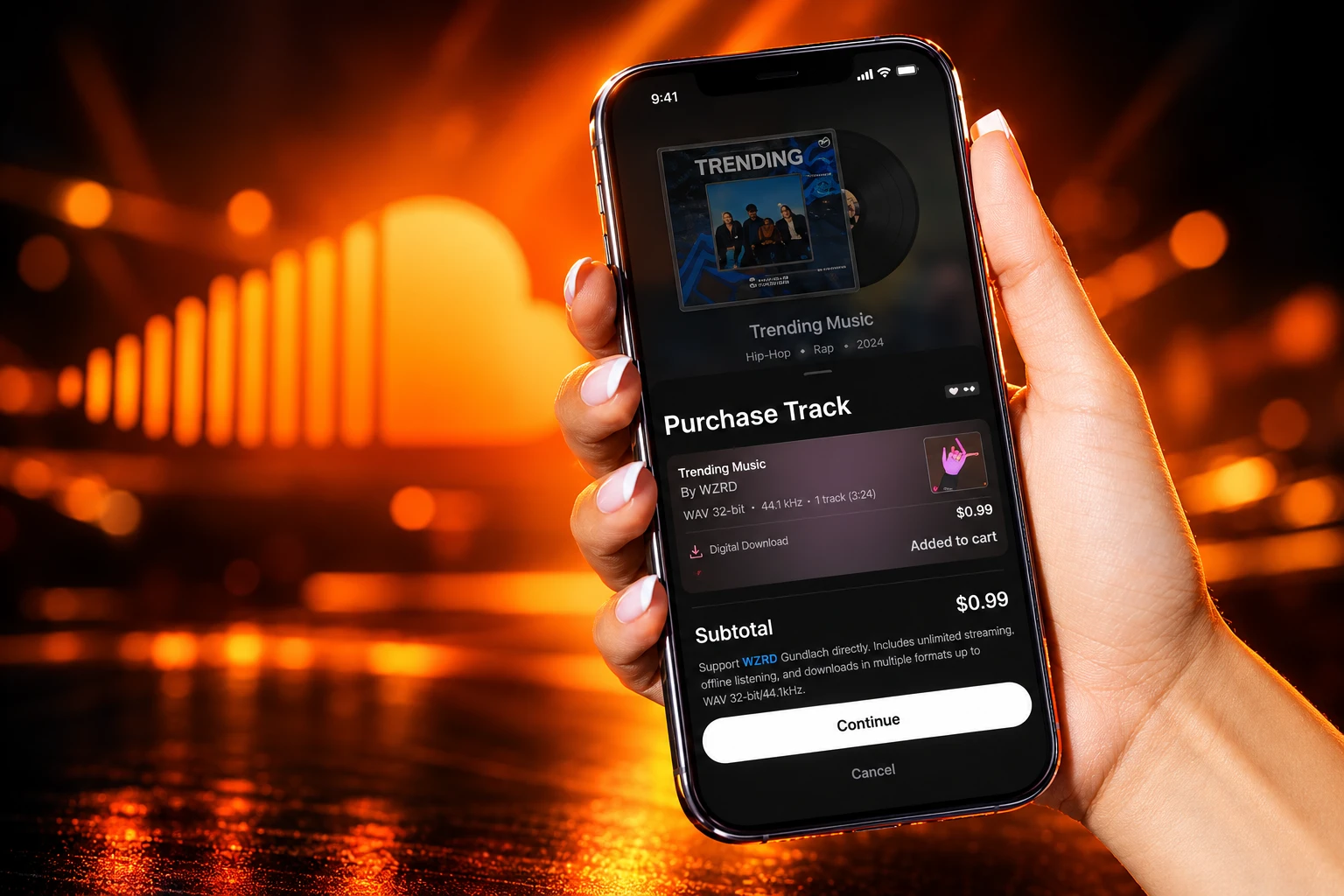
SoundCloud opened a beta on August 26 that lets about 200 U.S. Artist Pro creators sell MP3 and WAV files from their profiles at zero commission. Fans buy and download without leaving the page they already use to stream. Fees and taxes still come out of each sale.
The company is not really opening a public shop. It is pulling a checkout into a paid plan so the people who already found the song do not click out to pay someone else.
SoundCloud Opens Direct Track Sales to 200 Artists
The first group is small on purpose. SoundCloud limited the test to about 200 U.S. Artist Pro accounts that already have Fan Support turned on, then said it wants a tight feedback loop on friction before a wider release later in the fall.
Those testers set prices in Artist Studio and the Fan Support Dashboard. They can flip a streamed track into a paid file. Buyers get whatever format the artist uploaded, named in the launch note as MP3 or WAV.
SoundCloud takes no commission on purchases, with artists receiving the proceeds less applicable fees and taxes. That is the line the company wants repeated. It does not name the processor, and it does not publish a rate card for those fees.
Artists should be able to build their audience in one place, on one platform. SoundCloud has always been where artists find their first fans and build real communities. We’re continuing to bring more of what they need to grow their careers into that same experience, while letting fans directly support the music they love.
Eliah Seton, CEO, SoundCloud announcement
Seton’s “one place” line is the product thesis. Discovery, comments, tips, vinyl, tickets, and now a file sale are supposed to stack on the same profile so the fan never opens a new tab.
Half a Million Shoppers Were Leaving Anyway
The launch post is unusually blunt about leakage. Artists have been using SoundCloud as a storefront window, then sending listeners somewhere else to pay.
THE TRAFFIC SOUNDCLOUD WANTS BACK
- Outbound links: More than 250,000 artists have linked over 2.4 million tracks to external music platforms.
- Lost checkouts: Each year the company sends more than half a million users to outside parties to buy music.
- Artist demand: In SoundCloud’s own survey, 14% of artists already sell downloadable music and 14% want to, or 28% in total.
- Superfan spend: The same research says superfans can spend up to five times more on music and artists than casual listeners.
Those figures explain the timing better than a sudden love of MP3s. If more than half a million people a year already leave to pay, a zero-cut button on the profile is a way to keep the card on-site. The file sale is the patch. The audience was always there.
The $99 Door in Front of Zero Commission
Free uploaders do not get the button. Neither do artists on the cheaper paid tier. The beta sits on Artist Pro, which SoundCloud’s own pricing page lists as $8.25 a month when you take the Artist Pro plan billed at $99 a year.
The cheaper Artist plan is $3.25 a month billed yearly at $39, with a three-hour upload cap and two tracks a month for distribution and on-platform earning. Basic is free and tops out at two hours of audio. None of those lower rungs are in the sales beta.
A checkout with no platform cut that only opens after a yearly plan is a subscription product. SoundCloud dropped its 20% take of distribution payouts at the end of November 2025. It still has to get paid somewhere, and $99 a year is a cleaner meter than a cut of a $1 track.
WHAT THE $99 PLAN ALREADY BUNDLES
- Uploads and swaps: Unlimited upload time and unlimited track replacements, so a sales file can replace a stream file without killing stats.
- Pay routes: Unlimited on-platform earning plus distribution to 50+ other services, with SoundCloud passing through 100% of those royalties.
- Splits and ID: Split Pay for collaborators, plus YouTube Content ID, both reserved for Pro.
- Fan tools: Advanced audience stats, a comments hub, five spotlight tracks, and the Fan Support button the beta requires.
That bundle is the real store. Direct purchases are one more SKU inside it. Artists arguing the launch on X landed on the same objection in plainer words: you pay $99 for the right to sell, then you still cover processor fees and tax.
What Bandcamp Still Takes on a Digital Sale
The comparison everyone reaches for is Bandcamp, and the math is not mysterious. Bandcamp’s help pages spell out a 15% fee on digital items, falling to 10% once sales hit $5,000 and stay at that mark over the past 12 months. Physical goods sit at 10%. Processor fees sit on top and typically run 4 to 6%.
Bandcamp artist accounts are free. There is no $99 gate in front of the first sale. SoundCloud is cheaper on the platform cut and more expensive on the ticket in.
WHO TAKES WHAT ON A DIGITAL SALE
| Store | Platform cut | Cost to open the till | What the fan gets |
|---|---|---|---|
| SoundCloud beta | 0%, plus unnamed fees and taxes | $99 a year Artist Pro, U.S. testers only | MP3 or WAV from the profile |
| Bandcamp | 15% digital (10% after $5,000), plus about 4-6% processing | Free artist account | DRM-free download, name-your-price option |
SoundCloud wins the headline rate. Bandcamp still wins the installed habit, the pay-what-you-want extra, and the fact that a new artist can sell tonight without a Pro badge. Calling SoundCloud late is fair. Calling the 0% fake is not. The till is cheaper. The door is not free.
Nina Shut Down. SoundCloud Bought the Idea.
On July 22, SoundCloud acquired Nina Protocol, the independent store and editorial site that had let artists sell direct and keep 100% of sales. Nina was winding down after five years. The deal, on SoundCloud’s own post, takes the editorial archive and “genre map,” then invites Nina artists to opt into SoundCloud’s creator tools rather than rebuilding a separate shop.
Mike Pollard, Nina’s CEO and co-founder, tied the two rooms together in that note.
Nina has always been about empowering independent artists and documenting the communities that drive music forward. SoundCloud built that foundation: without SoundCloud, there wouldn’t be Nina. As we considered the future of the platform, we wanted to ensure our artists and editorial work found a home that shared and actively practiced those values. SoundCloud was the natural choice.
Mike Pollard, CEO and co-founder, Nina Protocol
Five weeks later the host platform shipped its own 0% download button. That is not a coincidence anyone at SoundCloud is hiding. The Nina post already listed “continue selling directly to fans” as a reason to migrate, next to Fan Support, on-demand vinyl, and 100% distribution royalties.
Seton, in the same acquisition note, called SoundCloud the place where millions of artists begin, and said the next movements in music show up in communities long before they hit the mainstream. Direct sales are how that beginning is supposed to keep the money when a fan is ready to pay more than a stream.
Tips, Vinyl, and Tickets Were Already There
Downloads are the missing aisle, not the first one. SoundCloud has been stacking other cash tools onto the same profile since last autumn’s All-in-One plan, which went live on October 30, 2025.
Fan-Powered Royalties already pay artists from their own fans’ listening rather than a giant shared pool. Fan Support lets U.S. listeners tip with no SoundCloud cut. On-demand vinyl and live ticketing sit in the same family, along with off-platform storefront links for merch. The August beta simply stops the music file itself from being the thing you still have to buy somewhere else.
For a listener, the change is small and physical. The Buy control appears on a profile that used to end at stream, like, comment, and maybe a tip. For an artist who already pays for Pro, it is one more column in a dashboard they open anyway. For everyone else, the old outbound link to Bandcamp or Beatport still does the job the leak numbers described.
A Dollar Track Tests the Fall Rollout
One of the first testers went public within a day of the launch and put every track up at a dollar, treating the button like a tip jar with a file attached. That is a reasonable read of a 0% checkout on a platform where most plays still pay like streaming. It is also a reminder that the beta is a few hundred rooms, not a catalog shift.
Replies around the Mixmag write-up split the same way the fee table does. Some people called it a win for independents. Others noted the $99 plan. A third line said the party started years ago on Bandcamp. All three can be true at once: the cut is gone, the plan is the price of admission, and the rival store still has the buyers’ muscle memory.
HOW THE STORE GOT ONTO THE PROFILE
- October 30, 2025: SoundCloud turns on its All-in-One artist plan, with Fan Support, vinyl, and storefronts in the same bundle.
- End of November 2025: The 20% distribution revenue share disappears, and subscribers keep 100% of those royalties.
- July 22, 2026: SoundCloud acquires Nina Protocol and invites those artists to keep selling on its platform.
- August 26, 2026: Direct music purchases open to about 200 U.S. Artist Pro creators with Fan Support on.
- Later in fall 2026: SoundCloud says access widens to all eligible creators after the beta.
Eligible still means the paid tier, not the whole upload graph. Processor fees and tax still hit every sale. The wider release has no public date beyond the season, and no public list of who is in the first 200.
Until that fall switch flips, the new checkout lives on a few hundred U.S. profiles, and the rest of SoundCloud can still send a ready buyer out the door.

Amazon’s Apple Prime Deals Mostly Undo the June Hikes

The Atlantic’s First Hurricane Is Aimed at Soaked Gulf Soil

Iran’s Hormuz Attacks Target the Route That Restored Crude

S&P 500 Clears 7,800 as AI Chips Outrun Yields

Russia’s No-Plague Finding Leaves a Siberian Death Unexplained

AI Server Boards Put Everyday Circuit Materials on Allocation

Glacier Collapse Buried Nepal’s Hydropower Workers in Tunnels

Congo’s Bundibugyo Outbreak Outruns the Licensed Ebola Shots

Pennsylvania Measles Deaths Follow a Long Slide in Coverage

Germany Can Miss Its 2026 Climate Cap Without Penalty
-
 NEWS2 months ago
AI Server Boards Put Everyday Circuit Materials on Allocation
-
 NEWS2 months ago
Glacier Collapse Buried Nepal’s Hydropower Workers in Tunnels
-
 NEWS2 months ago
Congo’s Bundibugyo Outbreak Outruns the Licensed Ebola Shots
-
 NEWS2 months ago
Pennsylvania Measles Deaths Follow a Long Slide in Coverage
-
 NEWS2 months ago
Germany Can Miss Its 2026 Climate Cap Without Penalty
-
 NEWS2 months ago
CISA’s Known Exploits Still Come From 2007-Era Bugs
-

 NEWS2 months ago
Texas Judge Freezes the SEC Eligibility Ban for 41 Athletes
-

 BUSINESS2 months ago
Trump’s Venezuela Oil Deal Leaves the Barrels in the Ground