
NEWS
Germany’s Oil Shock Still Misses the 2026 Climate Cap
Agora says Germany’s war-driven oil slump still leaves 2026 some 10 million tonnes over the legal cap.

Germany is on course to emit 635 million tonnes of greenhouse gases in 2026, 10 million above the legal cap, the think tank Agora Energiewende said. Emissions fell about 2 percent in the first half, mainly because a war in Iran pushed oil prices up and German oil use down.
If that pace holds, 2026 would be the first miss of the overall annual limit in the national climate law.
The Cut That Came From Hormuz
Agora’s own reading of the first six months is blunt. The main driver was not a new climate programme. It was a fossil fuel price crisis after the war in Iran and the blockade of the Strait of Hormuz, which made oil and gas expensive and quietly rationed demand.
Manufacturing output fell, lorry traffic on German roads eased, and sales of light heating oil collapsed. The Working Group on Energy Balances, AGEB, found that energy-related carbon emissions fell 2.5 percent in the first half, about 8 million tonnes, covering roughly 85 percent of total greenhouse gases.
That AGEB snapshot is the part of the year that looks like climate progress until you open the fuel mix. Oil product use was down about 8 percent, with diesel off close to 6 percent and light heating oil down more than 30 percent, according to AGEB figures reported in August. Coal use rose about 7 percent. Natural gas use rose 1.3 percent. Hydrocarbons still supplied 75.9 percent of energy demand. Wind and solar’s share of that demand only moved from 20.9 percent to 22.2 percent.
WHAT DROVE THE FIRST-HALF DIP
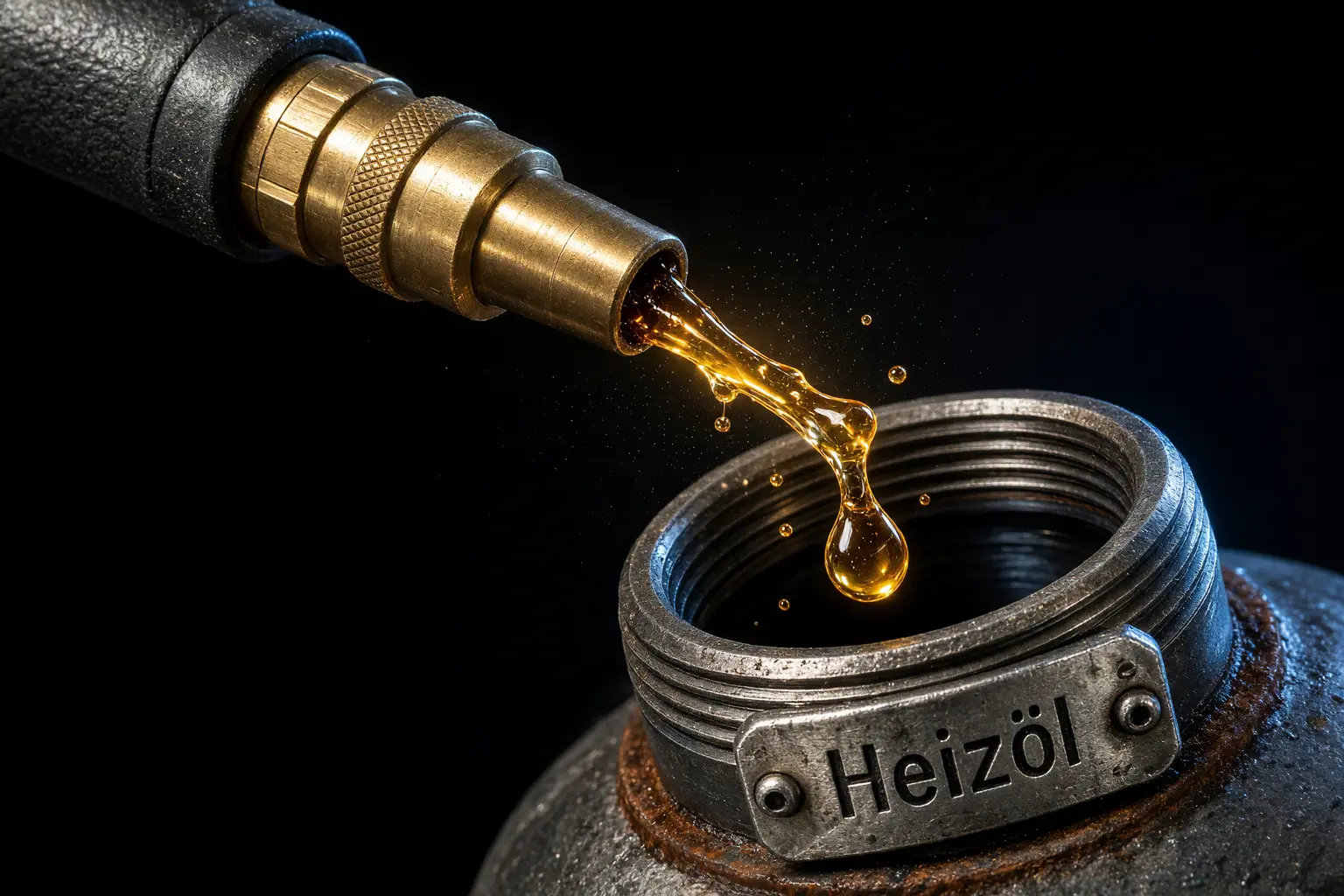
- Heating oil: Household tank fill-ups collapsed by more than 30 percent as prices jumped after the Hormuz shock.
- Road freight: Lorry traffic slipped and diesel demand fell about 6 percent, which Agora ties to weaker goods movement.
- Factories: Overall manufacturing output fell, but Frankfurter Allgemeine Zeitung, citing the same Agora work, reported a 9 percent rise in iron and steel output that lifted industry emissions even as other branches shrank.
- Power: Energy-sector emissions barely moved, down about 0.3 million tonnes in the Agora first-half estimate, while coal consumption for the wider energy balance rose.
So the tonnes that disappeared were mostly oil that people stopped buying. The tonnes that did not disappear sat in coal and steel. A German cut built on a foreign oil shock can reverse when prices ease, and it can also show up as output somewhere else if factories simply run down.
635 Million Tonnes Against a 625 Million Cap
Through June, Agora counts about 327 million tonnes of carbon dioxide equivalent, 7 million below the same period in 2025, a 2 percent drop. Its first-half forecast of 635 million tonnes for the full year is 13 million below 2025 and about 10 million above the 625 million tonne ceiling in the climate law.
The think tank’s second-half assumptions are conservative in one direction and optimistic in another. It sees no large structural change, a slight pickup in industrial production, and temperatures in line with the second half of 2025. Julia Bläsius, director of Agora Energiewende Germany, wants the government to treat even this thin dip as something to lock in.
The government should capitalise on and reinforce this momentum and consistently align its energy and industrial policies with renewable energy and electrification.
Julia Bläsius, director of Agora Energiewende Germany
The official 2025 inventory, published in March by the German Environment Agency, is the baseline those 13 million tonnes are measured against. UBA recorded emissions of 648.9 million tonnes in 2025, only 0.9 million, or 0.1 percent, below 2024, and 12.8 million under that year’s adjusted legal total of 661.6 million. Against 1990’s 1,253 million tonnes, the country is 48.2 percent down. The 2030 law still asks for 65 percent.
THE 2026 GAP IN TONNES
| Year | Emissions | Legal ceiling | Result |
|---|---|---|---|
| 2025 (UBA) | 648.9 million tonnes | 661.6 million tonnes | 12.8 million under |
| 2026 (Agora forecast) | 635 million tonnes | 625 million tonnes | 10 million over |
FAZ noted that Berlin had already missed sector targets for buildings and transport in 2021 through 2024, then scrapped those sector triggers. The overall annual cap had still been met. 2026 is the year the summed budget itself is at risk.
Heat Pumps and Electric Cars Set Sales Records
The policy tools that are supposed to replace oil did move in 2025, which is why the 2026 miss stings. Heat pumps overtook gas boilers as the best-selling heating system, with 299,000 units sold, 55 percent more than the year before, UBA said. Almost one in five newly registered passenger cars was a fully battery-electric vehicle, up 45 percent on 2024. The public charging network passed 180,000 points. New wind permits hit a record of almost 21 gigawatts, and the Federal Network Agency finished approval procedures for 2,000 kilometres of power lines.
Agora says heat pumps and electric cars set fresh sales records again in the first half of 2026, with a measurable effect on the carbon accounts. Buildings emissions fell about 3 million tonnes in that Agora estimate, and transport fell about 4 million, mainly because trucks burned less diesel. Those are real tonnes. They are also smaller than the annual hole the 2030 path requires, and they arrived in a half-year when oil was rationed by price.
Federal Environment Minister Carsten Schneider, a Social Democrat in Chancellor Friedrich Merz’s CDU/CSU-SPD coalition, had already used the 2025 technology bounce as proof the country still had a path. “Demand for electric cars and heat pumps increased enormously in 2025. And there are more newly approved wind power projects than ever before,” he said in March, when UBA put out the 2025 numbers. The same press release said emissions from 2026 onward would have to fall by an average of 42 million tonnes a year through 2030.
Agora’s 2026 arithmetic is almost the same: about 40 million tonnes a year. A 13 million tonne cut, even one helped by a war, is a third of that pace.
Berlin Says the 2026 Warning Comes Too Soon
Schneider’s ministry spent Friday telling reporters not to treat Agora’s sheet as a verdict. A spokesman for the minister told dpa the Federal Environment Agency will publish the decisive 2026 figures in mid-March 2027. “It is still too early to make a reliable, sound assessment of greenhouse gas emissions for 2026,” the spokesman said. Under-year estimates, the ministry added, are not an official annual inventory. Reuters also quoted the ministry pointing to money still sitting in the Climate and Transformation Fund and in the extra infrastructure budget.
WHAT WE KNOW
- The H1 count: Agora’s preliminary figure is 327 million tonnes through June, down 7 million from a year earlier.
- The legal line: The working 2026 ceiling cited by Agora, FAZ, dpa and Reuters is 625 million tonnes.
- The official clock: UBA’s inventory for 2026 is due in mid-March 2027, and that is the number the law actually reads.
WHAT IS UNCONFIRMED
- The full-year total: 635 million tonnes is Agora’s extrapolation, not an official result, and a colder or hotter winter can still move buildings demand.
- Industry’s second half: Agora baked in a slight production pickup; if the Hormuz shock lingers, output and oil use could stay suppressed.
- Whether 2026 is a legal miss: That label waits on UBA, then on the Council of Experts on Climate Change, not on a Friday think-tank note.
The ministry is right that a mid-year sheet is not a closed book. It is also true that Agora already folded in the usual seasonal swing, and that AGEB’s energy-carbon tally is pointing the same way.
What Happens If Germany Misses the 2026 Cap?
A single-year overshoot of 10 million tonnes does not, by itself, force new measures. The climate law’s procedure when emission budgets are exceeded looks at projection data, not at one inventory. If the Council of Experts finds, in two years running, that the sum of emissions from 2021 through 2030 will exceed the sum of the annual budgets, the federal government must decide on extra measures in that same calendar year, with ministries submitting proposals within three months.
There is a caveat. No extra round is required if the government already passed a qualifying package in that year or the year before. The Council of Experts has already said the Climate Action Programme 2026 is not that package. Chair Barbara Schlomann said in May that the programme’s actual cut is likely “considerably lower than assumed by the Federal Government,” and that even full delivery would miss the statutory targets through 2040. If the council finds the 2021-2030 budget exceeded again next year, the caveat, in its view, would not apply.
That is the design the 2024 rewrite left behind when it dropped sector-by-sector emergency brakes. Missing 2026 is a political signal. The legal tripwire is a repeated projection miss, and the cash risk sits in Brussels. UBA’s 2026 projection put the cumulative gap under the EU Effort Sharing Regulation, which covers buildings and transport, at 255 million tonnes of CO2 equivalent for 2021 through 2030. Those tonnes, if not cut, have to be covered with certificates bought from other member states.
The 2030 Target Still Needs 40 Million Tonnes a Year
UBA still wrote in March that the 65 percent cut by 2030 “remains achievable” if extra measures arrive. The same projection said instruments already in force as of November 2025 only get the country to a 62.6 percent cut, and that a buffer of about 81 million tonnes from the previous projection run had been almost used up, leaving a 3.8 million tonne arithmetic margin across 2021-2030.
The independent council did not buy even that narrow pass. In its 18 May review it could not confirm target compliance. It estimated a median path would exceed the 2030 budget by 60 to 100 million tonnes. “The assumptions underlying the calculations in particular for the energy and buildings sectors need to be updated,” Schlomann said. “For both sectors, we assume that actual emissions are likely to be higher than reported.” The council also expects further lawsuits over climate policy.
THE 2030 GAP AGAINST THIS YEAR’S PACE
| Yardstick | What the law or the agencies ask | Where 2025-26 sits |
|---|---|---|
| Annual cut to 2030 | About 40 million tonnes (Agora); 42 million (UBA) | 13 million in Agora’s 2026 path |
| Cut vs 1990 | 65 percent by 2030; 88 percent by 2040 | 48.2 percent by 2025 |
| KSG budget 2021-2030 | Stay inside the summed annual ceilings | ERK median: 60 to 100 million over |
| EU Effort Sharing | Buildings and transport inside the EU cap | UBA: 255 million tonne gap |
Clean Energy Wire, reporting Agora’s note, listed the policy choices already pointing the wrong way: weaker heating-transition rules, a freeze of the national carbon price instead of the planned rise, a push to reopen the EU’s 2035 combustion-engine deadline, and an effort to soften the EU emissions trading system. Those are the levers that would have to move if the Hormuz windfall is not going to be the high-water mark of 2026.
Merz Promises Lessons After a Summer of 42-Degree Days
The Agora warning landed three days after Merz tried to answer a brutal summer. At a cabinet retreat in Neuhardenberg on 25 August he said Germany had to “further curb climate change and at the same time better adapt to the consequences,” and to “draw the long-term lessons from extreme situations such as this summer of heat.” A late-June heatwave broke the national temperature record three days running, topping 42 degrees. Official data put heat-related deaths this year at around 14,000. Rivers ran so low that cargo had to be lightened. Greenpeace put the summer’s economic cost at least 36 billion euros, with production losses of just under 11 billion from about 25 days above 30C.
At a forest fire near Hürtgenwald, Merz had already said the quiet part. “The regrettable reality is that we must expect the number of such events to rise,” he said. “That is climate change.”
The Federal Environment Agency is due to close the 2026 books in mid-March 2027. Until that inventory appears, the 625 million tonne cap is still a forecast fight, and the 40 million tonne annual cut is still the figure no current programme has matched.


Nepal’s Glacier Flood Repeats a Himalayan Tunnel Disaster

Trump’s Venezuela Oil Deal Leaves the Barrels in the Ground

Germany’s Oil Shock Still Misses the 2026 Climate Cap

CISA’s Known Exploits Still Come From 2007-Era Bugs

Marvin Bracy-Williams Arrested for DUI After Career-Ending Ban

A Cow Rumen Enzyme Dissolves Superbug Biofilms on Gauze
Nepal’s Glacier Flood Repeats a Himalayan Tunnel Disaster

Bundibugyo Ebola Reaches 60 Zones Without a Licensed Shot

The Ninth Circuit Just Split the Prediction Market Map
CISA’s Known Exploits Still Come From 2007-Era Bugs
-
 NEWS7 days ago
A Cow Rumen Enzyme Dissolves Superbug Biofilms on Gauze
-
 NEWS3 days ago
Nepal’s Glacier Flood Repeats a Himalayan Tunnel Disaster
-
 NEWS4 days ago
Bundibugyo Ebola Reaches 60 Zones Without a Licensed Shot
-
 BUSINESS3 days ago
The Ninth Circuit Just Split the Prediction Market Map
-
 NEWS3 days ago
CISA’s Known Exploits Still Come From 2007-Era Bugs
-
 BUSINESS3 days ago
Trump’s Venezuela Oil Deal Leaves the Barrels in the Ground
-
 NEWS3 days ago
Marvin Bracy-Williams Arrested for DUI After Career-Ending Ban